

Offcourse today one challenge consistently stands out: patient payment collection. For healthcare providers, the rise of high-deductible health plans and increased patient responsibility has made collecting payments more complex than ever. This is where healthcare payments companies like PayNova step in, transforming traditional billing approaches with modern automation solutions that improve collection rates while enhancing the patient experience.
In this blog, we’ll explore the challenges in patient collections, the limitations of traditional methods, and how advanced payment automation from healthcare payments companies can boost collections by up to 30% or more.
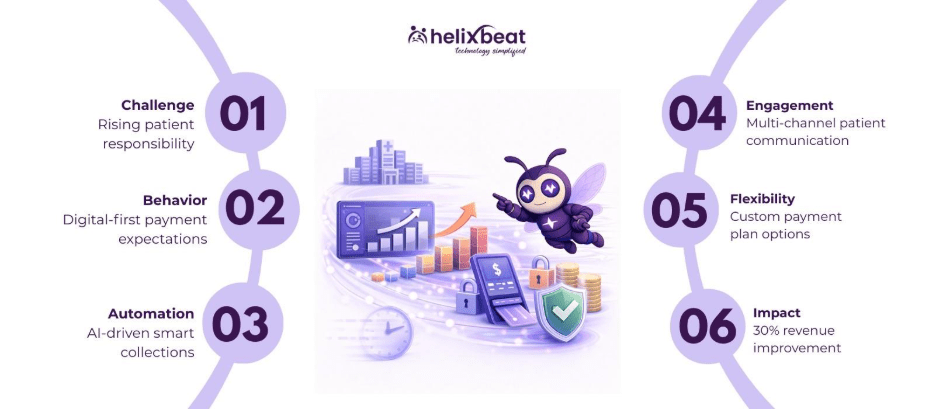
Table of Contents
The Patient Payment Challenge
For many healthcare providers, billing and collections are a major pain point. While providers focus on delivering care, they often spend an excessive amount of time managing patient payments. According to industry data, manual processes can consume 25-30% of billing staff time, leaving less time for tasks that directly impact patient satisfaction or revenue optimization.
Paper statements, once the mainstay of healthcare billing, achieve only 60-70% collection rates. Phone calls and mailed letters, meanwhile, have seen declining effectiveness, especially among younger, digitally-savvy patients who expect convenience and transparency.
Administrative costs are also mounting. Staff turnover in billing departments exceeds 25% annually, and manual collection efforts can cost anywhere from $15-25 per account. For practices where patient responsibility represents 35-40% of revenue, these inefficiencies translate into substantial financial losses.
Understanding Patient Behavior
The way patients approach payments has changed significantly. Research from healthcare payments companies indicates:
- 80% of patients prefer digital payment options over traditional checks or phone payments.
- 65% want payment plans for balances exceeding $500.
- 70% respond better to text messages than phone calls.
- 85% value transparency, such as upfront cost estimates.
- 60% will pay immediately if convenient payment options are provided.
These insights highlight the critical need for billing processes that meet patient expectations while ensuring timely collections.
Limitations of Traditional Collection Methods
Traditional methods like manual calls, paper statements, and office-based payment collection are no longer sufficient. The challenges include:
- Manual Process Burden – Staff spend hours chasing payments instead of supporting patient care or improving revenue cycles.
- Low Collection Rates – Paper statements and phone calls have plateaued in effectiveness.
- High Administrative Costs – Managing billing errors, claim denials, and follow-ups consumes financial and human resources.
- Patient Frustration – Complex bills and limited payment flexibility lead to confusion and delayed payments.
With patient expectations leaning toward digital convenience, healthcare providers are discovering that traditional methods are increasingly inadequate.
How Healthcare Payments Companies Are Changing the Game
Modern healthcare payments companies like PayNova leverage payment automation to address these challenges. Automation platforms combine artificial intelligence, predictive analytics, and multi-channel communication to streamline collections, reduce administrative burden, and improve patient satisfaction.
Here’s how.
1. Intelligent Patient Segmentation
One of the first steps in improving collections is understanding patient risk profiles. Automated systems categorize patients into low, medium, and high-risk groups, based on factors like payment history, insurance type, and outstanding balances.
- Low Risk: Patients with commercial insurance, good payment history, and balances under $200. Automated reminders and online payment incentives are effective here. Discover how healthcare payments companies improve patient collections by 30% using automation, AI, multi-channel communication, and flexible payment plans.
- Medium Risk: High-deductible plan holders, new patients, or balances between $200-$1,000. Payment plans, multiple touchpoints, and financial counseling can improve collection rates.
- High Risk: Self-pay patients with prior payment issues or balances over $1,000. Personal outreach and flexible assistance programs are essential.
By tailoring communication and payment strategies to each group, healthcare payments companies can dramatically increase the likelihood of timely payment.
2. Predictive Analytics and AI
Automation platforms don’t just segment patients—they predict payment behaviors. Using AI, healthcare payments companies can analyze:
- Patient demographics and payment history
- Insurance coverage and benefits
- Service type and balance amount
- Seasonal and economic trends
This predictive capability allows providers to intervene proactively. For instance, patients likely to require assistance can be offered customized payment plans, while those who respond to reminders at specific times receive targeted communications. By anticipating challenges before they arise, providers can reduce collection delays and bad debt.
3. Multi-Channel Communication Automation
A single communication channel is rarely sufficient. Automated platforms provide multi-channel touchpoints to engage patients at every stage:
- Pre-service: Cost estimates, payment options, and plan enrollment
- Point-of-service: Real-time payment processing and plan setup
- Post-service: Automated reminders, links to pay, and plan management
- Follow-up: Escalated outreach, assistance program referrals
Channels include:
- Email: Detailed statements and educational content
- Text messages: Quick reminders and payment confirmations
- Phone calls: Automated or live agent escalation
- Mail: Formal statements and compliance notices
By offering multiple communication channels, healthcare payments companies increase engagement and reduce the chance of missed payments.
4. Flexible Payment Processing
Flexibility is key to improving patient collections. Payment automation platforms provide:
- Multiple Payment Methods: Credit/debit cards, ACH transfers, HSA/FSA accounts, and mobile wallets like Apple Pay, Google Pay, or PayPal
- Payment Plans: Interest-free options, automatic payment setup, early payoff incentives, and adjustable terms based on patient capacity
This flexibility ensures patients can pay in a manner that suits them, which directly contributes to improved collection rates.
5. Enhancing the Patient Experience
Payment automation isn’t just about collections—it also improves patient satisfaction:
- Transparent, Itemized Bills: Patients can see exactly what they owe and why
- Patient Portals: Access to payment history, outstanding balances, and plan management
- Real-Time Assistance: Immediate access to financial counseling or support
When patients understand their bills and have convenient options to pay, they are more likely to complete payments promptly. According to recent studies, patient-friendly payment systems can increase collections by up to 30% within the first year.
6. Integration with EHR and PMS
Healthcare billing is complex because it often involves insurance claims, co-pays, deductibles, and multiple payers. Automation platforms from leading healthcare payments companies integrate seamlessly with:
- Electronic Health Records (EHR)
- Practice Management Systems (PMS)
This integration ensures accurate billing, reduces errors, and minimizes claim denials. Automatic insurance verification and preauthorization also prevent delays before services are rendered.
7. Reducing Administrative Burden
Automation reduces the manual effort required to manage collections. Staff are freed from repetitive tasks like:
- Printing and mailing statements
- Chasing unpaid bills
- Managing payment disputes or refunds
This not only reduces administrative costs but also allows billing staff to focus on higher-value activities, such as patient support and revenue optimization.
8. Compliance and Security
Healthcare payments involve sensitive financial and medical data. Automation platforms ensure compliance with:
- HIPAA: Protecting patient health information
- PCI-DSS: Securing credit card and payment data
Built-in encryption, fraud detection, and audit trails provide peace of mind for both patients and providers, while reducing legal and compliance risks.
9. Managing Multiple Revenue Streams
Providers often receive payments from multiple sources: patient self-pay, insurance reimbursements, and third-party services such as labs or pharmacies. Automation platforms allow for:
- Centralized Payment Management: Consolidates revenue streams into a single dashboard
- Accurate Allocation: Automatically assigns payments to the correct department or service
- Cross-Provider Settlements: Simplifies payments across multiple providers
This holistic view improves transparency and reduces errors, further boosting collection efficiency.
10. Supporting Telehealth and Digital Services
The rise of telehealth has made digital payment flexibility more critical than ever. Healthcare payments companies provide:
- Online Payment Options: For virtual consultations, digital prescriptions, and remote monitoring
- Seamless Integration: Payments directly linked to telehealth platforms
- Recurring Payment Support: Subscription-based care or remote service fees can be automated
This ensures patients can pay conveniently from anywhere, increasing payment compliance and satisfaction.
Real-World Impact
By implementing these strategies, healthcare providers can see significant improvements in collection rates. On average:
- Automated payment reminders and flexible plans can increase collections by 20-30%
- AI-driven segmentation and predictive analytics can further boost collections by identifying high-risk accounts early
- Patient-friendly portals and multi-channel communication enhance satisfaction, reducing disputes and late payments
Healthcare payments companies like PayNova combine all these features into a single platform, creating a seamless and efficient revenue cycle management solution.
Conclusion
For healthcare providers in the U.S., patient collections are no longer just a back-office task—they are a critical component of financial health. Traditional methods are failing to meet patient expectations, leading to delays, bad debt, and administrative burden.
Healthcare payments companies like PayNova offer a solution by integrating payment automation, AI, predictive analytics, flexible payment plans, and multi-channel communication into one platform. By leveraging these capabilities, providers can improve collections by 30% or more, streamline billing, enhance patient satisfaction, and reduce administrative costs.
Investing in modern payment automation isn’t just about efficiency—it’s about creating a patient-friendly, financially sustainable healthcare system.
With PayNova, healthcare providers can finally focus on what matters most: delivering exceptional patient care while optimizing revenue.
FAQs
- What are healthcare payments companies?
Healthcare payments companies provide automated solutions to manage billing, patient payments, insurance claims, and revenue cycles efficiently.
- How can payment automation increase collections?
Automation reduces manual errors, sends timely reminders, and offers flexible payment plans, helping providers improve collection rates by 30% or more.
- Do healthcare payments companies integrate with EHR/PMS systems?
Yes. Leading companies like PayNova integrate with EHR and Practice Management Systems for accurate billing and seamless payment processing.
- Are patient payment options flexible with PayNova?
Absolutely. PayNova supports credit/debit cards, ACH, HSA/FSA, mobile wallets, and offers recurring and interest-free payment plans.
- How do healthcare payments companies ensure security and compliance?
They follow HIPAA and PCI-DSS standards, encrypt sensitive data, and use fraud detection systems to protect both patient and provider information.