

The U.S. healthcare payment ecosystem has never been more complicated. Rising claim volumes, increasing regulatory scrutiny, value-based care models, payer-provider disputes, and growing patient financial responsibility are creating a perfect storm.
In this environment, one thing has become clear: healthcare organizations cannot afford payment leakage, errors, or inefficiencies anymore.
That’s why healthcare payment integrity companies are no longer optional partners — they are essential.
Let’s talk about why.
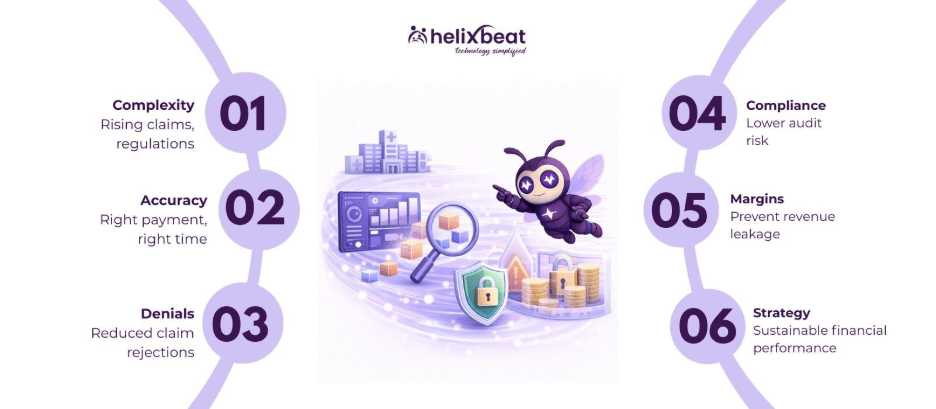
Table of Contents
The Reality of Today’s Healthcare Payments
Think about a typical hospital or medical group.
Every single day they:
- Submit hundreds (or thousands) of claims
- Verify insurance coverage
- Process co-pays and deductibles
- Handle claim denials
- Manage reimbursements
- Respond to audits
- Reconcile payments
Now imagine just a 2–3% error rate.
That small percentage can translate into millions of dollars in lost revenue annually.
This is exactly where healthcare payment integrity companies step in.
They exist to ensure that every dollar paid — whether from insurers, government programs, or patients — is accurate, compliant, and justified.
What Is Payment Integrity (In Simple Terms)?
Payment integrity means:
Paying the right amount to the right provider for the right service at the right time.
Sounds simple, right?
But in healthcare, it’s anything but simple.
With complex coding systems like ICD-10 and CPT, multiple payer contracts, policy variations, prior authorizations, and value-based payment models, errors are common.
Healthcare payment integrity companies use advanced analytics, automation, and auditing processes to detect:
- Overpayments
- Underpayments
- Duplicate claims
- Fraud, waste, and abuse
- Coding inaccuracies
- Contract misalignments
And they fix them before they damage your bottom line.
Why Organizations Need Healthcare Payment Integrity Companies More Than Ever
1. Rising Claim Denials
Claim denials are increasing every year.
A missing modifier.
An outdated authorization.
A simple coding mismatch.
Suddenly, revenue is delayed for 30–90 days.
Healthcare payment integrity companies help reduce denial rates by:
- Pre-submission claim validation
- Coding audits
- Real-time contract compliance checks
Example:
A multi-specialty clinic was experiencing a 12% denial rate. After partnering with healthcare payment integrity companies, denial rates dropped to 5%, improving cash flow within three months.
2. Value-Based Care Is Changing the Game
Healthcare is shifting from fee-for-service to value-based models.
That means payments are tied to:
- Quality metrics
- Patient outcomes
- Cost efficiency
Incorrect payment calculations in value-based contracts can lead to serious financial losses.
Healthcare payment integrity companies ensure that:
- Performance metrics are calculated accurately
- Risk adjustments are properly coded
- Incentive payments are correct
Without integrity checks, providers can lose earned bonuses — or face clawbacks later.
3. Increased Regulatory Pressure
Federal and state audits are more aggressive than ever.
Programs like:
- Medicare
- Medicaid
have strict billing requirements.
Errors can result in:
- Fines
- Repayment demands
- Compliance investigations
Healthcare payment integrity companies proactively monitor compliance and reduce audit risk by maintaining documentation accuracy and coding integrity.
4. Fraud, Waste, and Abuse Risks
Healthcare fraud costs billions annually.
Even unintentional billing errors can appear fraudulent during audits.
Healthcare payment integrity companies use:
- AI-driven anomaly detection
- Predictive analytics
- Pattern recognition tools
For example, if a provider accidentally bills duplicate services due to system glitches, integrity systems flag it immediately — preventing costly investigations later.
5. Financial Margins Are Shrinking
Operating costs are rising:
- Staff salaries
- Technology investments
- Regulatory compliance
- Cybersecurity
At the same time, reimbursements are tightening.
Healthcare payment integrity companies protect margins by identifying revenue leakage that often goes unnoticed.
Example:
A regional hospital system discovered $3.2 million in underpayments after engaging healthcare payment integrity companies for contract analysis and retrospective review.
That’s money they had already earned — but never received.
The Hidden Cost of Doing Nothing
Let’s say a healthcare organization processes $200 million annually in claims.
If just 3% of payments contain errors:
That’s $6 million at risk.
Without healthcare payment integrity companies, those losses compound year after year.
And the worst part? Many organizations don’t even realize the scale of the problem.
How Payment Integrity Supports the Entire Revenue Cycle
Payment integrity isn’t just about audits. It supports the entire revenue cycle:
- Pre-Payment Review – Prevent incorrect claims before submission
- Real-Time Edits – Ensure contract alignment
- Post-Payment Analysis – Detect overpayments and underpayments
- Appeals Management Support – Recover denied revenue
- Contract Optimization – Validate payer agreements
Healthcare payment integrity companies provide full lifecycle visibility, not just surface-level checks.
The Technology Advantage
Modern healthcare payment integrity companies leverage:
- Machine learning
- Automation
- Advanced data analytics
- Real-time dashboards
Instead of manual audits that take months, organizations now get instant insights.
Imagine knowing:
- Which payer underpays most often
- Which CPT codes trigger denials
- Where coding inconsistencies occur
- Which departments create billing risks
That’s actionable intelligence.
A Real-World Scenario
Let’s walk through a simple example.
Dr. Smith’s cardiology practice submits 5,000 claims monthly.
Problems they face:
- 10% denial rate
- Frequent underpayments from two major insurers
- Audit warnings for documentation gaps
After engaging healthcare payment integrity companies:
- Automated pre-claim scrubbing reduced denials
- Contract variance tracking recovered underpaid claims
- Compliance monitoring improved documentation standards
Within six months:
- Denials reduced by 40%
- Revenue increased by 8%
- Audit risk significantly lowered
That’s not just efficiency — that’s transformation.
Why Payment Integrity Matters in 2026 and Beyond
Healthcare is evolving rapidly:
- More telehealth
- More digital payments
- More interoperability
- More data exchange
- More scrutiny
With increased data comes increased risk.
Healthcare payment integrity companies help organizations manage complexity at scale.
The future will demand:
- Real-time monitoring
- Automated compliance checks
- Cross-platform payment validation
- Fraud prevention systems
Organizations that fail to invest in integrity solutions risk falling behind financially and operationally.
The Strategic Advantage
The smartest healthcare leaders are not asking:
“Can we afford healthcare payment integrity companies?”
They’re asking:
“Can we afford not to?”
Payment integrity is no longer just about fixing errors — it’s about building sustainable financial performance.
It strengthens:
- Cash flow
- Compliance posture
- Payer relationships
- Operational efficiency
- Patient trust
When payments are accurate, disputes decrease. When disputes decrease, administrative costs drop. When costs drop, organizations can focus on care.
How PayNova Supports Payment Integrity
At PayNova, we understand that payment processing and payment integrity must work together.
Our healthcare-focused payment solutions support integrity by:
- Ensuring secure, compliant transactions
- Integrating with EHR and PMS systems
- Supporting automated reconciliation
- Enabling real-time verification
- Reducing payment delays
While healthcare payment integrity companies focus on auditing and validation, PayNova ensures the payment flow itself is smooth, secure, and optimized.
Together, integrity + payment technology create a powerful financial foundation.
Final Thoughts
Healthcare organizations today operate in one of the most complex financial environments in any industry.
Errors are expensive.
Delays are disruptive.
Non-compliance is risky.
Fraud is costly.
Healthcare payment integrity companies provide the oversight, analytics, and protection organizations need to thrive.
In a world of shrinking margins and rising scrutiny, payment integrity is no longer optional — it is strategic.
If your organization wants:
- Stronger cash flow
- Fewer denials
- Lower audit risk
- Accurate reimbursements
- Reduced revenue leakage
Then partnering with healthcare payment integrity companies isn’t just a smart move.
It’s a necessary one.
And with PayNova supporting secure, compliant payment processing, your organization gains both integrity and efficiency — exactly what modern healthcare demands.
FAQs
1. What are healthcare payment integrity companies?
Healthcare payment integrity companies help ensure claims are accurate, compliant, and paid correctly to prevent revenue loss and billing errors.
2. Why are healthcare payment integrity companies important today?
They reduce claim denials, detect underpayments, prevent fraud, and protect healthcare organizations from compliance risks.
3. How do healthcare payment integrity companies reduce revenue leakage?
They use analytics and audits to identify coding errors, duplicate claims, contract mismatches, and payment discrepancies.
4. Do healthcare payment integrity companies help with regulatory compliance?
Yes. They monitor billing practices to ensure compliance with Medicare, Medicaid, and other payer regulations.
5. Can healthcare payment integrity companies improve cash flow?
Absolutely. By minimizing errors and speeding up correct reimbursements, they help healthcare organizations maintain steady cash flow.