

In the digital age of healthcare, hospitals and clinics are no longer dependent on paper charts and manual data entry. Transitioning to electronic solutions has become a strategic step toward modernized patient care and operational efficiency. Best EHR systems for hospitals are at the forefront of this shift, redefining how healthcare providers deliver services, manage data, and streamline workflows.
Electronic Health Record (EHR) systems support clinicians by storing patient information digitally and making it readily accessible at the point of care. When properly implemented, these systems elevate quality, performance, and communication throughout healthcare facilities. In this guide, we’ll discuss the top ten benefits of EHR systems.
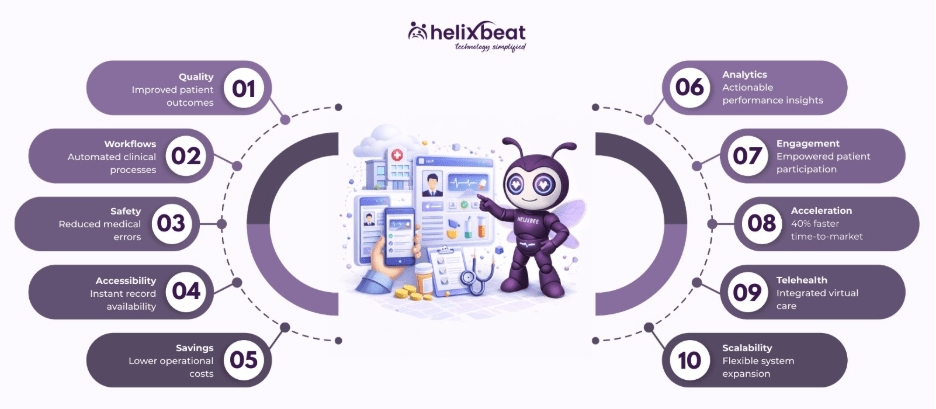
Table of Contents
Why EHR Adoption Is Critical in Modern Healthcare?
Healthcare is evolving rapidly. With rising patient expectations, regulatory requirements, and complex care coordination needs, the traditional ways of managing patient information no longer meet industry demands. EHR platforms are the answer to many challenges hospitals face today, ranging from documentation inefficiencies to gaps in communication during patient transitions of care.
Therefore, adopting the best EHR systems for hospitals supports compliance with national health IT goals, value‑based care models, and improves overall hospital performance.
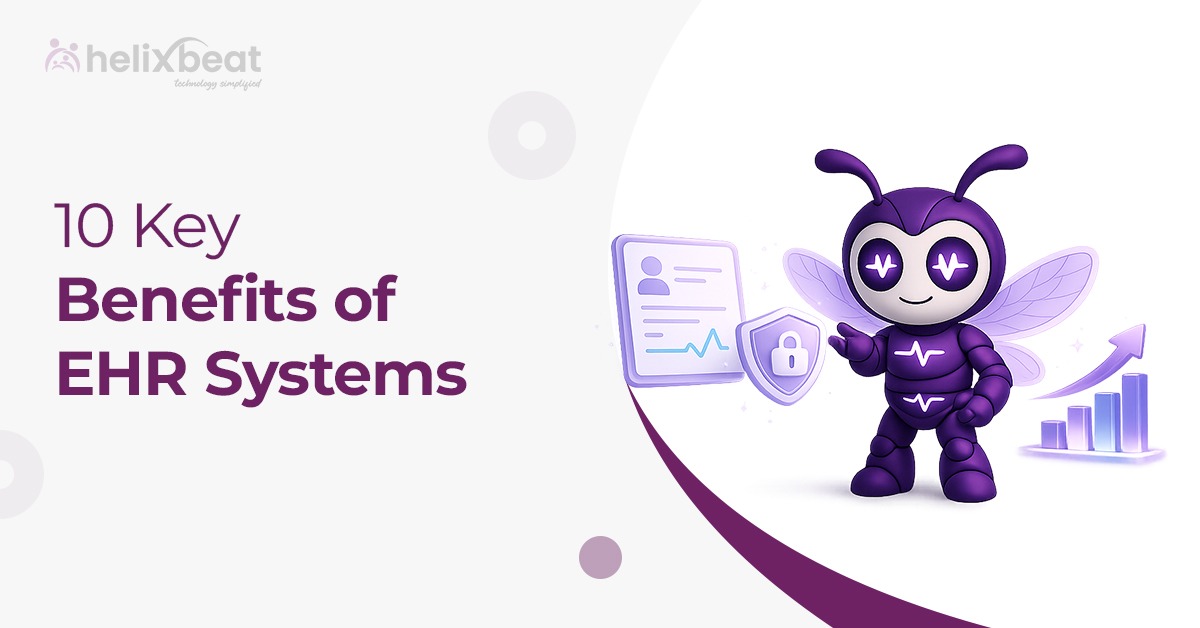
10 Key Benefits of EHR Systems
Below are the core advantages that hospitals experience when they implement high‑quality EHR solutions:
1. Improved Patient Care Quality
One of the most vital benefits of EHR systems is improved quality of care. With immediate access to patient medical histories, clinical staff can make informed decisions quickly. This real‑time access helps reduce medical errors, avoid redundant testing, and support timely clinical interventions.
EHR platforms give a comprehensive view of a patient’s health status, including allergies, medications, and previous procedures. This visibility leads to better diagnostic accuracy and reduces the risk of adverse events.
In addition, many of the best EHR systems for hospitals include clinical decision support tools that alert providers to potential drug interactions and preventive care opportunities.
2. Streamlined Clinical Workflows
Hospitals are complex environments with busy clinical schedules, documentation requirements, and multidisciplinary care teams. EHR systems simplify workflows by automating routine tasks like order entry, documentation templates, and prescription management.
Instead of manually searching through paper charts or scattered files, physicians and nurses use structured EHR interfaces to capture data efficiently. This improves productivity and reduces clerical burden.
Some EHR platforms also support role‑based dashboards, task assignment, and real‑time communication between departments, making care coordination smoother and faster.
3. Better Patient Safety
Patient safety is a foundational priority for healthcare delivery. Therefore, EHR systems introduce multiple layers of safety improvements:
- Medication safety alerts: Real‑time notifications for drug interactions, allergies, or incorrect dosages.
- Accurate documentation: Legible and standardized entries reduce interpretation errors.
- Tracking of care progress: Care teams can follow up on results or pending orders systematically.
These safety enhancements collectively contribute to better clinical outcomes and reduce preventable complications.
By choosing among the best EHR systems for hospitals, facilities can deploy robust monitoring features that support safety protocols across departments.
4. Enhanced Data Accessibility and Sharing
One of the greatest advantages of digital records is accessibility. EHR systems allow authorized clinicians to view patient information instantly, anywhere within the hospital network.
Whether during shift changes, cross‑department consultations, or emergency admissions, clinicians can instantly pull up needed records, lab results, and images.
Interoperability, a key feature of top EHR platforms, supports seamless data sharing between hospitals, laboratories, pharmacies, and specialists. This connectivity eliminates delays in care continuity and supports coordinated case management across care settings.
5. Cost Reduction Over Time
Although EHR implementation requires an initial investment, hospitals often experience significant cost savings over time. Some cost benefits include:
- Reduced administrative overhead from less paperwork
- Lowered storage costs from digitized record keeping
- Fewer duplicate tests due to shared medical records
- Improved billing accuracy
- Faster claims processing
The best EHR systems for hospitals achieve faster return on investment (ROI) through operational efficiencies and eliminate redundant processes.
6. Data Analytics and Reporting
Healthcare leaders increasingly rely on data to make strategic decisions. EHR systems capture vast amounts of structured clinical and operational data, which can be transformed into actionable insights.
Advanced reporting capabilities help hospitals:
- Track outcomes and performance metrics
- Identify trends in patient populations
- Monitor resource utilization
- Support population health initiatives
- Report quality measures to regulatory bodies
These analytics features empower hospital administrators to optimize services, improve care delivery, and benchmark performance against industry standards.
7. Better Compliance with Regulatory Standards
Healthcare is a highly regulated industry with strict requirements for quality reporting, patient privacy, and documentation integrity. EHR systems help hospitals maintain compliance with national health IT standards, clinical quality measures, and reporting mandates.
For example, certified EHR technology supports compliance with standards similar to Meaningful Use or similar regional programs by capturing structured data and generating the necessary reports.
By adopting the best EHR systems for hospitals, facilities can confidently approach regulatory reporting and audits without scrambling for manual record extraction or incomplete data.
8. Enhanced Patient Engagement
EHR systems not only support clinicians but also empower patients. Many modern EHR platforms include patient portals that allow individuals to:
- View personal health records
- Check lab results
- Communicate with care teams
- Schedule appointments
- Request prescription refills
Active patient involvement in health management has been linked to better adherence to treatment plans and improved satisfaction scores. EHR‑driven engagement strengthens the bond between patients and providers.
9. Support for Telehealth and Remote Care
Telehealth has become a critical service, especially in situations that limit in‑person visits. Many leading EHR systems integrate with telehealth platforms, allowing clinicians to conduct virtual visits while accessing real‑time patient data.
Integration eliminates the need for separate applications, reduces friction in clinical documentation, and keeps telehealth encounters part of the centralized medical record.
As hospitals look to expand remote care services, the best EHR systems for hospitals are designed with built‑in or connected telehealth functionality.
10. Scalability and Adaptability
Healthcare needs evolve rapidly due to demographic changes, new treatment protocols, and emerging health challenges. The most effective EHR solutions are scalable and adaptable, supporting:
- Expansion to new specialties or service lines
- Multiple departments across large hospital systems
- Cloud‑based deployment for distributed access
- Mobile access for clinicians on the go
This flexibility helps hospitals adjust to growth, network expansion, and future‑oriented care delivery models.
How FHIR Servers Enhance EHR Productivity?
FHIR servers play a key role in modern EHR systems by standardizing the exchange of healthcare data. These servers provide a structured, consistent way to share patient information across multiple platforms, devices, and applications.
Key benefits of integrating a FHIR server into EHR systems include:
- Seamless Data Exchange: FHIR servers allow real-time sharing of patient records, lab results, and imaging reports between hospitals, labs, and specialist clinics.
- Reduced Administrative Burden: Physicians can access comprehensive patient data in a single interface without manually coordinating with multiple departments.
- Support for Telehealth and Mobile Access: FHIR servers enable secure data retrieval on mobile devices, so physicians can review patient information anytime, anywhere.
- Enhanced Clinical Decision Making: With standardized data formats, EHR systems can leverage predictive analytics, alerts, and clinical decision support more effectively.
Unlock Seamless Healthcare Interoperability with FUSION
Built by Helixbeat, FHIR server FUSION leverages RESTful APIs for plug-and-play integration, enabling seamless connectivity with legacy systems, modern EHRs, and emerging tools like wearable devices and telehealth platforms. This isn’t just compliance, it’s acceleration.
FUSION goes deeper by embedding critical medical coding systems like SNOMED CT, LOINC, and ICD-10 directly into its architecture. This built-in intelligence maintains data consistency and accuracy, transforming raw information into actionable insights ready for clinical decisions, regulatory reporting, and advanced analytics. No more wrestling with mismatched formats or manual mappings: FUSION handles the heavy lifting!
Organizations using FUSION report up to 70% faster data sharing, slashing referral delays by 60% and reducing redundant tests by 25%. That’s not hype; it’s a measurable impact, with providers saving $1,000–$2,000 per patient annually through streamlined claims and operations.
How FUSION Ignites Data-Driven Innovation?
The true magic of healthcare FHIR lies in its potential to fuel innovation, and FUSION amplifies this like no other. As a reliable engine for standardized data flows, it powers downstream applications that were once out of reach.
Take chronic disease management, for example. By integrating real-time data from wearables and EHRs, FUSION enables continuous monitoring and proactive interventions, potentially cutting hospital readmissions and optimizing therapies. Or, imagine a telehealth consultation that’s instantly better because the doctor has the patient’s full history right there. FUSION makes that happen, giving virtual care a huge boost in quality and making patients much happier.
Certified Excellence
FUSION is officially certified by the Drummond Group for FHIR-based interoperability, validating its conformance with healthcare data exchange standards HL7, FHIR, and SMART on FHIR. This certification demonstrates that FUSION meets industry-recognized benchmarks for secure, standardized data exchange — giving you the confidence to integrate seamlessly across systems.
What This Means for You?
In a complex healthcare ecosystem, FUSION simplifies connectivity and safeguards data integrity. With enterprise-grade uptime (99.99%) and secure authentication powered by OAuth2 and encrypted endpoints, it supports trusted, real-time collaboration between hospitals, labs, and payers.
Whether you’re mapping USCDI elements for regulatory reporting or automating data flows for public-health initiatives, FUSION keeps you compliant with current interoperability frameworks and ready for future mandates.
Final Thoughts
EHR systems are no longer optional but foundational to modern healthcare delivery. By transitioning to the best EHR systems for hospitals, healthcare organizations unlock new capabilities in patient care quality, operational efficiency, clinical safety, and data‑driven decision‑making.
If you’re ready to take your interoperability to the next level, explore FUSION and connect your EHR systems seamlessly across platforms for faster, smarter, and more secure patient care.
FAQs
1. How do EHR systems improve patient care?
EHR systems provide clinicians instant access to medical histories, lab results, and treatment plans, reducing errors and supporting timely decisions.
2. Can EHR systems reduce hospital costs?
Yes, EHR systems lower administrative expenses, reduce duplicate testing, and improve billing accuracy, contributing to cost savings over time.
3. Are EHR systems secure for patient data?
Top EHR platforms use encryption, access controls, audit trails, and compliance with privacy regulations to protect sensitive patient information.
4. How do EHR systems support telehealth?
Modern EHRs integrate with telehealth platforms, enabling virtual visits, real-time documentation, and centralized patient records for seamless remote care.
5. Do EHR systems enhance patient engagement?
Yes, EHRs often include patient portals that allow access to health records, lab results, appointment scheduling, and direct communication with providers.