

Healthcare technology is moving at lightning speed. Practices are adopting online portals, mobile apps, and digital billing systems to improve efficiency and patient experience. But in the middle of all this innovation, one priority remains unchanged: protecting patient data. That’s where HIPAA compliance payment methods come in.
A secure payment system does more than just process transactions—it safeguards sensitive financial and health data while keeping your practice compliant with federal regulations. For many practices, the question isn’t whether they need HIPAA-compliant systems—it’s how to make sure their payment systems are fully audited and protected. That’s where solutions like PayNova step in, offering modern, secure, and compliant payment methods billing software.
In this guide, we’ll walk you through why auditing your payment system matters, how to perform a thorough audit, the pitfalls to avoid, and best practices for maintaining compliance—using PayNova’s HIPAA-compliant payment methods as a trusted solution throughout.
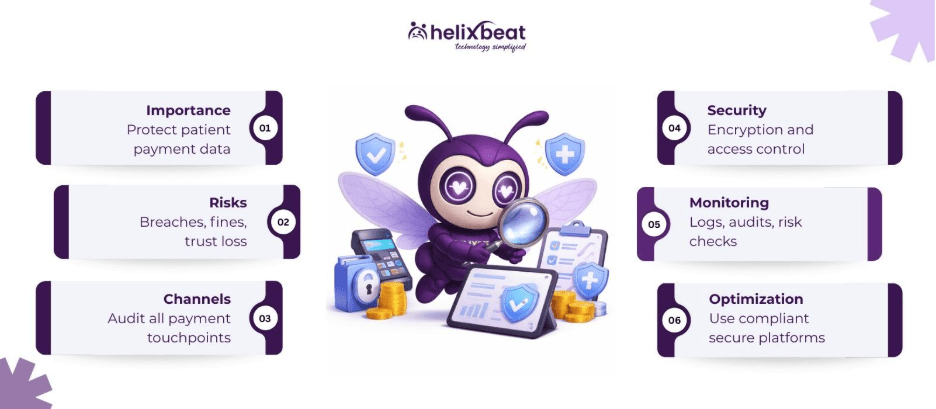
Table of Contents
Why HIPAA Compliance Matters for Payment Systems
Every transaction in your practice—from credit card payments to online patient billing—carries sensitive information. This includes names, insurance numbers, transaction histories, and sometimes parts of patients’ health data. Failing to secure this information can lead to costly breaches, fines, and lost patient trust.
HIPAA compliant payment methods provide secure mechanisms for handling financial data. These systems implement encryption, access controls, and detailed audit logs to ensure that patient payment information remains private and secure.
The two most relevant aspects of HIPAA for payment systems are:
- The Privacy Rule: Governs how healthcare organizations use and disclose patients’ protected health information (PHI). This includes financial data associated with care.
- The Security Rule: Requires administrative, technical, and physical safeguards to protect electronic PHI (ePHI), including payment data.
Using HIPAA compliant payment methods billing software ensures that your systems integrate these safeguards, providing encryption, secure authentication, and tracking capabilities that help maintain compliance.
HIPAA compliant payment methods are designed to prevent these issues. They encrypt data, manage user access, and create detailed logs of every transaction. Solutions like PayNova integrate these protections seamlessly, so you don’t have to worry about whether your software meets compliance standards.
Take the HIPAA Security Rule, for example—it mandates administrative, technical, and physical safeguards for electronic PHI. A payment system that isn’t secure can create a backdoor for breaches. By using PayNova’s HIPAA-compliant payment methods credit card processing, your transactions are encrypted end-to-end, access is tightly controlled, and every action is logged automatically.
Real Risks: When Payment Systems Fail
Even modern practices aren’t immune to breaches. Consider a 2022 incident involving a U.S.-based healthcare provider whose outdated billing system exposed thousands of patient records, including credit card numbers and insurance data. Staff only realized the problem after patients reported unauthorized charges.
This is the kind of scenario that auditing your payment system can prevent. With PayNova’s HIPAA-compliant payment methods billing software, you get proactive alerts, secure encryption, and audit-ready logs—all designed to prevent similar breaches.
Auditing isn’t just a compliance checkbox—it’s a patient safety measure. Ensuring your payment system is secure helps you avoid incidents that could damage your reputation and put patients’ financial and medical information at risk.
Step 1: Map All Payment Channels
Start your audit by identifying every way your practice accepts payments:
- Online patient portals
- Mobile applications
- In-person credit card terminals
- Recurring or subscription billing
Each channel needs to meet HIPAA standards. With PayNova, all channels integrate seamlessly into a single HIPAA-compliant platform, ensuring consistency and security across the board. Using HIPAA compliant payment methods USA or elsewhere, PayNova supports encryption and secure transaction processing for every channel.
Step 2: Review Access Controls
Who can access your payment system? Not everyone needs full access. Role-based permissions ensure staff can only access what’s necessary for their job. Multi-factor authentication or biometrics add an extra layer of protection.
During your audit, ask:
- Are user roles properly defined?
- Are authentication protocols strong and enforced?
- Are access rights updated regularly as staff roles change?
With PayNova’s HIPAA-compliant payment methods credit card processing, access controls are built-in, making audits simple and ensuring that even internal staff can’t unintentionally compromise patient data.
Step 3: Check Encryption and Security
Encryption is a non-negotiable requirement for HIPAA compliance. Both stored and transmitted payment data should be encrypted to prevent interception.
When auditing, verify:
- That all credit card and billing data are encrypted at rest and in transit
- That encryption standards meet current best practices, like AES-256
- That legacy systems or backups aren’t storing unencrypted data
PayNova’s platform automatically encrypts all transactions using the latest standards, so you can confidently demonstrate compliance with HIPAA compliant payment methods billing software.
Step 4: Inspect Audit Trails
Audit trails are your window into system activity. They log every access, change, and disclosure of sensitive data.
During your audit, confirm:
- Are logs detailed enough to trace all activity?
- Are alerts triggered for suspicious behavior?
- Are audit logs reviewed regularly?
With PayNova, detailed logs are maintained automatically, giving you real-time insights into every financial transaction. These logs make audits easier and ensure compliance with HIPAA rules.
Step 5: Assess Vendors
Many payment systems rely on third-party providers. It’s not enough to trust that your vendors are compliant—you need proof.
During your audit, review:
- Vendor HIPAA certifications and documentation
- Security measures for payment processing
- Responsiveness to compliance queries
Choosing PayNova’s HIPAA-compliant payment methods credit card processing ensures that your vendor is fully aligned with HIPAA regulations, reducing risk across the payment ecosystem.
Step 6: Conduct Regular Risk Assessments
HIPAA mandates ongoing risk assessments. When auditing your payment system, consider:
- Are software updates and security patches applied timely?
- Is the network tested for vulnerabilities?
- Are encryption and access controls effective?
PayNova helps streamline these assessments by providing continuous monitoring and automated alerts for potential risks, keeping HIPAA compliant payment methods effective over time.
Common Pitfalls to Avoid
Even with a solid platform, audits can reveal gaps if you’re not careful. Common issues include:
- Outdated software without encryption or audit logs
- Employees unaware of HIPAA requirements
- Third-party vendors without proper certifications
- Delayed security patches
By integrating PayNova’s HIPAA-compliant payment methods billing software, these risks are minimized. Automated updates, encrypted transactions, and built-in logging ensure that audits are smooth and effective.
Best Practices for Maintaining Compliance
Once your audit is complete, keep your payment system secure with these strategies:
- Use comprehensive HIPAA-compliant software
Platforms like PayNova combine encryption, access control, and audit logs into one solution.
- Train your staff regularly
Continuous education on handling sensitive financial and medical data reduces human error.
- Perform recurring audits
Quarterly or semi-annual audits keep your system aligned with HIPAA standards.
- Monitor vendors proactively
Ensure third-party systems remain compliant and updated.
- Document policies and procedures
Written guidelines make audits easier and demonstrate compliance.
Following these practices ensures that PayNova’s HIPAA-compliant payment methods credit card processing solution continues to safeguard patient data reliably.
Leveraging Technology for Seamless Compliance
Modern payment systems do more than process transactions—they simplify HIPAA compliance. Look for:
- End-to-end encryption
- Role-based access and multi-factor authentication
- Comprehensive audit logs
- Automatic updates aligned with HIPAA standards
PayNova delivers all of this in a single platform. Whether you’re processing payments online, in-person, or via recurring billing, PayNova’s HIPAA-compliant payment methods globally make audits easier, reduce risk, and free your team to focus on patient care.
Future-Proofing Your Payment System
HIPAA regulations evolve. Your payment system must be flexible to keep pace:
- Choose scalable, adaptable HIPAA-compliant solutions like PayNova
- Conduct regular risk assessments and system audits
- Update staff training and processes continually
By future-proofing with PayNova, your practice ensures ongoing compliance while minimizing exposure to fines or breaches.
Conclusion
Auditing your payment system is more than a compliance requirement—it’s an investment in patient trust, safety, and your practice’s reputation. HIPAA compliant payment methods are essential, and platforms like PayNova make it easy to maintain secure, efficient, and compliant payment processes.
From credit card processing to online billing, every transaction should be secure. With PayNova’s HIPAA-compliant solutions, encryption, audit trails, and access controls are built-in, giving your practice confidence in compliance and patient data security.
Investing in PayNova’s HIPAA-compliant payment methods billing software is a smart step toward reducing risk, simplifying audits, and protecting your patients—today and in the future.
FAQs:
1. How often should HIPAA audits be performed?
Audits should be conducted at least annually, or whenever significant system changes occur.
2. Why should audit findings always be addressed promptly?
Unresolved findings can result in violations, fines, and increased security risks.
3. Why is it important to establish audit scope and objectives?
Defining scope ensures that all systems handling PHI are properly reviewed, preventing gaps in compliance.
4. Can PayNova help simplify HIPAA audits?
Yes! PayNova provides automated audit logs, encrypted transactions, and built-in compliance reporting for smooth audits.
5. What types of payment systems require HIPAA-compliant methods?
All systems handling PHI, including online portals, credit card processing, recurring billing, and mobile payments, require HIPAA-compliant solutions like PayNova.