

The start of 2026 feels familiar for most healthcare providers. Deductibles have reset. Patients are once again trying to understand what they owe. And your front desk is handling more billing questions than ever before.
This isn’t new. But it is becoming more difficult to manage.
In the United States, over 90% of people have some form of health insurance. A large portion of that coverage comes from employer-sponsored plans. But here’s the shift—more of these plans are now high-deductible health plans (HDHPs). That means patients are paying more out of pocket before insurance contributes anything.
This is where things change for your practice.
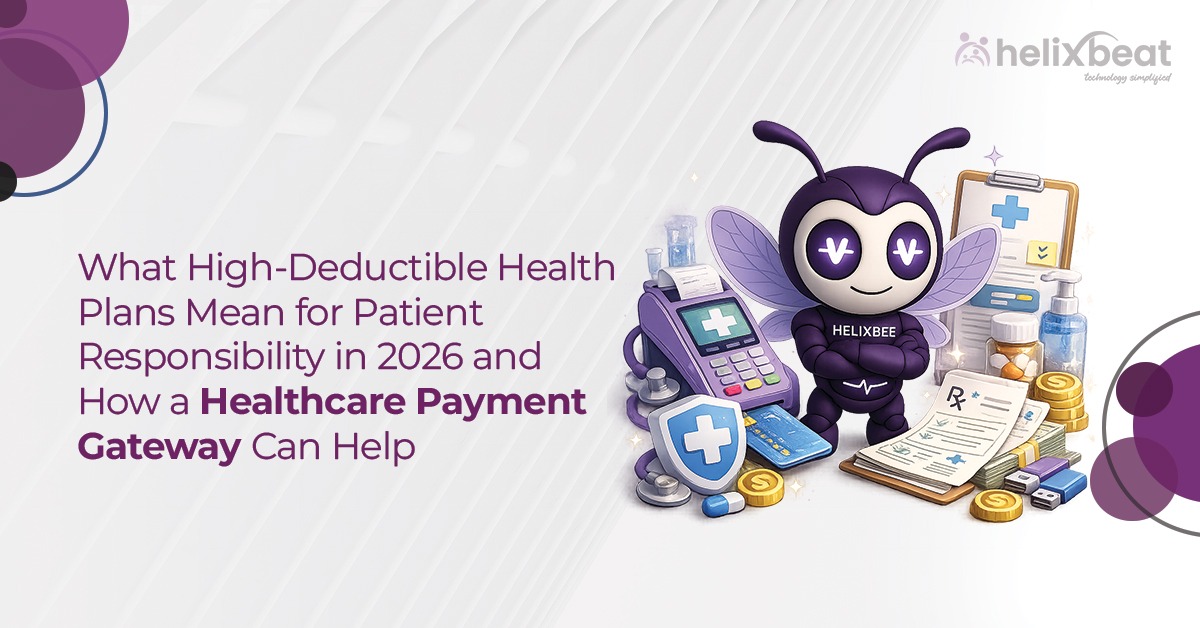
Patients are no longer just responsible for small copays. They are now responsible for hundreds—or even thousands—of dollars upfront. And without the right systems in place, collecting those payments becomes a challenge. This is exactly where a healthcare payment gateway starts to make a real difference.
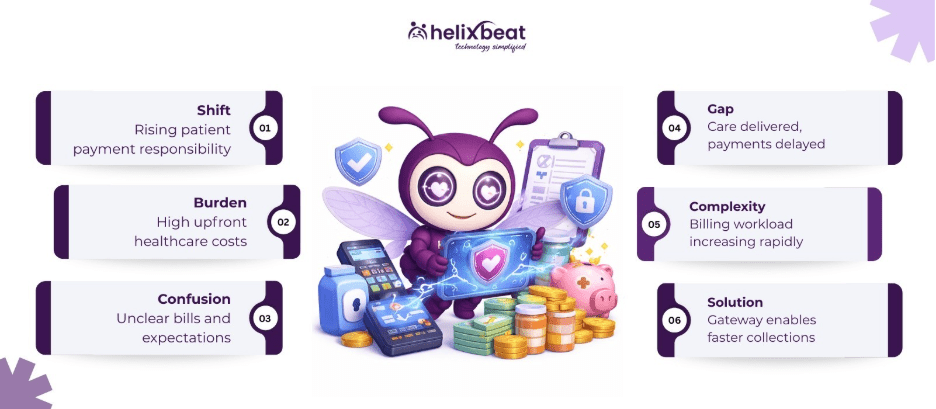
Table of Contents
The Continued Rise of High-Deductible Health Plans in 2026
Let’s start with the basics: the high deductible health plan meaning.
A high-deductible health plan is defined by the IRS as a plan with a minimum deductible of at least $1,700 for individuals and $3,400 for families in 2026. Out-of-pocket maximums can go much higher.
At first glance, these plans seem attractive. Lower monthly premiums make them appealing for employers and employees. Many are paired with Health Savings Accounts (HSAs), which offer tax benefits.
But the reality is different.
A simple high deductible health plan example looks like this:
A patient visits your clinic expecting to pay a $30 copay. Instead, they receive a bill for $400 because they haven’t met their deductible yet.
That moment of surprise? It happens every day.
Even patients enrolled in what they believe are the best high-deductible health insurance plans often don’t fully understand how much they’ll owe until after care is delivered.
And that confusion flows directly into your billing process.
How Patient Responsibility Has Changed
Not long ago, most patients paid predictable amounts—copays, small balances, and occasional deductibles.
That model no longer applies.
With high-deductible plans:
- Patients pay the full cost of services until the deductible is met
- Insurance only applies negotiated rates—not immediate payments
- Bills arrive weeks later, often higher than expected
This creates a disconnect.
Patients walk into your practice believing they are “covered.” But in reality, they are closer to self-pay patients during the early part of the year.
This is one of the biggest disadvantages of high-deductible health plan structures.
And your practice feels the impact immediately.
The Growing Gap Between Care and Payment
You’ve likely seen the pattern already.
A patient completes a visit. Everything goes smoothly. But when the bill arrives:
- They call your front desk with questions
- They delay payment
- Or they avoid the bill altogether
It’s not always about unwillingness to pay.
It’s about timing and affordability.
For many families, a $600 or $1,000 bill in January or February feels overwhelming. Budgets are tight after the holidays. Savings may not be available. And healthcare becomes something they postpone.
This creates a growing gap between:
Services provided → Payments collected
And without intervention, that gap keeps increasing.
A healthcare payment gateway helps close this gap by bringing clarity and convenience into the process—before the problem escalates.
Why Medical Billing Is Becoming More Complex
When patients owe more, they ask more questions.
Your staff is now handling:
- Insurance confusion
- Payment disputes
- Requests for breakdowns and itemized bills
- Follow-ups on unpaid balances
Instead of collecting a $25 copay at the front desk, your team is chasing $500 after the visit.
That shift matters.
Larger balances take longer to collect. Accounts receivable grows. Cash flow becomes unpredictable.
And over time, this affects your entire revenue cycle.
The operational pressure is real.
This is where a healthcare payment gateway becomes more than just a payment tool. It becomes part of your strategy.
The Importance of Upfront Cost Transparency
Think about the patient experience for a moment.
A patient schedules an appointment. They show up, receive care, and leave assuming insurance will handle most of the cost.
Then, weeks later, they receive a bill for $700.
That surprise creates frustration—even if the charge is accurate.
Now imagine a different scenario.
Before the visit, the patient receives a message:
“Your estimated balance for this visit is $120. You can pay now or at the clinic.”
This changes everything.
When patients know what to expect:
- They prepare financially
- They ask questions earlier
- They trust your practice more
A healthcare payment gateway enables this kind of transparency by allowing you to send pre-visit payment links, estimates, and reminders.
It turns billing into a predictable experience instead of a stressful one.
How a Healthcare Payment Gateway Simplifies Collections
Managing high patient responsibility doesn’t have to mean more manual work.
A healthcare payment gateway like PayNova helps streamline the entire process.
Here’s how it fits into your workflow:
1. Pre-Visit Payments
Send secure payment links before appointments. Patients can pay in advance, reducing post-visit collections.
2. Multiple Payment Options
Patients can pay via:
- Credit/debit cards
- Online portals
- Mobile payments
Convenience increases the likelihood of faster payments.
3. Automated Reminders
Instead of manual follow-ups, automated reminders keep patients informed without adding workload to your staff.
4. Real-Time Tracking
You can monitor payments instantly, reducing delays and improving cash flow visibility.
All of this happens within a single healthcare payment gateway, reducing friction for both your team and your patients.
Addressing the Financial Reality for Patients
Even with transparency, not every patient can pay upfront.
That’s the reality of high-deductible plans.
A patient might understand their bill perfectly—but still not have the funds available.
This is another major disadvantage of high-deductible health plan structures.
Without flexible options, patients may:
- Delay care
- Skip treatments
- Avoid communication
A modern healthcare payment gateway helps by offering flexibility:
- Installment payments
- Partial payments
- Easy online checkout experiences
When the payment process feels manageable, patients are more likely to engage and complete their payments.
Why Convenience Is No Longer Optional
Today’s patients expect the same experience they get in other industries.
They shop online. They pay bills digitally. They manage finances through apps.
Healthcare is no exception.
If your billing process still relies on:
- Paper statements
- Phone calls
- Limited payment options
You’re creating unnecessary friction.
A healthcare payment gateway aligns your practice with modern expectations:
- 24/7 payment access
- Mobile-friendly interfaces
- Instant confirmations
It’s not just about collecting money. It’s about meeting patients where they are.
Best Practices for Managing Patient Responsibility in 2026
Adapting to high-deductible health plans requires a shift in approach.
Here are a few strategies that work:
Start the Conversation Early
Discuss costs before the visit. Use digital tools to share estimates and payment options.
Make Payments Easy
Reduce steps in the payment process. The simpler it is, the faster you get paid.
Offer Flexible Options
Give patients choices. Not everyone can pay in full immediately.
Automate Where Possible
Use automation to handle reminders and follow-ups without increasing staff workload.
Train Your Team
Ensure your front desk understands how to explain costs and guide patients through payment options.
A healthcare payment gateway supports all of these steps without requiring major operational changes.
Turning a Challenge Into an Opportunity
High-deductible health plans aren’t going away.
If anything, they will continue to grow.
This means patient responsibility will keep increasing—and so will the pressure on your practice.
But there’s another way to look at it.
Practices that adapt can:
- Improve collections
- Strengthen patient relationships
- Reduce administrative burden
It starts with understanding the shift and responding with the right tools.
A healthcare payment gateway allows you to move from reactive billing to proactive financial management.
Final Thoughts
In 2026, the financial relationship between patients and providers has changed.
Patients are paying more. They are confused more often. And they need clearer communication than ever before.
Your practice can’t rely on old billing methods to handle new challenges.
The question is simple:
Is your current system built for today’s reality?
If not, this is the right time to rethink your approach.
PayNova, as a healthcare payment gateway, helps your practice simplify payments, improve transparency, and reduce collection delays—without adding complexity to your operations.
Ready to make billing easier for your patients and your team?
Explore how PayNova can support your practice with a smarter, more efficient payment experience.
FAQs
1. What is a healthcare payment gateway in healthcare?
A healthcare payment gateway is a secure digital system that allows hospitals and clinics to collect patient payments online, in person, or through mobile devices. It simplifies billing, improves transparency, and helps practices receive payments faster.
2. What is the high deductible health plan meaning in simple terms?
The high deductible health plan meaning refers to insurance plans where patients must pay a higher amount out of pocket before insurance starts covering medical costs. These plans usually have lower monthly premiums but higher upfront expenses.
3. What are the disadvantages of high-deductible health plan for patients?
Some common disadvantages of high-deductible health plan structures include high upfront costs, delayed care due to affordability issues, confusion about billing, and difficulty managing large medical expenses early in the year.
4. Can you give a high deductible health plan example?
A simple high deductible health plan example is when a patient visits a clinic expecting a small copay but instead receives a full bill of $300–$500 because they haven’t met their deductible yet.
5. How does a healthcare payment gateway help practices?
A healthcare payment gateway helps practices by enabling pre-visit payments, offering multiple payment options, automating reminders, and improving overall collections without increasing staff workload.
6. Are high-deductible plans among the best high-deductible health insurance plans?
Some of the best high-deductible health insurance plans offer lower premiums and HSA benefits, but they can still create financial challenges for patients if not managed properly.
7. Why is a healthcare payment gateway important in 2026?
In 2026, as patient responsibility increases, a healthcare payment gateway becomes essential for improving payment transparency, reducing delays, and enhancing the patient financial experience.