

When billing creates confusion, patients avoid care. When billing creates clarity, flexibility, and trust, patients engage, pay, and heal
Healthcare has always been about diagnosis, treatment, and recovery. But in 2026, there’s a growing realization that something far less visible plays an equally powerful role in outcomes—billing.
For many patients, the healthcare journey doesn’t end in the consultation room. It ends with a bill. And that moment—often confusing, stressful, or unexpected—shapes how patients behave next.
This is where payment solutions healthcare providers like PayNova are redefining the experience. Because when billing improves, patient behavior follows.
Table of Contents
Billing Is No Longer Administrative—It’s Behavioral
Traditionally, billing was treated as a backend function. Something handled quietly after care was delivered. But that perspective is outdated.
Today, billing directly influences:
- Whether patients seek care or delay it
- Whether they pay on time or avoid payments
- Whether they trust providers or switch
- Whether they continue treatment or drop off
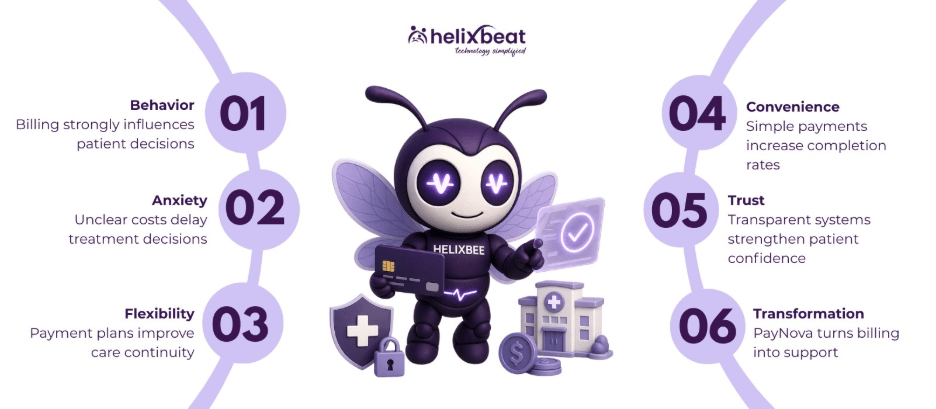
In short, billing is not just financial—it’s behavioral psychology in action.
And outdated systems are creating the wrong behaviors.
The Problem: How Billing Negatively Shapes Patient Behavior
1. Cost Anxiety Is Driving Care Avoidance
Patients today are more financially aware—and more financially stressed—than ever.
When faced with unclear or high medical costs, many patients pause. They calculate. They hesitate.
Instead of focusing on recovery, they ask:
“Can I afford this?”
This leads to a dangerous behavior:
- Delayed treatments
- Skipped appointments
- Ignored follow-ups
Without effective payment solutions, healthcare costs become a barrier to care instead of a manageable part of it.
2. Confusing Bills Trigger Avoidance
Medical bills are often:
- Complex
- Non-itemized
- Full of unfamiliar codes
For patients, this creates confusion—and confusion leads to inaction.
Behavioral science calls this a “freeze response.”
Patients don’t:
- Call to clarify
- Attempt to pay
- Engage with providers
They simply ignore the bill.
The result? Delayed payments, higher defaults, and broken communication.
3. Rigid Payment Systems Don’t Match Real Life
Traditional billing expects:
- Full payment in 30 days
- No flexibility
- No personalization
But patient lives don’t follow rigid timelines.
Different groups behave differently:
- Younger patients prefer subscription-style payments
- Older patients need flexible timelines or assistance
- Chronic patients require ongoing affordability
Without adaptable payment solutions healthcare, patients are forced into systems that don’t work for them.
And when systems don’t fit, patients drop out.
4. Financial Stress Damages Trust
Billing is often the last interaction patients have with a provider. And it leaves a lasting impression.
When patients receive:
- Unexpected bills
- Unclear charges
- Aggressive payment expectations
They feel:
- Frustrated
- Anxious
- Disrespected
Trust erodes quickly.
But trust is critical in healthcare. Without it, patients are less likely to:
- Return for care
- Follow treatment plans
- Recommend providers
5. Payment Friction Reduces Completion
Even when patients want to pay, friction stops them.
Examples include:
- Complicated portals
- Re-entering payment details repeatedly
- Limited payment options
Every extra step reduces the likelihood of completion.
This is why modern payment solutions in healthcare focus on simplicity, speed, and automation.
The Shift: How Payment Solutions in Healthcare Fix Patient Behavior
The good news? These challenges are solvable.
Modern payment solutions healthcare are designed not just to process transactions, but to influence behavior positively.
1. Transparency Builds Confidence
Patients need clarity before they need convenience.
The best electronic healthcare payment solution ensures:
- Upfront cost estimates
- Clear breakdowns of charges
- Separation of insurance vs out-of-pocket costs
When patients understand what they owe:
- Anxiety reduces
- Trust increases
- Payments become more predictable
Transparency transforms billing from a shock into a structured process.
2. Flexible Payment Plans Improve Compliance
One of the most powerful tools in payment solutions healthcare is flexibility.
There are two key models:
Installment Plans
- Fixed total amount
- Paid over time
Recurring Payment Plans
- Ongoing monthly payments
- Ideal for chronic care
The best electronic healthcare payment solution combines both options to suit different patient needs.
When patients can:
- Spread costs
- Predict payments
- Align expenses with income
They are far more likely to:
- Pay consistently
- Avoid default
- Continue treatment
3. Predictability Changes Behavior
Uncertainty drives avoidance. Predictability drives action.
Modern payment solutions healthcare create structured payment experiences where:
- Patients know exactly what to expect
- Payments align with monthly budgets
This mirrors familiar systems like:
- Subscriptions
- EMIs
- Utility billing
Predictability reduces fear—and increases engagement.
4. Digital Convenience Increases Completion Rates
Patients expect healthcare payments to work like everything else in their lives.
The best electronic healthcare payment solution offers:
- Online payment portals
- Mobile-friendly interfaces
- One-click repeat payments
- Automated reminders
These features:
- Reduce effort
- Eliminate delays
- Improve payment completion rates
However, true convenience also includes choice.
5. Patient Choice Is Critical
Not every patient prefers digital.
Some still rely on:
- Paper bills
- Checks
- Offline payments
Forcing a single method leads to disengagement.
Effective payment solutions healthcare offer:
- Digital + traditional options
- Seamless integration across channels
This ensures every patient can pay in the way they’re most comfortable with.
6. Automation Reduces Friction
Automation is a key driver of better patient behavior.
With advanced healthcare claim payment platforms, providers can:
- Send automated reminders
- Update balances in real-time
- Generate instant receipts
This reduces:
- Manual errors
- Staff workload
- Payment delays
Patients benefit from a smoother, faster experience.
7. Blockchain Brings Trust and Security
Emerging technologies like blockchain healthcare payments are adding a new layer of transparency and trust.
With blockchain:
- Transactions are secure
- Records are immutable
- Data is transparent
This builds confidence among patients who are increasingly concerned about:
- Data security
- Payment accuracy
While still evolving, blockchain healthcare payments are shaping the future of trusted financial interactions in healthcare.
8. Integrated Platforms Simplify Everything
Disconnected systems create confusion.
Modern healthcare claim payment platforms unify:
- Billing
- Claims
- Payments
- Communication
This creates a seamless ecosystem where:
- Patients get a single, clear view
- Providers reduce administrative complexity
Integration is key to delivering a consistent experience.
9. Communication Drives Engagement
Payment isn’t just a transaction—it’s a conversation.
Effective payment solutions healthcare like PayNova include:
- Personalized reminders
- Multi-channel communication (SMS, email, calls)
- Real-time updates
This keeps patients informed and engaged.
When patients feel guided—not chased—they respond better.
10. Financial Support Awareness Changes Decisions
Many patients avoid care simply because they don’t know their options.
The best electronic healthcare payment solution helps providers:
- Inform patients about payment plans
- Highlight assistance programs
- Offer flexible timelines
This shifts behavior from:
Avoidance → Action
Patients are more likely to seek care when they know support exists.
Why PayNova Is at the Center of This Transformation
PayNova is built on a simple but powerful idea:
Fix the payment experience, and you fix patient behavior.
By combining:
- Flexible payment structures
- Smart automation
- Seamless integration
- Patient-first design
PayNova delivers payment solutions healthcare that:
- Improve collections
- Strengthen trust
- Enhance patient satisfaction
And most importantly, keep patients engaged in their care journey.
The Bigger Picture: Billing as a Care Experience
Healthcare is one of the most emotional experiences a person goes through.
When billing adds stress, it amplifies that emotional burden.
But when billing is:
- Transparent
- Flexible
- Simple
It becomes a support system, not a barrier.
This is the true power of modern payment solutions healthcare.
Final Thought
The hidden link is no longer hidden.
Billing shapes behavior.
Behavior shapes outcomes.
And the right payment solutions healthcare like PayNova don’t just improve payments—they improve lives.
FAQs
1. How do payment solutions healthcare improve patient behavior?
They reduce confusion, offer flexible payment options, and simplify billing, which encourages patients to pay on time and stay engaged with their treatment.
2. What is the best electronic healthcare payment solution?
The best electronic healthcare payment solution offers transparency, multiple payment options, automation, and seamless integration with billing systems.
3. How do healthcare claim payment platforms help providers?
Healthcare claim payment platforms streamline billing, reduce errors, speed up reimbursements, and improve overall cash flow for providers.
4. Are blockchain healthcare payments secure and useful?
Yes, blockchain healthcare payments enhance security, ensure transparency, and reduce fraud, making transactions more reliable and trustworthy.