

Hospitals can deliver excellent care and still lose revenue through slow, disconnected financial workflows. A wrong insurance number, missed charge, delayed claim, or confusing patient bill can hold up payment for weeks.
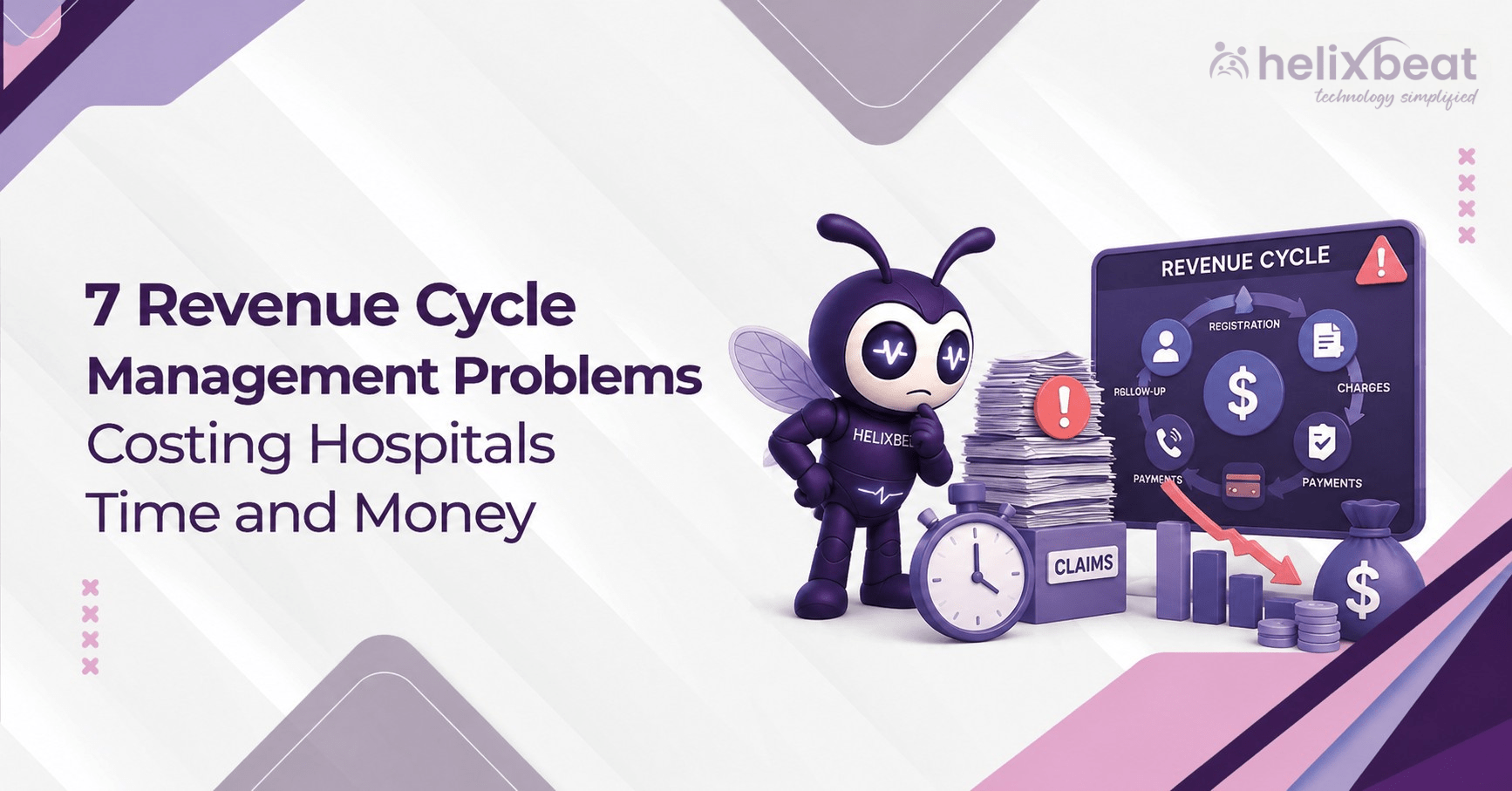
The healthcare revenue cycle usually moves through seven stages: patient registration, insurance verification, medical coding and charge capture, claim submission, payment posting, denial management, and patient collections. When each stage relies on manual entry, separate systems, and staff follow-up, small mistakes become expensive delays.
That is why revenue cycle automation healthcare is now a practical priority for U.S. hospitals. It helps teams catch errors earlier, move accounts faster, and focus on exceptions instead of repetitive tasks.
The pressure is also growing on patients. A 2026 West Health-Gallup study found that 47% of U.S. adults were worried about affording necessary healthcare, while more than 82 million had made financial trade-offs to pay for care. For hospitals, this makes clear billing, flexible payment options, and timely communication more important than ever.
Why Traditional Revenue Cycle Workflows Fall Behind
Many hospital billing processes were built around insurer reimbursement. Patient balances were handled later through mailed statements, call-center follow-up, and manual payment posting.
That model is less effective today. Patient payments can represent a substantial share of provider revenue—often cited at around 30% in industry material—yet many workflows still treat the patient as the final step rather than an active payer throughout the cycle.
Modern hospital revenue cycle management needs stronger connections between front-end registration, payer workflows, payment processing, and financial reporting. Used well, revenue cycle automation healthcare creates a shared financial workflow rather than another isolated tool.
Here are seven common problems that automation can address.
- Registration Errors Create Rework Across the Cycle
A wrong date of birth, outdated address, duplicate record, or incorrect insurance ID can affect every step that follows. The claim may be rejected, the patient estimate may be wrong, and the final statement may go to the wrong person.
Revenue cycle automation healthcare can validate required fields during registration, identify possible duplicate records, and flag missing information before the patient receives care.
This reduces avoidable corrections and gives billing teams cleaner data from the start. It also supports patient payment automation because accurate demographic and coverage information leads to more reliable bills and payment requests.
- Slow Insurance Verification Delays Payment
Insurance information can change between scheduling and the date of service. Staff may need to check multiple payer portals, confirm benefits by phone, or review incomplete records.
If eligibility, deductibles, copays, or authorization requirements are missed, the hospital may face a denial or an unexpected patient balance.
Revenue cycle automation healthcare can check eligibility earlier, return structured coverage data, and send exceptions to staff before the visit. Insurance reimbursement automation can also reduce repetitive payer checks and help teams act on missing requirements sooner.
PayNova supports insurance verification and automated insurance processing as part of its healthcare payment workflow. This can help connect coverage information with billing and collection activity.
- Missed Charges and Coding Gaps Leave Revenue Unbilled
Hospitals generate thousands of billable activities across departments. Procedures, supplies, medications, and professional services must all be documented and transferred correctly into the billing process.
When charge capture is delayed or incomplete, revenue may be lost before a claim is even created.
Revenue cycle automation healthcare can apply charge rules, flag missing documentation, identify unusual billing patterns, and route exceptions to coding or clinical teams.
Hospitals researching how to automate hospital revenue cycle management should start by mapping where clinical activity becomes a billable charge. This helps leaders identify where information is being lost, delayed, or entered more than once.
- Claim Delays and Payer Follow-Up Consume Staff Time
A claim may be held because of a formatting error, missing attachment, payer edit, or late filing issue. Staff then spend time checking status, calling payers, and moving between portals.
The financial impact can be significant. The American Hospital Association reported that 772 surveyed hospitals had more than $6.4 billion in delayed or denied claims. Half of surveyed hospitals and health systems reported more than $100 million in unpaid claims older than six months.
Revenue cycle automation healthcare can validate claims before submission, monitor claim status, prioritize aging accounts, and create work queues based on value or urgency.
Insurance reimbursement automation also gives teams earlier visibility into claims that have stalled, allowing staff to act before the balance becomes old accounts receivable.
- Manual Payment Posting Creates Inaccurate Balances
Payment posting connects money received with the correct patient account, payer, claim, and service. When this work is handled manually, even a small error can affect the patient balance and financial reports.
Common problems include:
- Misapplied payments
- Incorrect adjustments
- Duplicate patient statements
- Unprocessed refunds
- Time-consuming reconciliation
Revenue cycle automation healthcare can match payments to the correct account, apply payment rules, identify variances, and send only exceptions for manual review.
Healthcare payment automation through PayNova provides real-time transaction tracking and reporting. This helps finance teams see what has been paid, what remains outstanding, and where delays are occurring.
For a deeper look at this part of the patient journey, read Understanding Patient Payment Processing for Healthcare.
- Denial Management Starts Too Late
Many hospitals work denials one account at a time. Staff correct the claim and resubmit it, but the root cause may continue across the same payer, department, or service line.
This creates repeated rework without solving the original problem.
Revenue cycle automation healthcare can group denials by reason, identify recurring patterns, track filing deadlines, and prioritize accounts with the greatest financial impact.
For example, hospitals may discover that denials are repeatedly connected to:
- Missing prior authorization
- Incorrect patient information
- Coding errors
- Incomplete documentation
- Payer-specific claim requirements
- Missed submission deadlines
Insurance reimbursement automation can support this process by organizing claim status, payer responses, and supporting documentation. Teams can then focus on correcting the source of the denial rather than repeatedly treating the result.
- Patient Collections Are Slow and Difficult to Scale
Patients may receive a bill weeks after care with little explanation of what insurance paid or why a balance remains. If the hospital offers only a mailed statement and phone payment, collection becomes harder.
Patients may also postpone payment because they cannot pay the full balance at once or do not understand the bill.
Revenue cycle automation healthcare can support digital bills, secure payment links, automated reminders, recurring payments, and payment plans. Patient payment automation helps hospitals reach patients sooner while giving them more control over how and when they pay.
PayNova enables credit and debit cards, digital wallets, ACH payments, recurring billing, and flexible payment plans. It also supports EHR and practice-management integration, helping payment data move into existing workflows.
This is how hospitals can reduce payment delays without relying only on more calls or collection letters. Healthcare payment automation removes unnecessary steps and makes the payment experience easier to complete.
For more practical guidance, read Healthcare Payment Processing for Patient Billing.
What Should Hospitals Automate First?
Revenue cycle automation for US hospitals should begin with tasks that are repetitive, high-volume, and easy to measure.
Good starting points include:
- Eligibility checks
- Claim-status monitoring
- Payment reminders
- Payment posting
- Denial categorization
- Reconciliation
- Aging-balance alerts
A phased revenue cycle automation healthcare plan should begin with one or two workflows that have clear owners and measurable outcomes.
Before choosing a workflow, hospital leaders should ask:
- How many staff hours does it require?
- How often does it create errors?
- How much revenue is delayed?
- Does the solution integrate with existing systems?
- Can staff review and override exceptions?
Revenue cycle automation healthcare works best when it improves an existing process rather than adding another disconnected platform. A focused revenue cycle automation healthcare strategy can produce faster results than a large, unfocused transformation.
How PayNova Supports a More Connected Revenue Cycle
PayNova focuses on the payment and billing side of hospital revenue cycle management. Within that strategy, revenue cycle automation healthcare should connect payment processing, recurring billing, payment plans, reimbursement tracking, reporting, and patient-facing payment options.
Its healthcare payment automation capabilities can help hospitals:
- Collect patient balances through more payment channels
- Reduce manual billing and follow-up
- Track payments and outstanding balances in real time
- Support recurring payments and structured payment plans
- Improve payment reconciliation
- Connect payment information with EHR and practice-management systems
- Protect payment data through HIPAA- and PCI-DSS-aligned controls
PayNova does not have to replace every revenue cycle system. It can strengthen the payment layer by connecting patient collections, payment tracking, reimbursement visibility, and financial reporting.
Reduce Revenue Leakage Without Adding More Manual Work
Every revenue cycle problem has a cost.
Registration errors create rework. Verification gaps lead to denials. Missed charges reduce billable revenue. Slow payer responses increase accounts receivable. Confusing bills delay patient payments.
Revenue cycle automation healthcare helps hospitals address these problems before they become old balances. It gives teams cleaner data, faster workflows, and clearer financial visibility.
For hospitals evaluating revenue cycle automation healthcare, the goal should be simple: reduce avoidable work, shorten payment timelines, and make every financial interaction easier for staff and patients.
PayNova supports that goal by strengthening the payment layer of hospital revenue cycle management. With healthcare payment automation, flexible patient options, real-time reporting, and system integration, hospitals can improve cash flow without creating more administrative work.
Explore PayNova to see how a connected healthcare payment platform can support faster collections and more efficient hospital operations.
Frequently Asked Questions
- What is revenue cycle automation healthcare?
Revenue cycle automation healthcare uses technology to reduce manual work across registration, insurance verification, billing, payment posting, denial management, and patient collections.
- How does hospital revenue cycle management improve cash flow?
Hospital revenue cycle management improves cash flow by ensuring claims are submitted correctly, payments are posted quickly, denials are addressed early, and patient balances are collected efficiently.
- How can healthcare payment automation reduce payment delays?
Healthcare payment automation allows hospitals to send digital bills, accept multiple payment methods, automate reminders, and offer payment plans.
- How do hospitals automate patient payment collection?
Hospitals can use patient payment automation to send secure payment links, schedule reminders, process recurring payments, and provide digital payment options.