

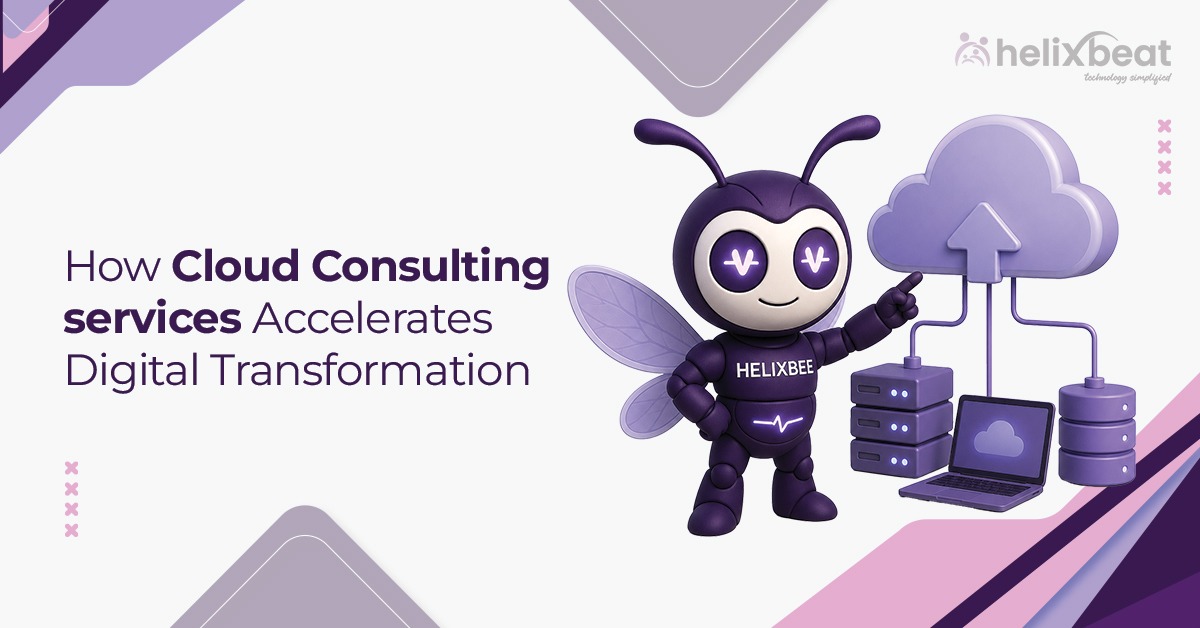
Slide decks make digital transformation look like a smooth ride, but the day-to-day reality is pretty chaotic. You end up wrestling with legacy systems that won’t play nice, manual workaround processes that waste hours, and a tech budget trapped between basic maintenance and real growth. This is where cloud consulting services earn their keep. They give organizations a structured way to move from ambition to execution.
Gartner projects worldwide public cloud spending to grow 21.3% in 2026, with the market on track to reach $1.48 trillion by 2029. That growth is happening because cloud infrastructure has quietly become the backbone of customer experience, supply chains, and product development. But buying cloud capacity and actually transforming a business are two different things. That gap is where an experienced consulting partner steps in.
Table of Contents
Why Digital Transformation Stalls Without the Right Guidance
Most companies don’t fail at digital transformation because they picked the wrong platform. They fail because they skip the planning work. However, a good cloud consulting services partner slows the process down just enough initially to speed it up later.
An IT infrastructure assessment is a useful example of this groundwork. Before recommending any move, the assessment identifies what’s actually running in your environment, what’s redundant, and what’s quietly costing you money.
Setting a Cloud Transformation Strategy That Matches the Business, Not the Trend
A cloud transformation strategy isn’t really a technology document; it’s a business one. It should tie every migration decision back to a measurable outcome: faster product releases, lower infrastructure costs, better uptime, or new revenue from data you couldn’t previously access. Consultants who specialize in this work typically start with a current-state assessment, then sort applications into categories — rehost, refactor, replatform, or retire — based on business value and technical complexity.
This is also where governance gets defined early: who approves new cloud spend, which workloads need to stay on-premises for regulatory reasons, and how success gets measured six months in.
Cloud strategy consulting, along with its broader digital transformation strategy work, digs into this planning phase in more depth if you want to see how a roadmap actually gets built.
Cloud Migration Consulting: Moving Without Breaking Things
Migration is where transformation projects are usually won or lost. Cloud migration consulting exists because moving production workloads carries real risk. Therefore, experienced consultants sequence migrations by risk and dependency, run workloads in parallel during cutover, and build rollback plans before they’re needed.
They also handle the unglamorous but critical parts: data mapping, network reconfiguration, and testing under realistic load.
Cloud Modernization Services: Making Old Applications Work Like New Ones
Migration gets your applications into the cloud. Modernization is what makes them worth being there. Cloud modernization services focus on re-architecting applications — breaking monolithic systems into microservices, adopting containers, and rebuilding data pipelines — so they can scale elastically instead of just sitting on rented infrastructure.
This matters more than most teams expect. An application that’s simply relocated to the cloud without modernization often costs more to run than it did on-premises, because it was never built to take advantage of auto-scaling or managed services.
If legacy systems are slowing this down for your organization, legacy system modernization covers how older codebases get untangled without disrupting the business.
Enterprise Cloud Consulting: Governance, Security, and Scale
Large organizations face a different set of problems than a startup moving to the cloud. Enterprise cloud consulting has to account for multiple business units, layered compliance requirements, legacy contracts, and thousands of employees who need access without creating security gaps. This is where frameworks like Zero Trust architecture, centralized identity management, and automated compliance monitoring stop being optional extras.
Therefore, security and compliance need to be part of the architecture from day one. Our cybersecurity and compliance services are worth looking at if your organization operates in a regulated space like healthcare or financial services.
Cloud Infrastructure Optimization: Where the Real Savings Show Up
Here’s something that catches a lot of teams off guard: the biggest cloud cost overruns usually happen after migration, not during it. Idle resources, oversized instances, and forgotten test environments quietly rack up bills long after the project gets declared “done.” That’s why cloud infrastructure optimization is an ongoing discipline of right-sizing resources, automating scaling policies, and applying FinOps practices so spending tracks actual usage.
What Progress Actually Looks Like
It rarely shows up as one dramatic milestone. It looks like a release cycle that used to take three weeks now takes three days, because deployments are automated instead of manual. It looks like a finance team that can finally explain what’s driving the cloud bill instead of being surprised by it every month. It looks like a support team that stops firefighting infrastructure issues and starts working on the product again. None of that happens by accident. It comes from the sequence of strategy, migration, modernization, and optimization working together.
Choosing the Right Cloud Consulting Partner
Not every provider offering cloud consulting services brings the same depth. Look for a partner who asks about your business outcomes before your technology stack, who can show real migration and modernization work rather than just certifications, and who stays involved after go-live instead of disappearing once the contract ends. Digital transformation isn’t a single project with a finish line. It’s a capability your organization builds over time, and the right partner should feel like an extension of your team.
Let’s build together. Get in touch with us!
FAQs
1. What are cloud consulting services, and do we actually need them?
Cloud consulting services help organizations plan, migrate, secure, and optimize their cloud environments with outside expertise. You need them most when you lack in-house cloud architecture experience or have tried a cloud project before that didn’t deliver expected results.
2. How is cloud migration consulting different from just moving to the cloud ourselves?
A DIY migration often skips risk sequencing, dependency mapping, and rollback planning — steps that experienced consultants build in from the start. Cloud migration consulting reduces downtime risk and catches configuration issues before they become production incidents.
3. What’s the real difference between cloud migration and cloud modernization?
Migration moves an existing application to the cloud largely as-is. Modernization redesigns that application to actually use cloud-native capabilities like auto-scaling, containers, and managed databases, which usually lowers long-term running costs.
4. How long does a typical cloud transformation strategy take to implement?
It varies by organization size and complexity, but a mid-sized enterprise transformation typically spans several months to plan and a year or more to execute across all workloads, often in phased waves rather than all at once.
5. Is enterprise cloud consulting different from consulting for smaller businesses?
Yes. Enterprise engagements deal with more business units, more compliance obligations, and more legacy integrations, so governance, identity management, and change management play a much larger role than they do for a smaller, single-team migration.