

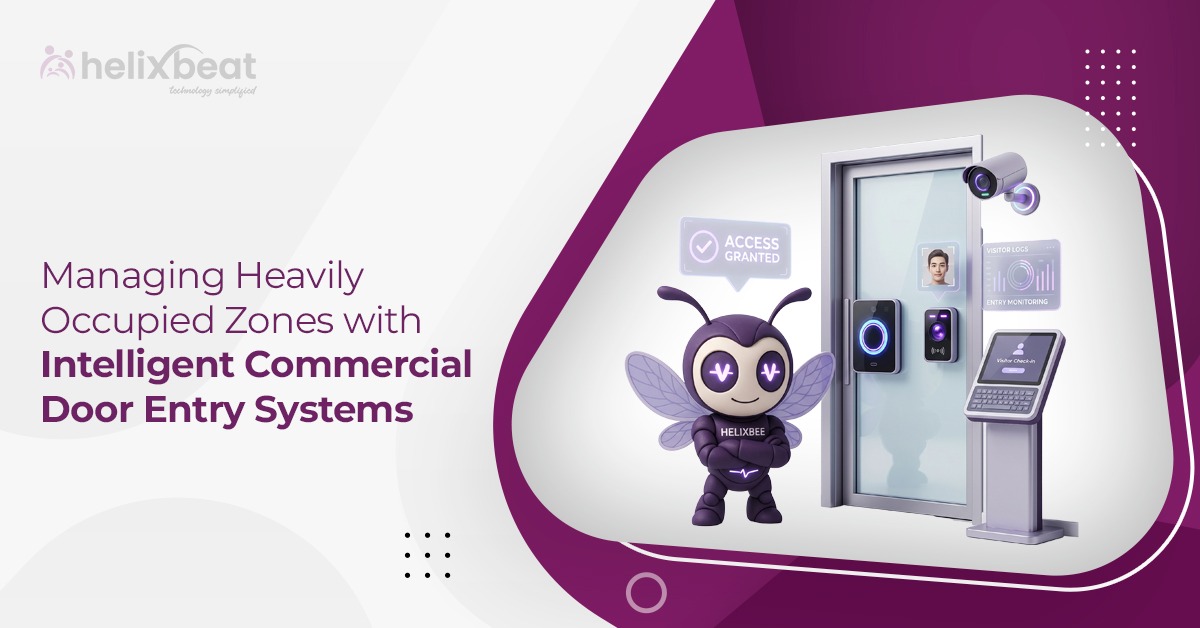
Managing a high-traffic facility is no small feat. Whether it’s a corporate headquarters buzzing with employees and clients, a hospital with hundreds of daily visitors, or a multi-tenant commercial building with dozens of moving parts — the pressure to keep people safe, operations smooth, and entry points secure is relentless. Traditional methods — clipboards, manual sign-ins, and physical key cards — simply can’t keep up anymore.
That’s exactly where intelligent commercial door entry systems step in.
These aren’t just fancy locks. They’re end-to-end security and operational ecosystems that tell you who entered, when, where they went, and how long they stayed — all in real time. If your organization manages a heavily occupied zone, this blog is your guide to understanding why upgrading your commercial door entry systems isn’t optional anymore. It’s a strategic necessity.
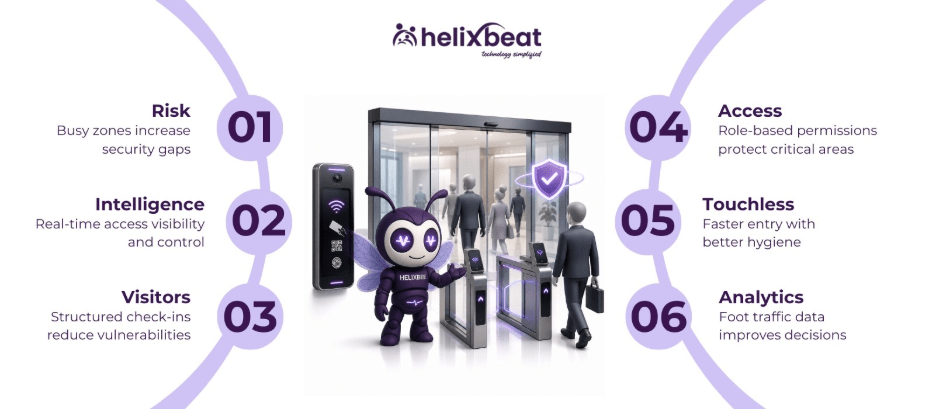
Table of Contents
The Scale of the Problem: Why Heavily Occupied Zones Are High-Risk
Think about a typical Monday morning at a large corporate office. Hundreds of employees badge in. A dozen vendors show up. Three candidates are there for interviews. A maintenance team arrives unannounced. And somewhere in that crowd — if you’re using outdated systems — is a serious vulnerability.
Heavily occupied zones create complexity that manual processes cannot manage. Bottlenecks at entry points frustrate employees. Unauthorized individuals can slip through during peak hours. Visitor logs become inaccurate. And in an emergency, there’s no reliable way to know exactly who is on the premises.
The numbers back this up. The global door entry systems market is estimated at USD 16.12 billion in 2025 and is expected to reach USD 41.12 billion by 2034, growing at a CAGR of 10.97%. That kind of investment surge doesn’t happen without reason — businesses worldwide are recognizing that entry management is a critical infrastructure problem, not an afterthought. Industryresearch
What Makes a Commercial Door Entry System “Intelligent”?
Not all commercial door entry systems are created equal. An intelligent system goes far beyond a keypad on a wall. It combines hardware, software, cloud connectivity, and analytics into one cohesive platform.
Here’s what separates a smart system from a basic one:
Real-Time Visibility — You can see who is inside the building at any given moment. Not who checked in two hours ago. Right now.
Multi-Factor Authentication — Credentials can be layered: QR codes, digital ID verification, facial recognition, or combinations of these. Approximately 47% of total installations now include multi-modal authentication, reflecting evolving end-user demands. Industryresearch
Role-Based Access Control — Not everyone needs access to every door. Intelligent access control systems assign permissions granularly, so a vendor can access the loading dock but not the server room.
Cloud-Based Management — No on-site servers to maintain. No manual updates. Everything is managed remotely, and security patches happen automatically.
Emergency Readiness — In a crisis, an intelligent system instantly generates evacuation lists, showing exactly who is on the premises and where they last checked in.
These aren’t luxury features. For any organization managing high foot traffic, they’re operational essentials.
The Visitor Problem Most Organizations Overlook
Here’s something many facility managers underestimate: visitors are often the biggest security gap in heavily occupied commercial zones.
Employees go through onboarding, background checks, and training. Visitors? They walk up to a front desk, scribble an unreadable name in a paper logbook, and get handed a sticker badge. That’s not security — that’s theatre.
Intelligent commercial door entry systems solve this with a structured visitor lifecycle:
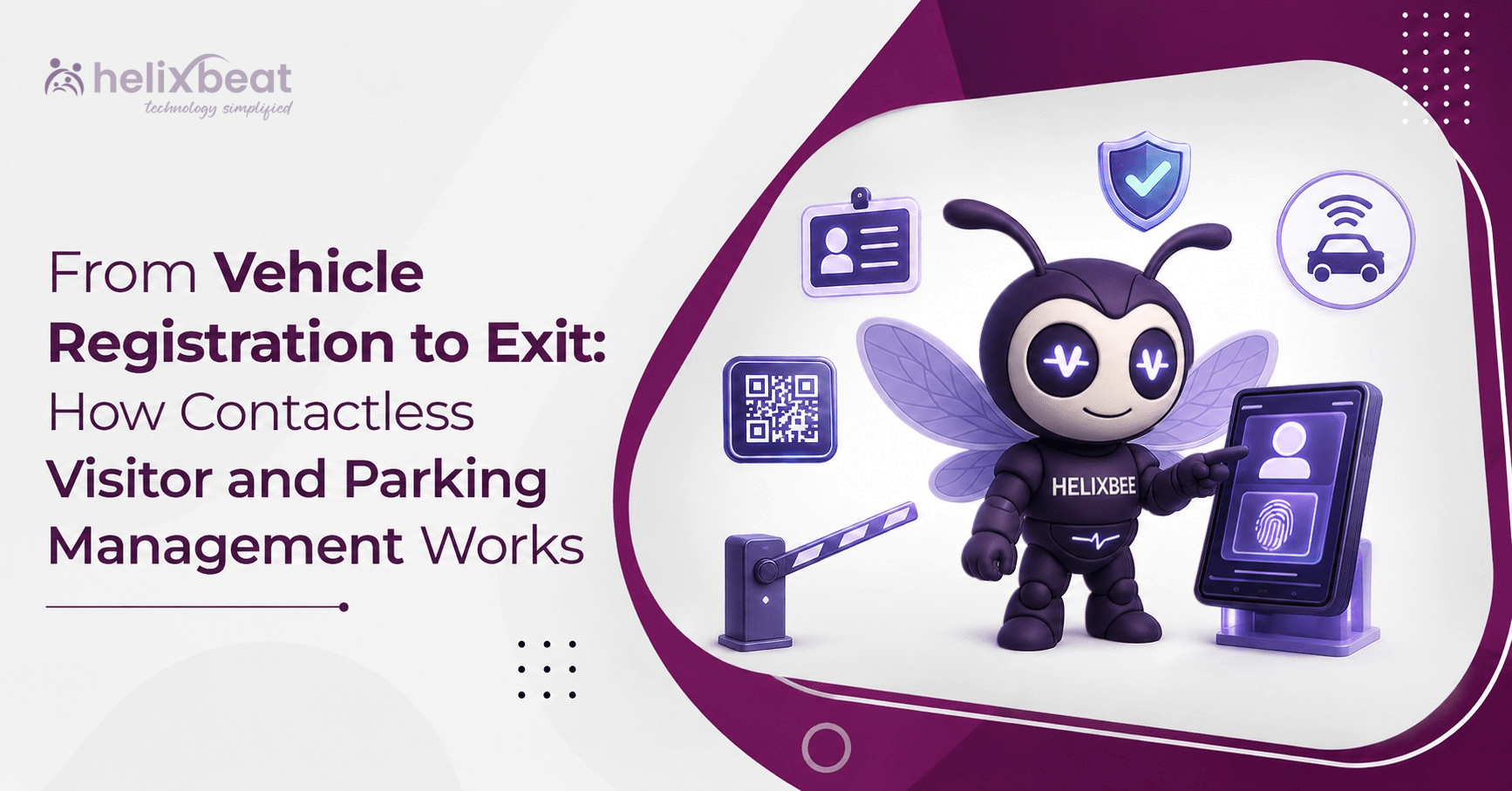
Pre-Registration — Visitors fill in their details online before arriving. The system validates their identity and issues a unique QR code. By the time they reach the front door, everything is already verified.
Touchless Check-In — On arrival, visitors scan their QR code or complete facial recognition via a kiosk. There’s no queue, no paperwork, no manual intervention. This is touchless access control systems in action — fast, hygienic, and accurate.
Instant Host Alerts — The moment a visitor checks in, their host receives a real-time notification. No more calling reception to ask “Is my 10 o’clock here yet?”
Automatic Check-Out and Data Clearance — When the visit ends, the visitor checks out with a single tap. Their access is immediately revoked, and their personal data is automatically cleared in compliance with data privacy regulations.
This is the visitor journey that modern commercial access control demands. And it’s exactly what platforms like VISTA by Helixbeat are designed to deliver.
Role-Based Access: The Cornerstone of Zone Management
Managing a heavily occupied zone means managing multiple types of people simultaneously — full-time staff, part-time contractors, vendors, clients, and guests. Giving everyone the same level of access is a recipe for security incidents.
Access control systems built on role-based logic change this completely. You define what each role can access, and the system enforces it automatically. A contractor working on the third floor doesn’t need access to the executive suite. A visitor meeting HR doesn’t need a badge that opens the data centre. The permissions are set once, applied everywhere, and logged in full.
This layered approach is especially powerful in sectors like healthcare, where patient privacy zones must remain strictly controlled, or in financial services, where regulatory compliance requires documented access trails. A smart door access system doesn’t just lock doors — it creates an auditable record of every entry and exit, which is invaluable during audits, investigations, or insurance claims.
Touchless Access: No Longer a “Nice to Have”
The post-pandemic world permanently changed expectations around physical touchpoints. High-traffic entry points with shared keypads or swipe readers became a liability — both from a health perspective and a user experience standpoint.
Touchless access control systems — powered by QR codes, mobile credentials, and facial recognition — have become the new standard in commercial door entry systems. The benefits are compounding:
- Speed: Touchless check-ins process visitors faster, reducing bottlenecks at peak hours.
- Hygiene: No shared surfaces at high-touch entry points.
- Accuracy: Biometric verification eliminates buddy-punching and credential sharing.
- User experience: Visitors and employees feel the difference immediately — it’s seamless, modern, and professional.
VISTA’s touchless check-in, for instance, allows visitors to scan their pre-issued QR code or use facial recognition at the kiosk — completing the entire entry process in seconds without touching a single surface.
Analytics: Turning Foot Traffic into Strategic Intelligence
Here’s a dimension of intelligent commercial door entry systems that often surprises facility managers: the data value.
Every check-in, every access attempt, every check-out creates a data point. Over time, these data points reveal patterns — peak entry hours, frequently visited zones, visitor-to-employee ratios, dwell times by area. This isn’t just security data. It’s operational intelligence.
Organizations using commercial access control platforms with built-in analytics can answer questions like:
- Which floors see the highest foot traffic between 9–11 AM?
- How many external visitors does the company receive per week, by department?
- Are there access attempts happening outside business hours?
- Which entry points are consistently bottlenecked?
This level of insight allows facility managers to allocate front-desk resources more efficiently, optimize space utilization, and proactively address security anomalies before they become incidents. VISTA’s dashboard delivers exactly this — real-time visitor logs, trend analytics, and access reporting all from one centralized view.
Emergency Management: When Every Second Counts
Heavily occupied zones carry elevated emergency risk simply because of the number of people present. In a fire, a security threat, or a medical emergency, the ability to instantly know who is in the building — and where — can be life-saving.
Intelligent commercial door entry systems maintain live occupancy data at all times. When an emergency occurs, administrators can pull a complete, real-time evacuation list with one click. Wardens know exactly how many people need to be accounted for, and in which zones. Compare that to manually cross-referencing paper sign-in sheets during a live evacuation. The difference is stark.
VISTA’s emergency management feature does precisely this — providing detailed, real-time tracking and quick-access evacuation lists to keep both visitors and employees safe when it matters most.
Why VISTA Is Built for Heavily Occupied Commercial Environments
VISTA by Helixbeat is a smart door access system purpose-built for the demands of busy, complex commercial spaces. It brings together every element discussed in this blog — pre-registration, touchless check-in, role-based access, real-time analytics, host notifications, emergency management, and automated data compliance — into one clean, cloud-based platform.
It’s designed for organizations that don’t have time for manual workarounds or clunky legacy systems. Here’s what sets it apart for high-traffic environments:
- No heavy hardware required — Cloud-based infrastructure means you just need tablets, kiosks, or smartphones to get started.
- Seamless integration — VISTA plugs into existing badge readers, door access hardware, and surveillance systems.
- Scales with you — Whether you manage one entry point or a multi-site campus, the platform scales without complexity.
- Compliance built in — Automatic data clearance post-visit keeps you aligned with data privacy standards without any manual effort.
- Industry-agnostic — Customizable for corporate offices, healthcare facilities, government buildings, real estate, and more.
According to Global Growth Insights, biometric and mobile-enabled commercial door entry systems now account for 41% of total new installations — a clear signal that the industry is moving decisively toward intelligent, touchless, and cloud-integrated solutions.
The Bottom Line
Heavily occupied zones deserve more than a lock and a logbook. They demand commercial door entry systems that are intelligent, adaptive, and built to manage complexity at scale. The risks of getting this wrong — security breaches, compliance failures, emergency unpreparedness — are too significant to ignore.
Access control systems like VISTA don’t just protect your doors. They protect your people, your data, your compliance posture, and your reputation. In a world where the first impression of your organization often starts at the front door, a smart door access system says something powerful: we take security seriously, and we respect your time.
If your organization manages a high-traffic commercial environment and you’re still relying on outdated visitor management processes, it’s time to look at what modern commercial access control can do for you. The upgrade is simpler than you think — and the impact is immediate.
Ready to see VISTA in action? Book your free demo today.
FAQs
Q1. What are commercial door entry systems? Commercial door entry systems are smart, cloud-based solutions that manage and secure entry points in businesses using digital check-ins, QR codes, biometrics, and role-based access control.
Q2. How do commercial door entry systems handle high foot traffic? They automate check-ins via QR codes or facial recognition, eliminating manual queues and front-desk bottlenecks — processing visitors in seconds even during peak hours.
Q3. Are touchless access control systems hygienic and secure? Yes. Touchless systems use QR codes or facial recognition — no shared surfaces, no credential sharing — making them both hygienically safe and highly accurate for identity verification.
Q4. Can VISTA integrate with existing security infrastructure? Absolutely. VISTA seamlessly connects with badge readers, door access hardware, and surveillance cameras, so you don’t need to replace your existing setup to get started.