

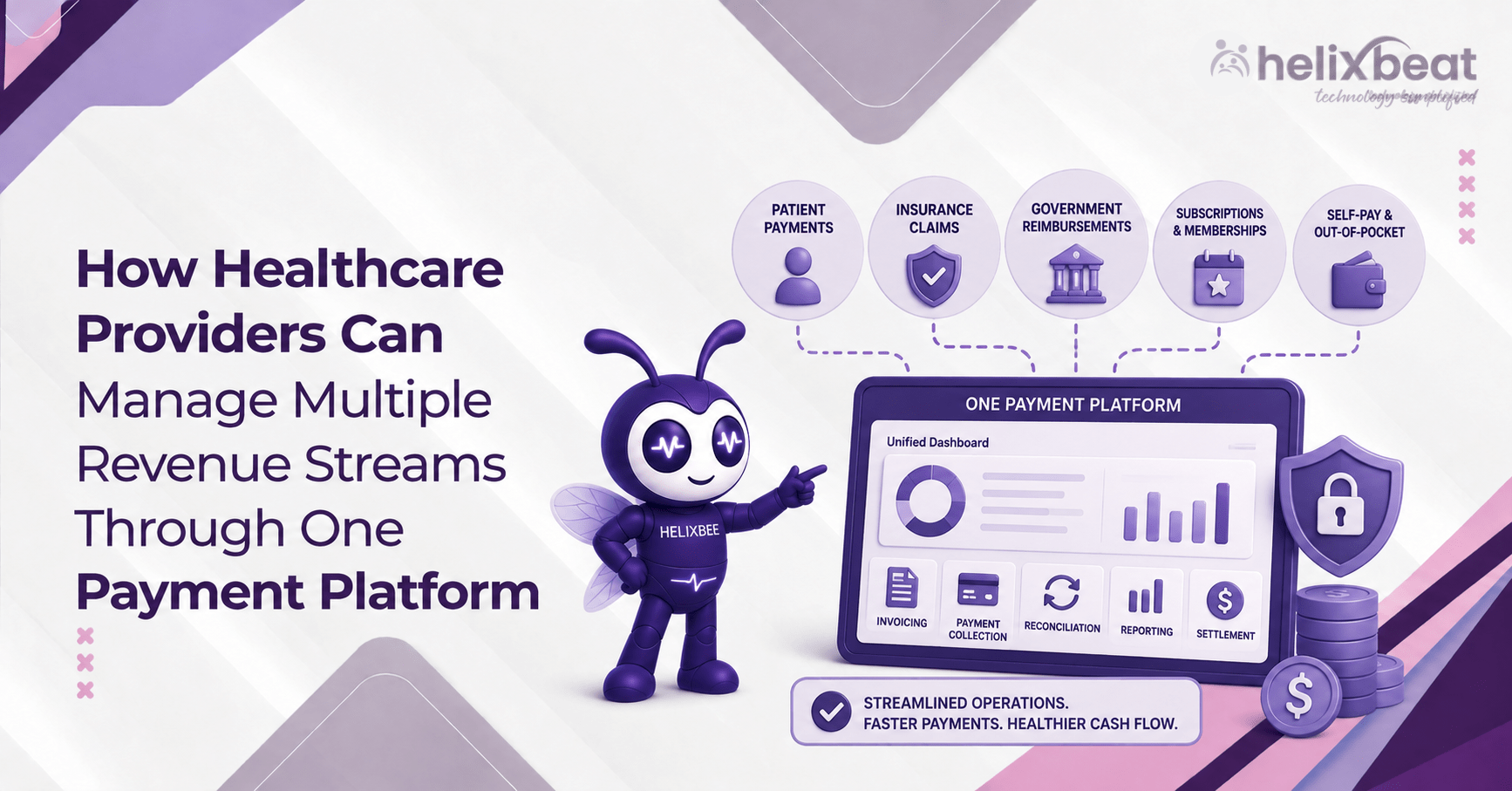
How Healthcare Providers Can Manage Multiple Revenue Streams Through One Payment Platform
Healthcare organizations no longer depend on one predictable source of income. A hospital or clinic may collect copays at the front desk, receive online payments after a visit, charge for telehealth consultations, manage recurring treatment plans, and accept payments across several departments or locations.
When every revenue stream uses a different tool, staff must switch between systems, copy information manually, and spend more time matching transactions. A Healthcare Payment Platform for Providers brings these activities into one connected environment. It helps teams collect, track, and reconcile payments while maintaining a clear view of where revenue comes from.
The goal is not simply to offer more payment methods. It is to make every payment easier to identify, manage, and report.
Why Healthcare Revenue Is More Complex Today
Healthcare revenue may come from:
- Copays, deductibles, and coinsurance
- Self-pay visits and procedures
- Telehealth consultations
- Recurring treatment or membership plans
- Diagnostic and laboratory services
- Dental and behavioral health services
- Pharmacy or specialist partnerships
- Payments collected across several locations
Each source may follow a different billing schedule. Some payments are collected before care, some at checkout, and others after a statement is sent. Recurring services may require scheduled payments, while larger balances may need flexible plans.
This makes healthcare revenue stream management difficult when every service follows a separate process. A Healthcare Payment Platform for Providers creates a common structure for these transactions without removing the details finance teams need.
What Happens When Payment Systems Are Disconnected?
Separate payment tools create extra work during payment posting, reconciliation, patient support, and reporting.
Common problems include:
- Manual transfer of payment information
- Duplicate or incomplete records
- Payments assigned to the wrong service or location
- Delayed reconciliation
- Inconsistent reports across departments
- Limited visibility into outstanding balances
- Repeated or incorrect patient reminders
- Heavy dependence on spreadsheets
These gaps can delay collections, weaken cash-flow visibility, and confuse patients.
The American Hospital Association reported that hospitals spent $43 billion in 2025 trying to collect payments owed by insurers for care already delivered. Patient payments are only one part of the revenue cycle, but the figure shows how costly complex payment administration can become.
A healthcare billing and payment platform cannot solve every revenue-cycle challenge. It can, however, reduce avoidable work by standardizing collection, reconciliation, and reporting on the patient-payment side.
How a Healthcare Payment Platform for Providers Connects Revenue Streams
A unified healthcare payment system gives providers one place to view transactions received through different channels. Payments can be organized by patient, service, department, location, or payment method.
Staff can review:
- Completed and pending payments
- Outstanding balances
- Active payment plans
- Recurring transactions
- Payment history
- Collection channels
- Department-level revenue
- Location-level performance
- Reconciliation status
A Healthcare Payment Platform for Providers does not make every revenue stream identical. It creates one shared process for managing them.
This matters when providers are deciding how to consolidate healthcare payment channels. They can continue offering convenient payment choices while keeping transaction data connected.
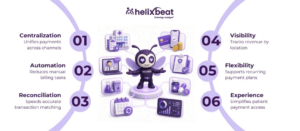
Six Ways One Payment Platform Helps Providers Manage Revenue
- Centralizes Patient Payments
Patients may pay at the front desk, through an online portal, from a mobile device, or after receiving a digital reminder. When these payments enter separate systems, staff may struggle to confirm whether a balance has been paid.
A Healthcare Payment Platform for Providers centralizes patient payment processing so employees can review transactions from one place. This reduces unnecessary searches and helps prevent repeated follow-up.
- Supports Recurring Payments and Payment Plans
Behavioral health programs, rehabilitation, dental treatment, and long-term specialty care may involve scheduled charges or installment plans.
Healthcare payment automation can help providers:
- Set approved payment schedules
- Process recurring payments
- Send due-date reminders
- Track completed or missed installments
- Give patients clearer payment information
The Federal Reserve reported that 26% of U.S. adults went without some form of medical care in 2025 because they could not afford it. Flexible plans cannot solve the wider affordability problem, but they can help patients manage legitimate balances more predictably.
- Simplifies Multi-Location Management
Multi-location clinics need both local visibility and organization-wide control. Each facility may serve different patients and offer different services.
A Healthcare Payment Platform for Providers can organize payments by branch, department, or service line. Leadership can compare performance across locations, while local teams can view the transactions relevant to their work.
A healthcare payment platform for multiple locations also helps providers apply consistent payment workflows without manually combining separate reports.
- Improves Telehealth Payment Collection
Virtual care can create payment gaps when scheduling, consultation, and billing tools are disconnected. Staff may have to contact patients after appointments or confirm payments manually.
With healthcare payment automation, providers can add payment steps before or after a virtual visit according to their policies. A Healthcare Payment Platform for Providers can then keep telehealth payments visible alongside in-person collections.
- Makes Reconciliation Faster
Reconciliation requires finance teams to connect each transaction with the correct patient account, service, department, and location. When data comes from several tools, this can take hours.
Automated payment reconciliation can match transaction details and flag records that need staff review. It can reduce:
- Manual payment matching
- Posting delays
- Duplicate entries
- Missing transaction details
- Differences between reports
For payment automation for hospitals and clinics, reconciliation is one of the clearest opportunities to reduce repetitive work.
- Provides Better Financial Visibility
Leaders need to know which services are generating revenue, where balances are aging, and whether payment plans are working as expected.
A Healthcare Payment Platform for Providers can present this information through centralized dashboards. Teams can review payment trends by department, location, service, or channel.
Better visibility strengthens healthcare revenue stream management and helps leaders identify collection issues earlier.
Benefits for Finance and Administrative Teams
The main operational benefits include:
- Less manual payment entry
- Faster automated payment reconciliation
- Fewer tracking errors
- Better cash-flow visibility
- More consistent billing workflows
- Easier multi-location reporting
- Reduced spreadsheet dependence
- More time for complex patient issues
A Healthcare Payment Platform for Providers supports staff rather than replacing financial oversight. Employees still review exceptions, answer billing questions, manage policies, and monitor results.
The platform handles repeatable work so employees can focus on tasks that require judgment. This is the purpose of centralized payment management for healthcare organizations.
How One Platform Improves the Patient Payment Experience
Patients experience financial operations through statements, portals, reminders, and conversations with staff. When these touchpoints are disconnected, they may receive conflicting information or repeated payment requests.
A unified healthcare payment system can provide:
- Clearer balance information
- Mobile-friendly payment access
- Multiple payment options
- Online payment plans
- Consistent reminders
- Easy access to payment history
- Fewer repeated billing requests
A Healthcare Payment Platform for Providers can make patient payment processing more convenient without adding pressure. Clear information and flexible options help patients understand what they owe and how they can pay.
What Should Providers Look for in a Payment Platform?
Before selecting a healthcare billing and payment platform, providers should look for:
- Online, mobile, and in-person payment options
- Recurring billing and payment plans
- Multi-location management
- Automated payment reconciliation
- Secure payment handling
- Financial dashboards and reports
- Integration with relevant healthcare systems
- Simple administrative controls
- A patient-friendly payment experience
- Reliable implementation support
The right Healthcare Payment Platform for Providers should remove fragmentation rather than add another isolated tool. Providers should confirm which capabilities are included, which require integrations, and how payment data moves between systems.
How PayNova Supports Multiple Revenue Streams
PayNova is a healthcare-focused payment and billing automation solution. It is designed to help providers centralize patient payments, automate routine billing activities, support recurring payments, and manage digital payment channels.
Its capabilities include:
- Online and mobile payments
- Recurring billing and payment plans
- Telehealth payment collection
- Automated billing workflows
- Payment tracking and reconciliation
- Centralized financial dashboards
- Secure payment experiences
PayNova can support healthcare revenue stream management by connecting the patient-payment side of financial operations. It should not be described as a complete insurance claims or end-to-end revenue cycle management platform.
Providers can learn more about healthcare payment processing for patient billing and healthcare payment processing integration through HelixBeat’s PayNova resources.
Conclusion
Understanding how healthcare providers manage multiple revenue streams starts with removing disconnected payment workflows. A Healthcare Payment Platform for Providers can bring payments from different services, locations, and channels into one organized system.
Centralization helps staff reduce manual work, improve automated payment reconciliation, and gain clearer financial visibility. It can also give patients a simpler way to view balances and choose payment options.
For hospitals, clinics, and specialty practices, PayNova offers one payment platform for healthcare providers that want to simplify the patient-payment side of financial operations.
FAQs
What is a Healthcare Payment Platform for Providers?
It helps providers collect, track, reconcile, and report patient payments in one system.
Can it manage payments from several locations?
Yes. Payments and reports can be organized by location, department, or service.
Does PayNova manage insurance claims?
No. PayNova focuses on patient billing, payments, reconciliation, and reporting.
Why is automated reconciliation useful?
It reduces manual matching, posting delays, and payment-record errors.