

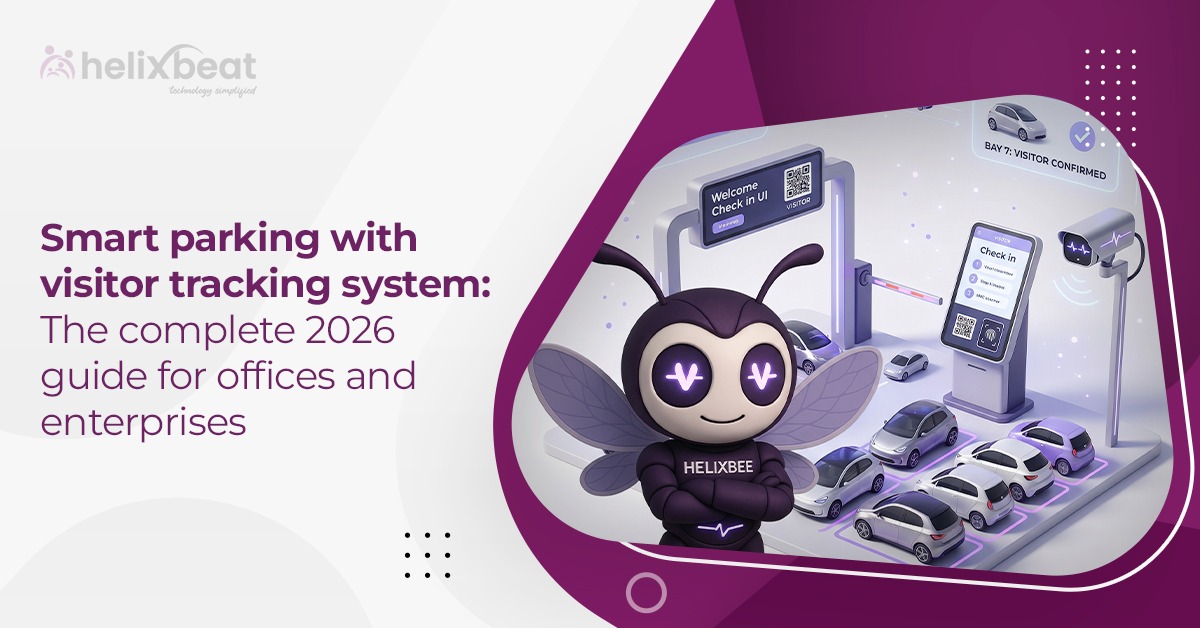
Let’s be honest — nobody walks into a business meeting feeling confident after spending 15 minutes circling a parking lot, arguing with a security guard over a paper register, or waiting at a boom barrier while someone “checks the system.”
In India’s fast-growing commercial office landscape, parking is no longer a back-office concern. It is the very first experience your visitors, clients, and employees have of your organization every single day. And in 2026, if that experience still relies on manual processes, your workplace is quietly bleeding productivity, credibility, and security.
This guide breaks down exactly how a visitor tracking system transforms smart parking for modern Indian offices and enterprises — and why businesses from Bengaluru to Noida are investing in intelligent parking infrastructure right now.
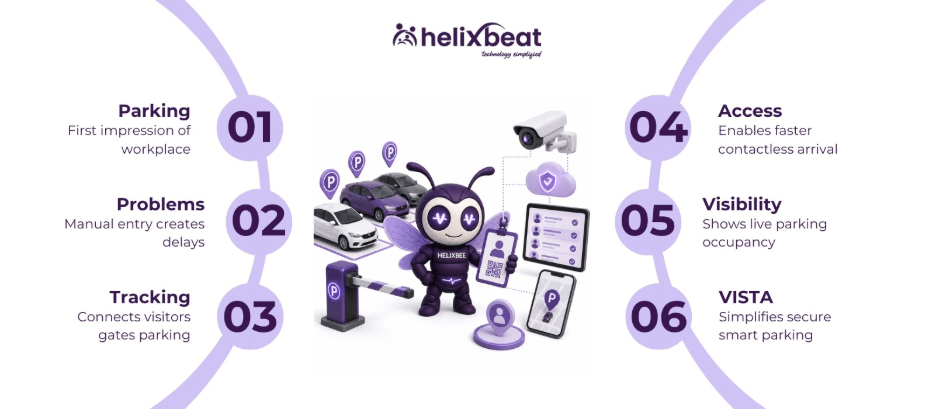
Table of Contents
Why Parking Has Become a Workplace Priority
India’s commercial real estate sector has crossed 700 million square feet of office space in 2026. Technology parks in Hyderabad, financial districts in Mumbai, and IT campuses in Pune are handling thousands of vehicle entries every single day.
The old way of managing this? A security guard, a logbook, and a phone call to reception.
The problems are predictable:
- Long queues at entry gates during peak hours
- No real-time visibility into parking occupancy
- Visitor details recorded inaccurately or not at all
- Zero audit trail for compliance or incident investigation
- Poor visitor experience from the very first touchpoint
A modern visitor tracking system solves all of this — not by adding complexity, but by replacing manual friction with intelligent automation.
What Is a Visitor Tracking System, Really?
A visitor tracking system is a digital platform that manages the entire lifecycle of a visit — from pre-registration and gate entry to parking allocation, access control, and exit logging.
When integrated with smart parking infrastructure, a visitor tracking system connects three things that have historically operated in isolation:
- Who is arriving — visitor identity, host details, purpose of visit
- Where they can go — which gates, zones, and floors are permitted
- Where they can park — which slot, for how long, in which zone
This integration is what separates a true smart parking management system from a simple boom barrier with a card reader. It is the difference between reactive security and proactive workplace intelligence.
How a Visitor Tracking System Powers Smart Parking
Here is how the end-to-end workflow looks in a well-implemented setup.
Pre-Visit: The Invite Does the Work
When a host schedules a meeting through the visitor tracking system, the platform automatically:
- Collects the visitor’s vehicle registration number
- Pre-assigns a parking zone based on visitor type (client, vendor, auditor, contractor)
- Generates a unique QR parking pass
- Sends the visitor entry instructions and a campus map
By the time your client leaves their hotel in the morning, they already know exactly where to park. No confusion. No calls to reception.
At the Gate: Contactless and Instant
This is where contactless visitor check in changes the game entirely.
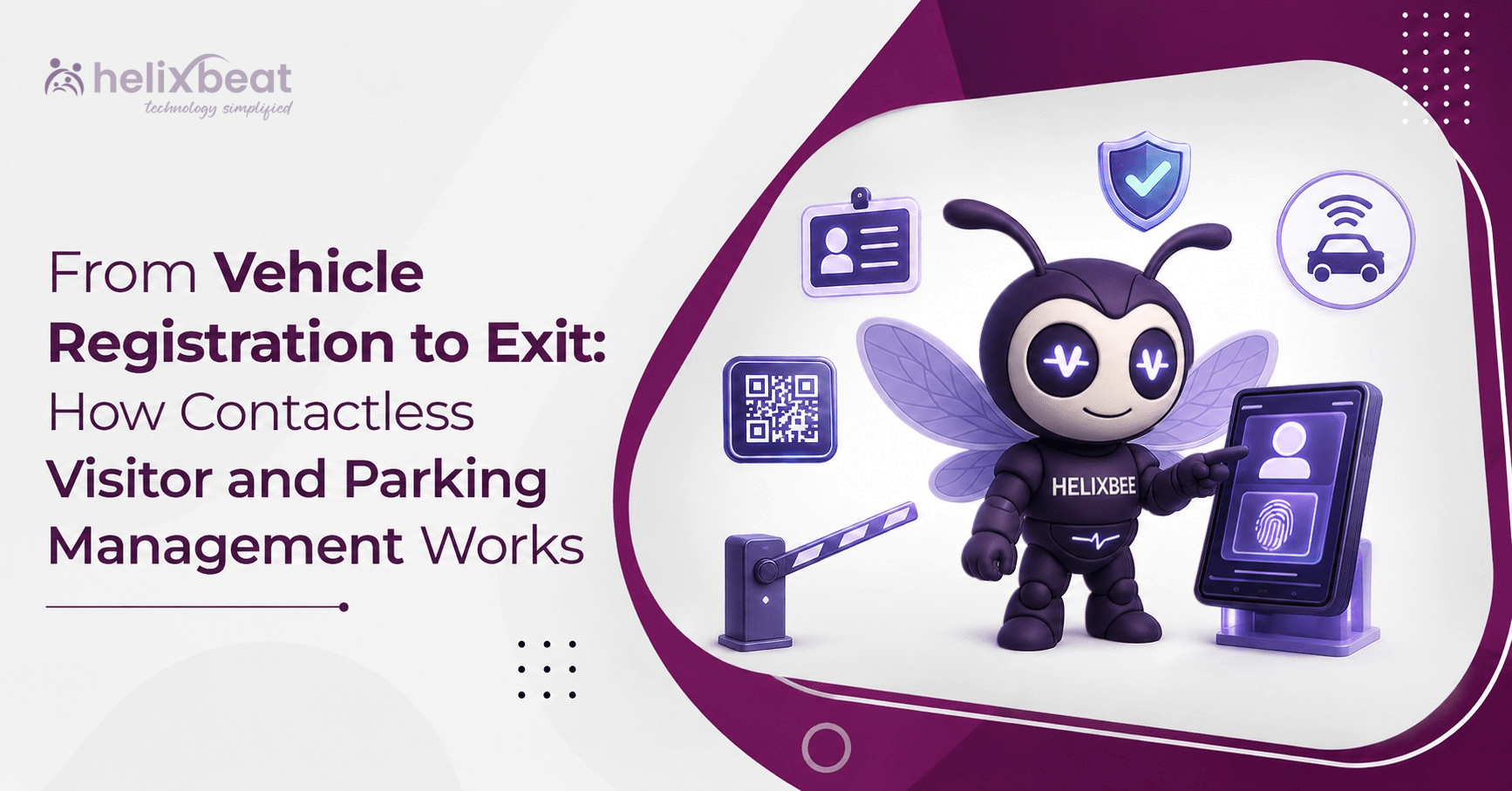
Instead of stopping at a security cabin, handing over an ID, waiting for a call to be made, and signing a register — the visitor either scans their QR code or the ANPR camera reads their number plate automatically.
Within two to three seconds:
- The boom barrier opens
- The host receives an instant arrival notification
- The parking zone is confirmed on a display board
- The security log updates in real time
No manual intervention. No queue. No delay. That is what contactless visitor check in actually delivers — not just a buzzword, but a measurable improvement in gate throughput and visitor satisfaction.
On Campus: Real-Time Occupancy Visibility
Once vehicles are inside, a smart parking management system provides live visibility into every zone:
- Which slots are occupied and which are available
- Which visitors are currently on campus
- How long each vehicle has been parked
- Where congestion is building up
Facility managers no longer have to walk the parking lot or call security for a headcount. They see everything from a single dashboard — and they can act on it in real time.
At Exit: Automated Logs, Zero Paperwork
When a visitor leaves, the visitor tracking system automatically:
- Records the departure time
- Calculates total parking duration
- Closes the visit record
- Updates the audit trail
For enterprises with compliance requirements — whether it’s an ISO audit, a client security review, or a data governance requirement — this automated exit tracking is not optional. It is essential.
The Technologies Behind Smart Parking in 2026
A robust office visitor management system does not rely on a single technology. It brings together several tools that work in concert.
ANPR/LPR Cameras use optical character recognition to read number plates automatically. This eliminates manual vehicle entry entirely and is increasingly standard in large campus deployments across India.
QR-Based Access is the go-to method for visitors, vendors, and temporary staff. The visitor tracking system generates QR credentials automatically during the invite process, making this a zero-effort experience for both the visitor and the security team.
RFID and FASTag Integration handles employees and long-term contractors who need seamless, recurring access. Their vehicle is recognized before they fully stop at the barrier — friction reduced to near zero.
IoT Occupancy Sensors provide slot-level availability data in real time. Combined with the visitor tracking system, this means the platform always knows not just who is on campus, but exactly where they are parked.
Automated Boom Barriers respond to authenticated credentials without human intervention. In high-traffic campuses, this single change can reduce peak-hour congestion by 60–70%.
Why Indian Enterprises Need This Now
Three trends make smart parking a boardroom-level priority for Indian organizations in 2026.
Hybrid work has made occupancy unpredictable. When your workforce density swings from 40% on Mondays to 90% on Wednesdays, static parking allocation fails constantly. Enterprise parking solutions that respond dynamically to actual daily demand are the only sustainable answer.
Campus scales are outgrowing manual management. India’s top IT parks and SEZs now house tens of thousands of employees across multiple towers. A visitor tracking system that can handle multi-zone, multi-gate, multi-tower operations from a single platform is a prerequisite, not a luxury.
Security and compliance requirements are tightening. MNCs operating Indian campuses face increasingly stringent security standards from global headquarters. Contracts, audits, and insurance policies are beginning to require digital vehicle logs with timestamps. Paper registers simply do not meet this bar anymore.
Enterprise parking solutions built around a visitor tracking system address all three of these pressures simultaneously — without adding headcount or operational complexity.
What to Look For in a Smart Parking Management System
When evaluating platforms, these are the capabilities that separate a serious smart parking management system from a feature-light tool:
Integrated parking workflow — Slot assignment, pass generation, and host notification should happen automatically when a meeting is scheduled. If your team has to manually coordinate parking separately from the visitor invite, the system is broken by design.
Multi-technology gate support — QR, RFID, FASTag, and ANPR should all be supported natively. Different visitor types require different authentication methods, and a platform that supports only one creates operational workarounds immediately.
Real-time occupancy dashboard — Zone-level visibility with trend analytics is essential for campus-scale operations. Bonus if the system sends automated alerts when a zone crosses a defined occupancy threshold.
Multi-location management — Organizations with offices across multiple Indian cities need centralized reporting with city-level or campus-level drill-down. Fragmented, site-specific tools create blind spots in security and reporting.
Deep integrations — The office visitor management system should connect natively with your access control platform, HR system, and meeting room booking tool. Automation only delivers its full value when systems share data without manual bridging.
How VISTA Delivers Smart Parking for Indian Enterprises
VISTA by HelixBeat is built on the understanding that parking is not a separate problem — it is a natural output of how you manage visitors.
As an advanced office visitor management system, VISTA handles the entire smart parking workflow within the same platform that manages your visitor invites, access credentials, and compliance logs. There is no separate parking module to configure, no separate vendor to manage, and no data gap between visitor records and vehicle records.
Using VISTA, enterprises can:
- Automate parking invites and slot assignments at the moment a meeting is scheduled
- Enable contactless visitor check in through QR, ANPR, or RFID at any gate
- Monitor vehicle movement and occupancy in real time across all campus zones
- Maintain timestamped, audit-ready entry and exit logs automatically
- Manage enterprise parking solutions across multiple office locations from one dashboard
For large Indian campuses handling hundreds or thousands of daily entries, VISTA removes the operational bottleneck at the parking gate — and replaces it with a seamless, secure, and professional arrival experience.
The Bottom Line
In 2026, smart parking is not a facility upgrade. It is an organizational statement.
When a client visits your office and glides through the entry gate in under 10 seconds — QR scanned, barrier open, host notified — they have already formed a positive impression of how your organization operates. When a security audit asks for six months of vehicle entry logs and you produce them in two clicks, you have demonstrated operational maturity.
A visitor tracking system is what makes both of those moments possible. Not just as a parking tool, but as the connective tissue between visitor management, access control, security compliance, and workplace experience.
The question is not whether your enterprise needs a visitor tracking system in 2026. The question is how much longer you can afford to operate without one.
Ready to modernize parking operations at your campus? Explore how VISTA’s visitor tracking system and smart parking management system can work for your organization — Request a Demo.
FAQs
1. What is a visitor tracking system in smart parking?
A visitor tracking system helps offices manage visitor entry, parking access, vehicle movement, and security through automated digital workflows.
2. How does contactless visitor check in improve parking management?
Contactless visitor check in reduces gate congestion by allowing visitors to enter using QR codes, RFID, or digital authentication without manual approvals.
3. Why do enterprises need a smart parking management system?
A smart parking management system improves parking utilization, reduces operational delays, enhances workplace security, and streamlines visitor access management.
4. How does VISTA support enterprise parking solutions?
VISTA by HelixBeat helps enterprises automate visitor parking, track vehicle movement, enable contactless access, and improve workplace mobility through intelligent visitor management.