

From Billing to Collection: 5 Places Hospitals Lose Patient Payments
Hospitals can deliver care, bill correctly, and still fail to collect the amount a patient owes. Revenue is often lost through small gaps between registration, billing, payment, and follow-up.
Strong patient payment collections depend on accurate information, clear bills, convenient payment options, and timely reminders. When one step fails, balances remain unpaid and billing teams spend more time on manual work.
This issue is growing across the United States. Patients now carry more financial responsibility through deductibles, copayments, coinsurance, and uncovered services. Hospitals therefore need a payment process that is easy for patients and efficient for staff.
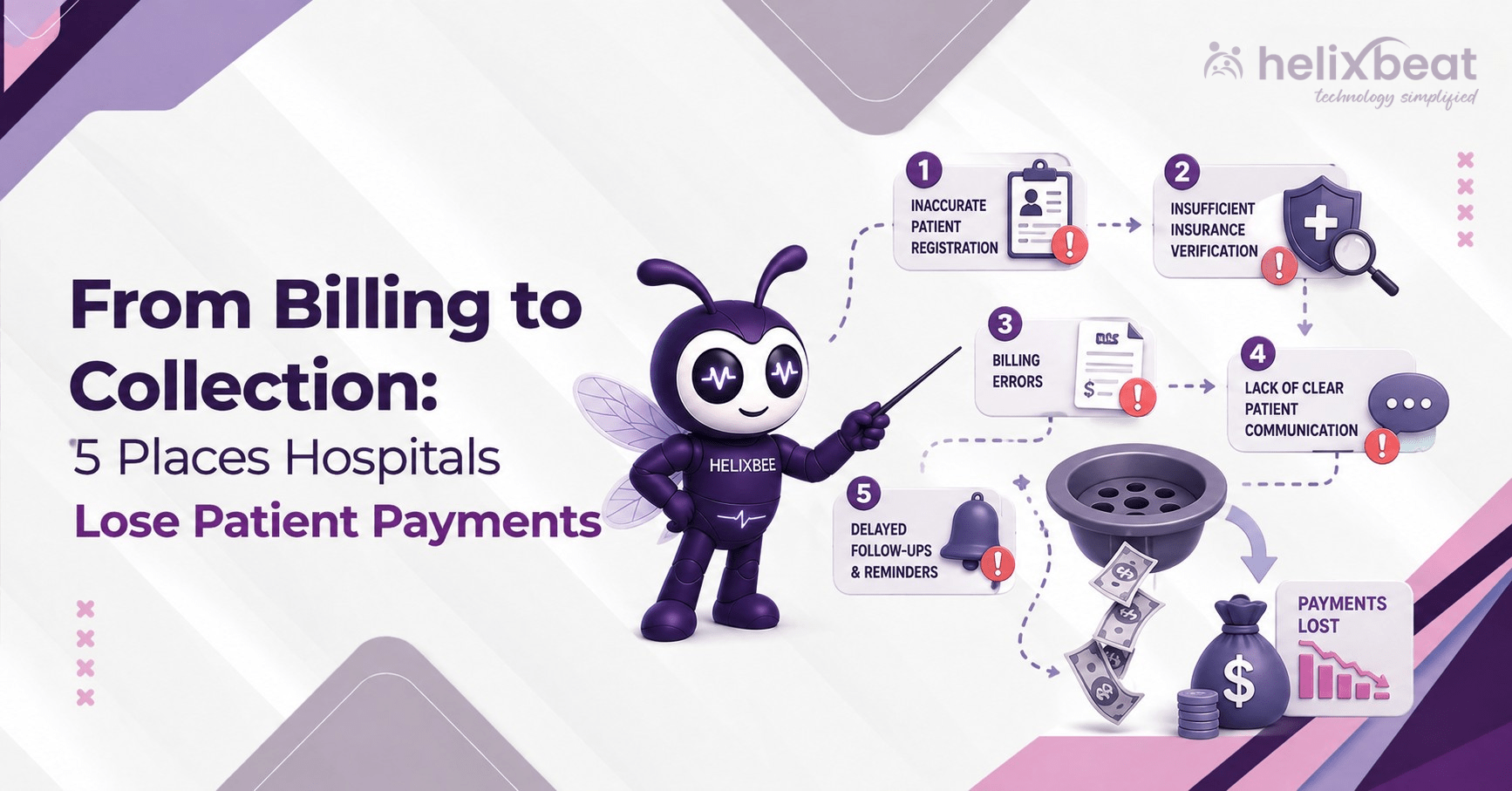
This article explains five places where hospitals commonly lose patient payments and how better systems can reduce leakage.
Improving patient payment collections does not require aggressive tactics. It requires fewer errors, clearer choices, and faster support.
Why Patient Payment Loss Is Growing
KFF estimates that Americans owe at least $220 billion in medical debt. This shows how quickly healthcare balances can grow when bills are unclear or payment options are limited.
J.P. Morgan’s 2025 Trends in Healthcare Payments Report also identifies patient collections as a major revenue concern for providers. The problem starts before a statement is sent and continues until the final payment is matched to the correct account.
A weak hospital payment collection process creates delays at every stage. It also increases staff workload and patient frustration. Better patient payment collections require hospitals to review the full journey, not only overdue accounts.
- Incorrect Information Before Care
The first payment gap often begins during registration. A wrong phone number, old email address, or outdated insurance record can stop a bill or reminder from reaching the patient.
This directly affects patient payment collections. If the hospital cannot contact the patient, the balance may remain open for weeks or months.
Hospitals also lose revenue when patients do not receive a clear estimate before care. Many patients know they have insurance but do not understand what they may owe after deductibles, copayments, and coinsurance are applied.
When the final bill is higher than expected, patients may delay payment while they ask questions or wait for more information. Some may assume the bill is wrong.
Hospitals should verify contact and insurance details at every visit. Staff should explain expected costs in simple language and clarify that the final amount may change after insurance processing.
Patient billing automation can support this step by reducing repeated data entry and keeping pre-service communication consistent. Accurate information and clear estimates improve patient payment collections before the bill is even created.
- Missed Payments at Check-In or Discharge
Hospitals often know that a copayment, deposit, or previous balance is due. However, the amount may not be collected at check-in or discharge.
Staff may not have access to the latest balance. Registration teams may work in one system while billing teams use another. This makes the hospital payment collection process slower and less reliable.
Some employees also avoid payment conversations because they feel uncomfortable discussing money. In other cases, the hospital does not offer a simple way to pay on the spot.
This is one clear example of where hospitals lose patient payments. The payment opportunity exists, but the workflow does not support it.
Hospitals should make financial conversations a normal, respectful part of registration and discharge. Staff should explain the amount due and provide clear choices.
Digital patient payments allow patients to pay through a secure mobile link, online page, card terminal, or digital wallet. When a patient cannot pay in full, the hospital should offer a suitable payment plan.
A consistent point-of-service process improves patient payment collections without making the experience feel aggressive.
- Confusing or Delayed Bills
Many patients delay payment because they do not understand the bill. Statements may include technical codes, unexplained adjustments, several service dates, or unclear insurance information.
A patient may not know what service was provided, what insurance covered, or why a balance remains. The bill is then delayed, disputed, or ignored.
Late billing creates another problem. The longer a hospital waits to send a statement, the less connected it feels to the care experience. Patients may forget the visit details or assume insurance is still processing the claim.
Clear statements are essential for patient payment collections. Each bill should explain the service, insurance payment, remaining balance, due date, and available payment options.
Patient billing automation can help hospitals send statements faster and present account information more consistently. It can also support mobile-friendly billing, making digital patient payments easier.
Patients are more likely to pay when the bill is clear, the balance is easy to verify, and payment takes only a few steps.
- Limited Payment Options
Hospitals can lose revenue even when patients are willing to pay. A portal may load slowly, fail on mobile, accept limited cards, or require full payment at once.
These barriers make the process harder than necessary.
A strong healthcare payment processing system should support different payment preferences. Patients may want to pay by credit card, debit card, bank transfer, digital wallet, or mobile payment link.
Some patients need recurring payments or a flexible plan. Without these choices, a manageable balance can become overdue.
Automated patient payment solutions for hospitals help provide more ways to pay while keeping transactions organized. Better flexibility is also one of the most practical ways to reduce patient payment leakage.
Hospitals asking how to collect patient payments faster should first remove unnecessary barriers. A simple, secure, mobile-friendly process improves patient payment collections and reduces staff follow-up.
- Weak Follow-Up and Manual Reconciliation
The final payment gap appears after the bill is sent. Many hospitals still depend on spreadsheets, paper statements, manual phone calls, and separate payment reports.
This makes follow-up slow and inconsistent. Some reminders arrive too late. Others use the same message for every patient, even when accounts are at different stages.
Hospitals may also send reminders after payment because the transaction has not been matched to the correct account. This creates more work and damages trust.
Healthcare payment processing should connect payment activity with account records and reporting. Billing teams should be able to see unpaid balances, completed payments, failed transactions, and active payment plans in one place.
Healthcare payment automation can send reminders based on account status. This makes follow-up more timely and reduces repetitive work.
Better reporting helps hospitals identify where balances are getting stuck. It also supports patient payment collections by showing staff which accounts need attention first.
How PayNova Helps Close the Gaps
PayNova is designed to simplify the patient payment side of healthcare billing. It supports digital billing, multiple payment methods, online and mobile payments, recurring payments, payment plans, automated reminders, and financial reporting.
These capabilities help hospitals create a smoother payment experience without replacing the full revenue cycle system.
Through patient payment collections tools, hospitals can make balances easier to understand and payments easier to complete. Staff can also spend less time moving between disconnected systems.
Healthcare payment automation supports more consistent billing and follow-up. It improves visibility into payment activity and reduces manual reconciliation.
PayNova also supports digital patient payments across convenient channels. This gives patients more flexibility and helps hospitals maintain an organized payment process.
Patient billing automation, clear estimates, trained staff, and respectful communication must work together. Technology will not solve every problem, but it can remove many avoidable delays.
How Hospitals Can Reduce Payment Loss
Hospitals should review the full journey from registration to final payment. The goal is to find where information, communication, or payment access breaks down.
They should verify patient details before care, explain estimated responsibility clearly, and collect known balances at the point of service when appropriate.
Bills should be sent soon after insurance processing. They should be easy to read and easy to pay.
Hospitals should also offer several payment methods and flexible payment plans. Healthcare payment automation should send reminders that match the patient’s account status instead of using the same schedule for every balance.
Leaders studying how hospitals can improve patient payment collections should review reconciliation and reporting. A dashboard can show unpaid balances, failed payments, active plans, and collection trends.
A connected healthcare payment processing system can make the hospital payment collection process more efficient and more patient-friendly.
Conclusion
Hospitals lose patient payments at several points, not only after a bill becomes overdue. Problems can begin with incorrect information, missed point-of-service payments, confusing statements, limited options, or weak follow-up.
Successful patient payment collections depend on clear communication, convenient payment choices, timely reminders, and connected payment data.
Simpler patient payment collections reduce avoidable questions and repeated follow-up for staff.
PayNova helps hospitals improve the payment experience through digital billing, flexible payment methods, healthcare payment automation, and reporting. By reducing friction from billing to collection, hospitals can support better cash flow while giving patients a simpler and more respectful way to pay.
Frequently Asked Questions
What causes hospitals to lose patient payments?
Common causes include incorrect patient information, unclear cost estimates, confusing bills, limited payment options, delayed reminders, and manual reconciliation. These gaps make it harder for patients to understand and complete payment.
How can hospitals improve patient payment collections?
Hospitals can verify patient information, explain costs before care, send clear bills quickly, offer mobile payments and payment plans, and use account-based reminders.
How does payment automation help hospital billing teams?
Payment automation reduces manual billing, reminder, reporting, and reconciliation work. It also helps staff see unpaid balances, completed payments, and failed transactions more clearly.
What payment options should hospitals offer patients?
Hospitals should offer credit cards, debit cards, online payments, mobile payment links, digital wallets, recurring payments, and flexible payment plans.