

Employee time tracking is no longer optional for Indian businesses—it is both a legal requirement and a vital operational practice. Studies show that over 70% of companies face compliance challenges due to inaccurate recording of employee hours, overtime, and breaks. Such mismanagement can result in fines, disputes, or even imprisonment under Indian labor laws.
By implementing automated solutions like Synergy HRMS, organizations can accurately maintain attendance records, manage leave, track overtime, and generate audit-ready reports. This not only streamlines operations but also ensures compliance with laws such as the Factories Act, Minimum Wages Act, and Shops & Establishments Act.
In this blog, we explore the top legal considerations for employee time tracking in India and how businesses can stay fully compliant.
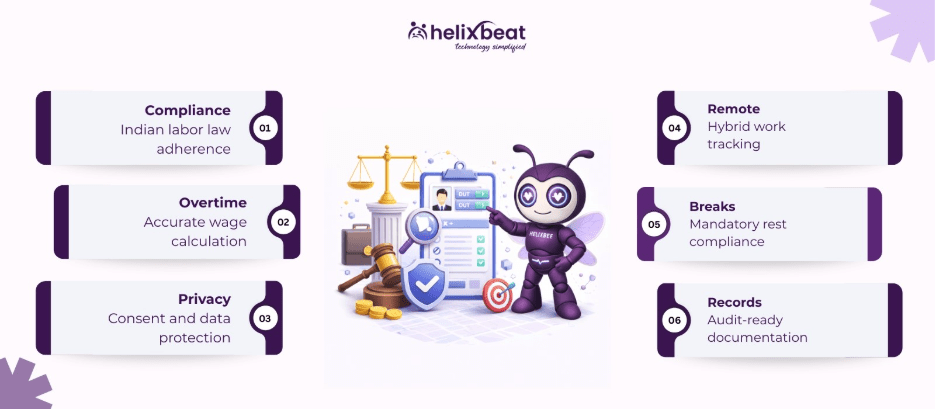
Table of Contents
1. Compliance with Indian Labor Laws for Employee Time Tracking
Accurate employee time tracking starts with a thorough understanding of India’s legal framework. Various labor laws dictate how businesses must record work hours, overtime, and wages, ensuring fairness for employees and legal protection for employers.
Relevant Acts and Regulations
Employee time tracking must align with several key legislations:
- Factories Act, 1948: Requires daily maintenance of attendance and overtime records for workers.
- Shops and Establishments Act (state-specific): Governs working hours, weekly offs, and leave records across different states.
- Minimum Wages Act, 1948: Mandates correct wage calculation, including overtime payments.
- Payment of Wages Act, 1936: Ensures timely and complete salary payments to all employees.
Implementing automated tools like Synergy HRMS makes it easier to comply with these laws while reducing manual errors.
Risks of Non-Compliance
Ignoring employee time tracking regulations can result in fines ranging from ₹5,000–₹20,000 per violation, interest penalties on unpaid wages, or even imprisonment for severe breaches. Staying compliant not only protects your business from legal consequences but also builds trust and fairness with your workforce.
2. Accurate Overtime Recording and Wage Calculation
Overtime mismanagement is a leading cause of labor disputes in India. Legal compliance requires accurate recording of all hours worked, safeguarding both employer and employee interests.
Legal Overtime Limits
Indian labor law limits weekly work hours to 48 and daily overtime to 12 hours, including breaks. Precise employee time tracking is crucial to ensure no violations occur, and employees are compensated fairly.
Impact on Payroll Accuracy
Manual tracking can lead to errors, wage disputes, and potential fines. By leveraging digital employee time tracking systems, businesses can automate overtime calculations, maintain transparent records, and improve payroll accuracy.
Avoid payroll errors—implement Synergy HRMS for precise overtime and wage management!
3. Employee Consent and Data Privacy
Employee time tracking involves collecting sensitive information, especially with biometric devices or GPS-enabled attendance systems. Indian law requires that employees provide explicit consent before their data is captured or used.
Consent for Biometric and Digital Tracking
Under the Information Technology (IT) Act, 2000, and the forthcoming Data Protection Bill, businesses must clearly inform employees about what data is collected, how it is stored, and the purposes of its use.
Data Storage and Retention
Secure storage, restricted access, and defined retention periods are essential for employee time tracking data. Modern systems like Synergy HRMS automatically safeguard records and enforce compliance policies.
4. Managing Remote and Flexible Work Hours
With the rise of remote and hybrid work, employee time tracking faces new legal challenges. Accurate records are essential even when work is performed outside the office.
Tracking Remote Work Legally
Digital tools allow companies to log start and end times, breaks, and task completion for remote employees. This ensures proper compensation and adherence to labor regulations.
Avoiding Disputes
Clear remote work tracking policies prevent pay disagreements and potential legal conflicts. Synergy HRMS provides real-time remote work logs, promoting transparency and compliance across teams.
5. Mandatory Breaks and Rest Periods
Indian labor laws mandate proper rest periods to prevent employee exploitation, making it essential for businesses to ensure employees take breaks and maintain compliance records. Effective employee time tracking helps organizations meet these requirements effortlessly.
Legal Requirements
- Factories Act: Requires a 30-minute break after 5 hours of continuous work.
- Shops & Establishments Acts: Specifies weekly offs and daily breaks for shops and offices.
Organizational Benefits
Proper break management enhances employee well-being, reduces burnout, and ensures legal compliance. Modern employee time tracking systems can automatically log breaks, alert managers to violations, and maintain accurate records for audits.
Ensure compliance and employee well-being—automate break tracking with Synergy HRMS!
6. Record Retention and Audit Readiness
Maintaining employee time tracking records for the legally required duration safeguards businesses during inspections and ensures smooth compliance with labor authorities.
Retention Periods
Attendance, payroll, and overtime records must typically be maintained for 3–5 years, depending on the applicable legislation.
Preparing for Government Audits
Organized digital records simplify audits, minimize fines, and prevent disputes. Businesses using automated HRMS solutions like Synergy HRMS save time and maintain compliance effortlessly.
Recommended Record Retention Periods
| Record Type | Retention Period | Applicable Law |
| Attendance & Work Hours | 3 years | Shops & Establishments Act |
| Payroll Records | 5 years | Payment of Wages Act |
| Overtime Logs | 3 years | Factories Act |
| Leave Records | 3 years | Shops & Establishments Act |
Avoiding Common Mistakes in Time Tracking
Many Indian organizations still rely on manual tracking processes, which can create compliance risks and operational inefficiencies.
Typical Errors
- Miscalculating overtime or missing break times
- Manual logs prone to errors
- Not tracking remote or flexible work hours
- Lack of integration with payroll systems
Mitigation Strategies
Implementing digital employee time tracking tools ensures accurate recording, reduces disputes, and keeps organizations compliant. Automation also frees HR teams to focus on strategic tasks instead of correcting manual errors.
Leveraging Synergy HRMS for Legal Compliance
Synergy HRMS provides a comprehensive solution for businesses to track employee hours while staying fully compliant with Indian labor laws.
Features Supporting Compliance
- Automated attendance tracking
- Leave and overtime management
- Payroll integration
- Audit-ready reports
Benefits for Indian Businesses
- Accurate tracking of office and remote work hours
- Automatic adherence to labor law limits
- Simplified audits and inspections
- Reduced payroll errors and disputes
Synergy HRMS Compliance Features
| Feature | Benefit | Legal Alignment |
| Attendance Automation | Accurate in/out logs | Factories Act, Shops & Establishments Act |
| Leave Management | Statutory leave compliance | Shops & Establishments Act |
| Overtime & Payroll | Correct wage calculation | Minimum Wages Act |
| Audit Reports | Easy government inspections | Payment of Wages Act |
Wrapping Up
Legal compliance in employee time tracking is critical for Indian businesses to avoid fines, disputes, and employee dissatisfaction. Leveraging Synergy HRMS streamlines attendance monitoring, overtime calculations, and record maintenance, ensuring transparency, efficiency, and full adherence to labor laws while boosting employee trust and organizational credibility.
FAQs
1. What are the key Indian labor laws affecting employee time tracking?
Factories Act, Minimum Wages Act, Shops & Establishments Act, and Payment of Wages Act.
2. Can biometric attendance systems be legally used?
Yes, with explicit employee consent and proper data privacy measures.
3. How long should I retain employee attendance records?
Typically, 3–5 years, depending on the applicable law.
4. Does overtime need to be documented digitally?
Manual or digital is allowed, but digital systems improve accuracy and compliance.
5. How does Synergy HRMS help with legal compliance?
It automates attendance, calculates overtime, generates audit-ready reports, and ensures statutory adherence.
6. Are there penalties for incorrect time tracking?
Yes, fines and legal actions vary by law; non-compliance can result in ₹5,000–₹20,000 or imprisonment in extreme cases.
7. How should remote work hours be tracked legally?
Using employee time tracking tools that log work hours with consent ensures proper documentation and wage compliance.