

Healthcare payment refunds may seem like a small back-office task, but they can quickly become a major revenue-cycle headache. A patient may overpay, an insurer may reprocess a claim, a service may be cancelled, or a duplicate transaction may slip through.
When refunds are handled manually across disconnected systems, teams can face delays, reconciliation errors, compliance risks, and frustrated patients asking, “When will I get my money back?”
That is why healthcare payment refunds need more than a simple refund button.
Providers need a clear, secure, and traceable process that connects payments, billing data, approvals, and account balances. With the right automation strategy, healthcare organizations can reduce repetitive work, improve accuracy, and give patients a smoother financial experience.
In this guide, we look at the most common causes of refunds, the risks of manual processing, and how PAYNOVA can help make refund workflows faster, easier, and more transparent to manage.
Table of Contents
What Are Healthcare Payment Refunds?
Healthcare payment refunds are amounts returned after a healthcare provider determines that money collected from a patient, insurer, government program, or another payer exceeds the amount ultimately owed.
A refund is different from a chargeback. A provider generally initiates a refund after validating that money should be returned. A chargeback is usually initiated through the cardholder’s financial institution as a dispute. The Consumer Financial Protection Bureau notes that cardholders may be able to dispute eligible charges with their issuer when an issue cannot be resolved directly with the merchant.
In healthcare, the refund decision may depend on payer adjudication, patient responsibility, previous transactions, and billing adjustments. That makes healthcare payment refunds more complex than a normal retail return.
What Commonly Causes Healthcare Refunds?
- Patient Overpayments
Patients may pay an estimated co-pay, deductible, or self-pay amount before a claim is finalized. If the insurer later assigns a lower patient responsibility, the account can develop a credit balance and patient payment refunds may be required.
For example, a patient may pay $300 before treatment based on an estimate. After insurance processes the claim, the actual patient responsibility may be only $220. The remaining $80 must then be identified and handled correctly.
- Duplicate Payments
A patient may pay online while the front desk also processes the same balance. Repeated payment links, duplicate card submissions, or synchronization failures between systems can create accidental double payments.
Duplicate collection is particularly difficult to identify when digital payment tools operate separately from the practice management or billing platform.
- Insurance Reprocessing
Insurance claims do not always remain final. A payer may reprocess a claim after:
- An appeal
- A coordination-of-benefits update
- A coding correction
- An eligibility change
- Additional documentation
- A contractual adjustment
If the revised adjudication reduces patient responsibility, medical billing refunds may become necessary.
CMS remittance advice contains claim and line-level adjustment information and indicates financial responsibility through standardized adjustment codes. This makes accurate reconciliation between payer decisions and money already collected essential.
- Canceled or Changed Services
A patient may prepay for a procedure, diagnostic test, consultation, or telehealth visit that is later canceled, rescheduled, or changed.
If the service is not delivered or the final charge is lower than the amount collected, healthcare payment refunds may follow.
- Payment Posting Errors
Payments can be posted to the wrong:
- Patient
- Encounter
- Provider
- Department
- Facility
- Outstanding balance
These errors become harder to identify when payment processing, patient accounts, and billing information live in disconnected systems.
- Payer Overpayments
Refund activity does not involve only patients. An insurer or government program can also pay more than the provider is entitled to receive.
CMS requires identified Medicare overpayments to be reported and returned under applicable requirements, making healthcare payment refunds a compliance responsibility as well as an accounting task.
What Are the Risks of Manual Refund Processing?
Healthcare organizations often invest heavily in collecting payments faster but pay less attention to what happens when money must be returned.
That creates several hidden risks.
Compliance Exposure
Poorly documented or delayed healthcare payment refunds can create significant risk when government-program overpayments are involved.
CMS states that Medicare Parts A and B overpayments retained after the statutory reporting-and-return deadline can become an obligation for False Claims Act purposes. Providers therefore need a consistent process to identify, investigate, quantify, document, and return applicable overpayments.
Refund requirements can differ depending on the payer, contract, transaction type, and applicable federal or state rules, so providers should build compliance review into their refund policies.
Poor Patient Experience
Slow patient payment refunds can generate:
- Repeated calls to billing teams
- Patient complaints
- Payment disputes
- Negative reviews
- Reduced confidence in the provider
A patient who has already paid more than required should not have to repeatedly contact multiple departments to determine when their money will be returned.
Duplicate or Incorrect Refunds
Manual workflows increase the possibility of returning:
- The wrong amount
- Money to the wrong patient
- Money against the wrong transaction
- The same credit balance twice
Without one reliable transaction history, one department may not know that another has already processed the correction.
Reconciliation Gaps
A refund may be processed in the payment gateway but never reflected correctly in the billing system.
The opposite can also happen: the billing application shows an account adjustment, but no corresponding payment transaction has been completed.
These gaps make month-end reconciliation, financial reporting, and revenue-cycle analysis harder.
Fraud and Unauthorized Activity
Refunds move money out of the healthcare organization.
Weak permissions or approval controls can increase the risk of unauthorized refunds, inappropriate destination changes, or misuse of patient credit balances. Secure authorization controls and traceable transaction records are therefore critical.
Higher Administrative Cost
Medical billing refunds can require staff to:
- Review the original payment.
- Check payer adjudication.
- Verify the remaining patient balance.
- Determine why the credit occurred.
- Obtain approval.
- Process the refund.
- Update the patient account.
- Reconcile the transaction.
- Respond to patient questions.
Repeating these activities manually across hundreds of transactions consumes significant revenue-cycle resources.
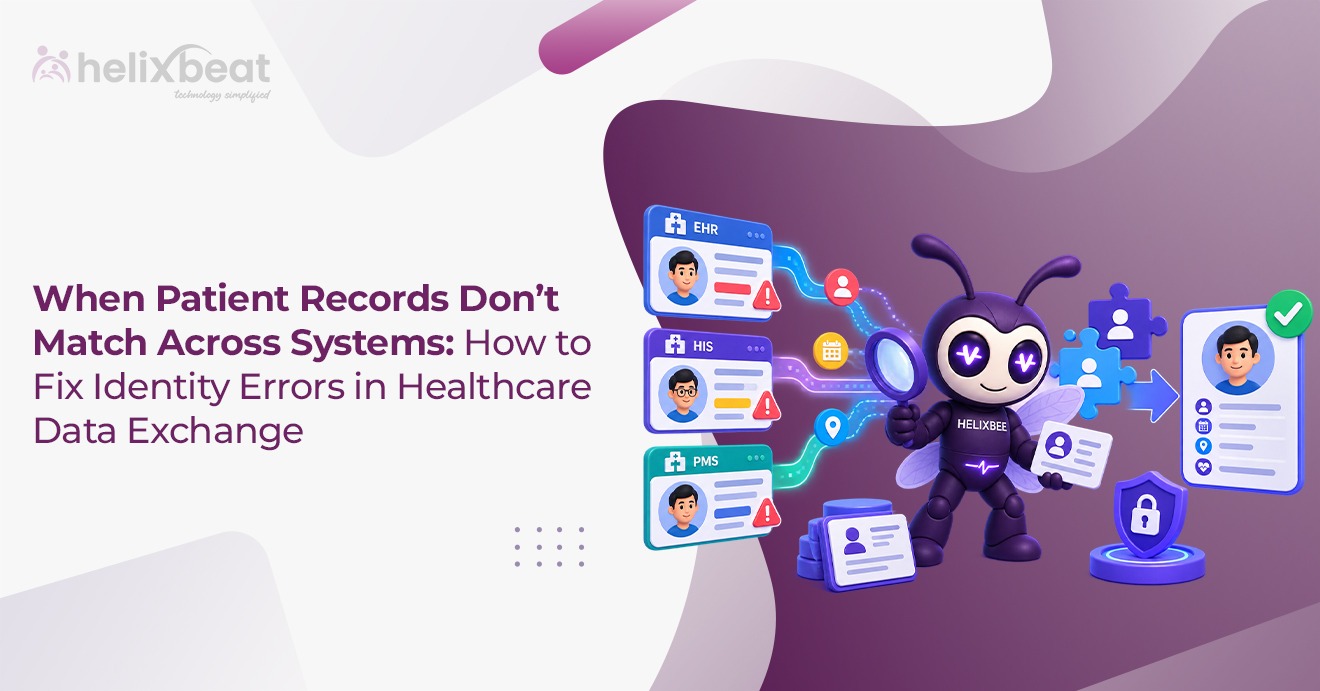
Why Disconnected Systems Make Refunds Harder
The underlying problem is often fragmentation.
One system stores patient information. Another manages insurance claims. Another processes card payments. Another tracks billing adjustments. A spreadsheet may then become the unofficial refund-management system.
PAYNOVA’s healthcare payment model is designed around centralized processing and integration with EHR, Practice Management Systems, and billing platforms. Its healthcare positioning also includes multiple payment methods, recurring payments, payment plans, patient-facing billing capabilities, reporting, automation, fraud prevention, and secure payment processing.
Providers examining the broader cost of transaction problems can also read HelixBeat’s guide on healthcare payment refunds and payment-processing errors.
When systems share transaction context, billing teams can answer four important questions quickly:
- Who originally made the payment?
- Which balance was the payment applied to?
- What event created the credit?
- Has the refund already been approved or completed?
That visibility is the foundation for safe automation.
How Should Refund Automation Work?
Good automation does not mean approving every refund without human oversight.
The goal of automated healthcare refunds is to automate repetitive validation, routing, transaction updates, and low-risk decisions while sending unusual cases to the appropriate billing or finance team.
Step 1: Detect the Credit Balance
The workflow should identify potential overpayments when:
- A claim is reprocessed
- A service is canceled
- A transaction is reversed
- Insurance responsibility changes
- An account adjustment generates a credit
- A duplicate payment is detected
Early identification prevents credits from remaining unnoticed for long periods.
Step 2: Validate the Original Transaction
The credit should be matched with the original:
- Patient
- Claim
- Encounter
- Payment transaction
- Payment method
- Current account balance
This helps prevent healthcare payment refunds from being issued to the wrong person or for the wrong amount.
Step 3: Check Open Financial Activity
Before medical billing refunds are released, the system should check whether other financial activity could still change the final balance.
That may include:
- Pending claims
- Secondary insurance
- Open appeals
- Unresolved adjustments
- Other active balances
- Recent reversals
This extra validation can prevent premature refunds.
Step 4: Apply Approval Rules
Not every refund carries the same level of risk.
Organizations can establish different workflows based on:
- Refund value
- Payer type
- Refund reason
- Payment method
- User role
- Account status
A small, routine patient credit may follow one workflow, while a large payer overpayment may require additional finance or compliance review.
Step 5: Process the Refund Securely
Where appropriate, the refund should be tied to the original transaction and payment method.
This reduces manual data entry and creates a clearer connection between the original collection and the returned amount.
PAYNOVA’s existing positioning emphasizes secure payment processing, automation, payment tracking, fraud controls, and healthcare-specific compliance considerations such as HIPAA and PCI-DSS.
Step 6: Synchronize Every System
After the refund is processed, its status should update the relevant billing, payment, and reporting systems.
This is where automated healthcare refunds provide major operational value.
Staff should not have to process a transaction in one application, manually change the patient balance in another, and then update a spreadsheet for reporting.
Step 7: Notify the Patient and Maintain an Audit Trail
Patients should receive a clear confirmation when a refund has been initiated or completed.
Internally, organizations should retain details such as:
- Refund amount
- Refund reason
- Original transaction
- Approval history
- Processing date
- Transaction reference
- Current status
This creates better transparency for both patients and finance teams.
How PAYNOVA Supports a Better Refund Workflow
PAYNOVA is built around healthcare payment complexity rather than generic online checkout.
Its USP centers on connecting payment processing with existing healthcare systems while reducing manual administrative work.
PAYNOVA supports a healthcare payment environment built around:
- Centralized payment processing
- EHR and PMS integration
- Multiple payment methods
- Payment plans and recurring payments
- Real-time financial visibility
- Payment tracking and reporting
- Secure transaction processing
- Automated billing workflows
- Reconciliation
- Claims-related payment workflows
PAYNOVA’s published healthcare-payment content also describes real-time reconciliation across payments, claims adjustments, and refunds.
That connected architecture is important because effective healthcare payment refunds depend on reliable data. A payment platform cannot safely streamline refund activity if it cannot connect the original transaction with the patient’s account, claim adjustment, and current balance.
Healthcare organizations considering a connected payment environment can also explore this PAYNOVA guide covering patient payment refunds and healthcare payment integration across EHR, RCM, and payment systems.
7 Steps to Build a Refund Automation Strategy
Healthcare organizations do not need to automate every refund exception immediately. A phased strategy is safer and easier to control.
- Map Refund Causes
Categorize credit balances into clear groups such as patient overpayments, duplicate payments, insurance adjustments, canceled services, and posting errors.
- Define Ownership
Specify who is responsible for investigating, approving, processing, reconciling, and monitoring refunds.
- Establish Control Rules
Set approval thresholds, documentation standards, user permissions, and exception criteria.
- Integrate Payment and Billing Systems
Connect payment processing with EHR, PMS, billing, and RCM data so staff are not repeatedly entering the same financial information.
- Automate Low-Risk Cases First
Start with repeatable refund situations where the amount, source, destination, account status, and eligibility can be consistently validated.
- Create Exception Queues
Unusual transactions should be automatically routed for review rather than becoming buried in email chains.
Monitor:
- Aging credits
- Failed refunds
- Large refund amounts
- Duplicate requests
- Missing transaction details
- Refunds waiting for approval
- Audit Refund Performance
Regularly examine refund causes, completion times, errors, unresolved balances, and duplicate activity.
This turns healthcare payment refunds from a reactive administrative activity into a measurable financial control.
What Refund Metrics Should Providers Track?
Healthcare organizations should measure more than the number of refunds completed.
Useful KPIs include:
- Average time from credit identification to refund completion
- Total value of outstanding credit balances
- Age of unresolved credits
- Percentage processed without manual re-entry
- Refund error and rework rate
- Number of duplicate refund attempts
- Failed refund rate
- Number of patient refund-status calls
- Percentage requiring manual exception review
These metrics help determine whether automated healthcare refunds are genuinely reducing staff workload, improving accuracy, and creating a better patient financial experience.
Conclusion
Healthcare payment refunds do not have to be complicated, slow, or dependent on spreadsheets and manual follow-ups. With connected payment, billing, and patient account data, providers can identify credits faster, validate refund amounts, reduce errors, and maintain a clear audit trail. Automation also helps teams spend less time on repetitive administrative work and focus on higher-value revenue-cycle tasks.
PAYNOVA is designed to support this shift with healthcare-focused payment integration, secure processing, real-time visibility, reconciliation, and workflow automation.
Explore PAYNOVA and build a smarter, more controlled healthcare payment workflow.
FAQs
- What causes healthcare payment refunds?
Healthcare payment refunds often happen because of patient overpayments, duplicate payments, claim adjustments, cancelled services, or billing errors.
- How can healthcare providers reduce refund errors?
Providers can reduce errors by connecting payment and billing systems, validating account balances, and using automated approval and reconciliation workflows.
- What are automated healthcare refunds?
Automated healthcare refunds use connected payment and billing data to identify, validate, approve, process, and track eligible refunds with less manual work.
- How does PAYNOVA help with patient payment refunds?
PAYNOVA helps streamline patient payment refunds through secure payment processing, integration, real-time visibility, reconciliation, and automated payment workflows.