

Table of Contents
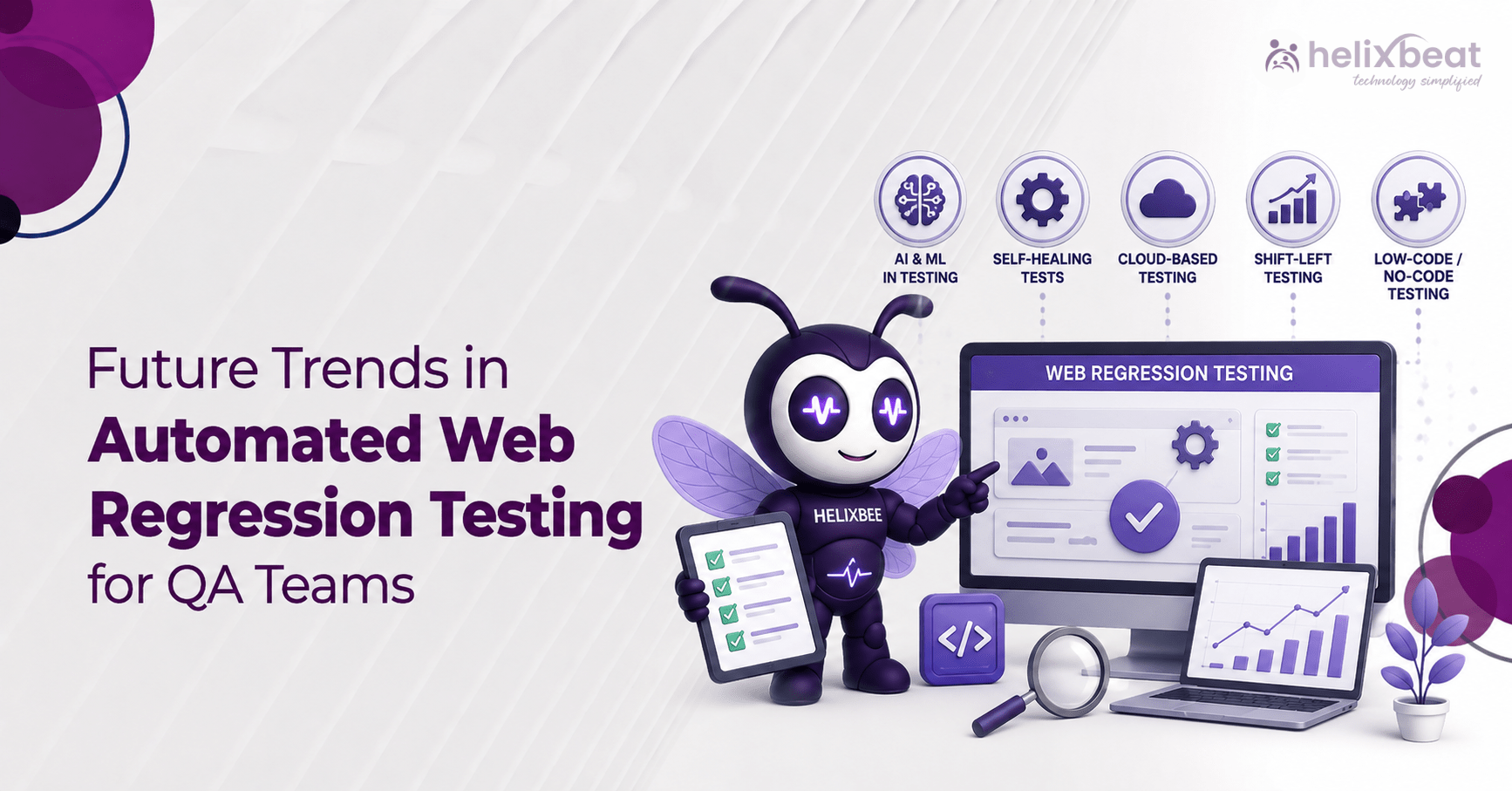
Future Trends in Automated Web Regression Testing for QA Teams
Web regression testing has always been about protecting what already works while new code ships. But somewhere in that shuffle, something that used to work quietly breaks. That’s where automated web regression testing saves the day, and the way QA teams approach it is changing fast.
In this blog, we look at where automated web regression testing is actually heading, so you can plan your test strategy with a clearer picture.
Why Regression Testing Web Applications Is Getting Harder
The days of simple web pages are over. With SPAs, external APIs, personalized content, and active A/B tests, modern regression testing is a whole different beast. You aren’t just checking a login form anymore; you’re verifying a constantly moving ecosystem.
That’s why manual-only approaches are quietly falling behind. Today, QA teams are responding by rethinking not just how they automate, but what they automate and when. Here are the shifts worth watching.
-
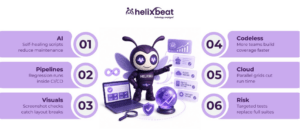
AI-Assisted Test Maintenance Is Replacing Brittle Scripts
The biggest complaint about older regression testing tools has always been maintenance. A developer renames a CSS class or moves a button, and half the test suite turns red for reasons that have nothing to do with an actual bug.
Thus, newer platforms use AI to identify page elements by multiple attributes at once, so a locator can adapt when the underlying markup shifts slightly. This “self-healing” approach doesn’t remove maintenance work entirely, but it cuts the hours QA engineers spend patching tests instead of writing new ones.
-
Regression Suites Are Moving Deeper Into CI/CD
Previously, automated web regression testing used to run overnight or right before a release freeze. Now it’s expected to run on every pull request. Therefore, teams are breaking large regression suites into smaller, tagged groups — smoke, critical-path, full-suite — so fast checks run on every commit while the complete pass runs less often.
This layered approach keeps feedback loops short without making every engineer wait on a lengthy full run just to merge a one-line fix.
-
Visual Regression Testing Is Becoming Standard, Not Optional
Functional checks confirm that a button click triggers the right action. However, they don’t tell you if the button is hidden behind an overlapping element. When your app needs to look flawless on every screen size, manual spot-checks just don’t cut it. That’s why automated test suites are adding visual checks. They snap screenshots and run smart comparisons to filter out random browser noise, so you only get alerted when a layout actually breaks.
This matters more as teams ship UI changes far more often than they redesign core logic.
-
Low-Code and Codeless Options Are Widening Who Can Contribute
Not every QA team has a bench of engineers who can write Playwright or Selenium scripts from scratch. That’s where low-code and codeless automated regression testing tools for web applications are a game-changer. You can record your app interactions, drop in visual validation checks, and keep your test suite up to date without needing deep programming knowledge.
This doesn’t replace skilled automation engineers — complex logic and API-level checks still need code — but it does mean regression coverage can grow faster because more people can contribute test cases.
-
Cloud Grids and Parallel Execution Are Cutting Run Times
Cross-browser and cross-device coverage used to be one of the slowest parts of any regression cycle. Now, cloud-based device and browser grids enable teams to run automated regression testing tools across dozens of browser and OS combinations in parallel, turning what used to be a multi-hour job into something that finishes in minutes.
This shift also makes it more realistic for smaller QA teams to test against real device and browser combinations instead of relying only on emulators. Parallel execution like this is central to keeping automated web regression testing fast as browser matrices grow.
-
Risk-Based Test Selection Is Replacing “Run Everything
Running a full regression pack after every change wastes time when most code changes only touch a small part of the application. Risk-based selection tools analyze which parts of the codebase changed and map that back to the test cases most likely affected, so teams run a smaller, targeted set instead of the entire suite. This is reshaping how automated web regression testing gets scheduled inside a sprint.
This approach depends on solid traceability between code and tests, so it works best for teams that already have a clear mapping between features and test coverage — something worth building even before adopting this kind of tooling.
-
Accessibility and Security Checks Are Joining Regression Suites
Regression testing isn’t only about functionality anymore. More QA teams are folding basic accessibility checks (contrast ratios, missing alt text, keyboard navigation) and lightweight security scans (exposed headers, outdated dependencies) directly into their automated web regression testing pipeline, catching issues before they reach a dedicated accessibility or security audit.
Final Thoughts
Automated web regression testing is moving away from static scripts to smarter, faster, more targeted systems. AI-assisted maintenance, risk-based test selection, and deeper CI/CD integration are the trends actually changing day-to-day QA work.
Whichever combination of tools and practices your team picks, the goal stays the same: catch regressions before your users do, without burning your QA team’s time on maintenance that a smarter system could handle.
Discover how Helixbeat can transform your software testing strategy and accelerate quality at scale.
FAQs
1. What is automated web regression testing?
It’s the practice of using automated scripts or tools to re-run previously passed test cases on a web application after code changes, to confirm existing features still behave as expected.
2. How is web regression testing different from functional testing?
Functional testing checks whether a feature works as designed when it’s first built. Regression testing re-checks that same feature (and others around it) after later code changes, to confirm nothing broke.
3.Which regression testing tools for web applications are commonly used today?
Selenium, Playwright, and Cypress remain popular for scripted automation, while tools with built-in visual comparison or AI-based element detection are gaining ground for teams that want less script maintenance.
4. Is AI replacing manual regression testing entirely?
No. AI helps with locator stability, visual comparison, and test selection, but manual testers still review edge cases, exploratory scenarios, and anything requiring human judgment about user experience.
5. How often should regression tests run in a CI/CD pipeline?
Many teams run a fast smoke subset on every commit or pull request, then run the full regression suite on a schedule, such as nightly or before each deployment.