

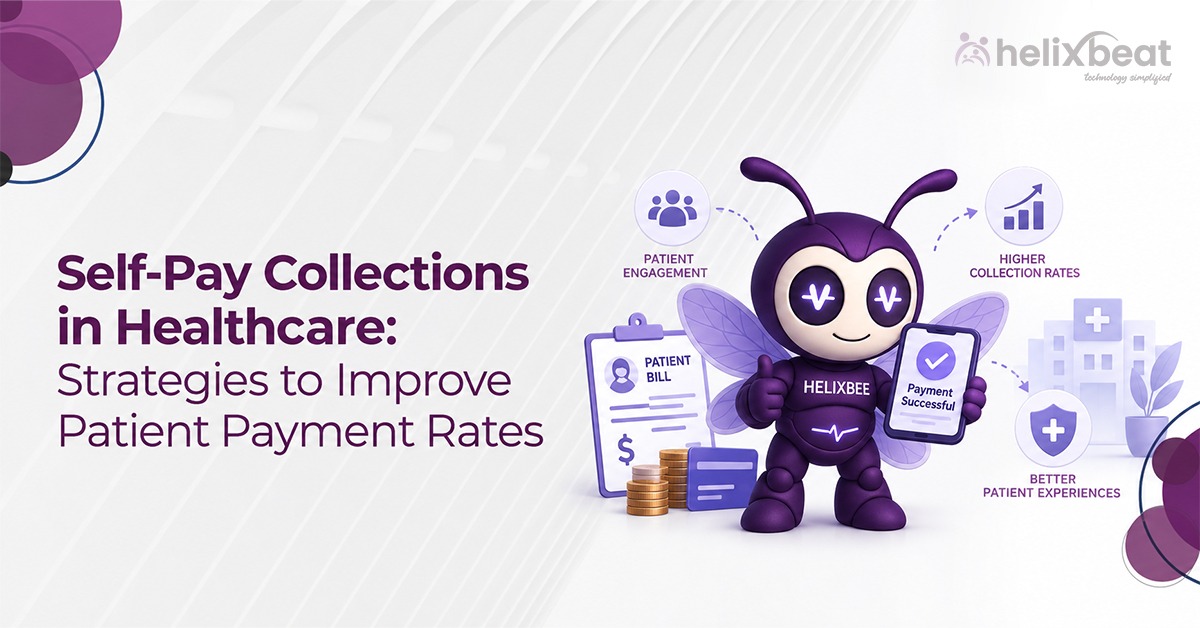
For healthcare providers, the patient-responsibility portion of a bill is now a major part of revenue cycle performance. Deductibles, copays, coinsurance, non-covered services, and uninsured balances can remain outstanding when patients do not understand what they owe or cannot find a convenient way to pay.
That makes self-pay collections part of the patient financial experience, not just a back-office task. Providers need clear estimates, simple bills, flexible payment options, timely reminders, and accurate account updates.
A strong self-pay strategy starts before care and continues after insurance adjudication. The goal is to make balances understandable, payments convenient, and financial options realistic.
Table of Contents
What Are Self-Pay Collections in Healthcare?
Self-pay collections refer to the process of collecting amounts patients are responsible for paying directly. This includes uninsured patients as well as insured patients who owe deductibles, copays, coinsurance, non-covered services, or balances remaining after insurance.
For revenue cycle teams, healthcare self-pay collections may include eligibility checks, cost estimates, point-of-service payments, statements, payment plans, reminders, posting, reconciliation, and follow-up.
Because patient responsibility can change after claim processing, workflows should clearly separate pre-service estimates from the final amount owed after payer adjudication.
Why Are Patient Balances Difficult to Collect?
Patients often receive their final responsibility only after the encounter, when the urgency of care has passed. Bills may also combine adjustments, insurance payments, prior payments, and charges from different encounters.
Affordability is another barrier. A patient may understand the balance but still be unable to pay it in one transaction. That is why patient payment collections should reduce uncertainty early and make the next payment step simple.
Providers need a process that combines transparency with convenient payment options rather than relying solely on statements and collection calls.
- Start the Financial Conversation Before Care
One of the best ways to improve self-pay collections is to give patients useful cost information before the appointment or procedure.
For uninsured or self-pay individuals, the No Surprises Act generally requires providers and facilities to provide a good faith estimate when a service is scheduled at least three business days in advance or when the individual requests one. CMS also explains that a patient may use the federal patient-provider dispute process when a provider’s final bill is at least $400 higher than that provider’s good faith estimate.
Even when a formal estimate requirement does not apply, early cost communication can reduce confusion. Providers should explain the estimated patient responsibility, expected insurance contribution when applicable, any amount requested before service, available payment methods, payment-plan or financial-assistance options, and why the final balance may change after claim adjudication.
Transparency should come before collection pressure.
- Collect at the Point of Service When Appropriate
A practical self-pay strategy should identify balances that can reasonably be collected at registration, check-in, or check-out.
Front-desk teams need current financial information rather than separate spreadsheets or outdated reports. Point-of-service collection can work well for known copays, deposits, previous balances, and established self-pay charges.
Staff should also know how to respond when a patient cannot pay in full or may qualify for financial assistance.
Secure terminals, mobile checkout, and connected payment systems can reduce manual entry and make payment easier for patients and staff.
The goal should be to collect when the amount is clear while avoiding unnecessary friction in the care experience.
- Give Patients More Ways to Pay
Convenience has a direct role in healthcare self-pay collections. If patients must call the billing office during business hours just to make a payment, the provider is creating unnecessary friction.
Useful payment channels can include:
- Mobile-friendly patient portals
- Secure payment links
- Credit and debit cards
- ACH or bank payments
- In-person payment terminals
- Recurring payment arrangements
PayNova’s healthcare payment services support multiple payment channels, self-service portals, automated reminders, and flexible payment plans. Providers looking to strengthen self-pay collections can use these tools to create a simpler collection journey.
The ideal experience lets a patient understand the balance and pay without unnecessary steps.
- Use Flexible Payment Plans for Larger Balances
Not every patient balance should be treated as an all-or-nothing payment.
Payment plans can help patients manage larger out-of-pocket costs while giving providers a structured collection path. Each plan should show the balance, installment amount, frequency, payment method, and what happens if a payment fails.
Providers should also define eligibility, minimum installments, plan duration, financial-assistance screening, and escalation rules. Consistent policies help staff handle similar situations consistently.
Recurring payment options can also reduce the need for billing teams to repeatedly contact the same patient. The patient receives a predictable schedule while the provider creates a more structured path toward collecting the outstanding balance.
For larger balances, flexibility may be more effective than repeatedly requesting full payment.
- Automate Reminders Without Creating Communication Fatigue
Manual follow-up can consume significant staff time. Automated reminders make patient payment collections more consistent and scalable.
A workflow might send a message when a balance becomes available, before an installment is due, or if a scheduled payment fails. Each message should identify the provider, balance or account reference, secure payment path, and support contact.
PayNova also provides guidance for modernizing billing through automated reminders and multiple payment methods. Providers improving patient payment collections can use this approach to reduce repetitive staff outreach while keeping communication consistent.
Automation should help patients act, not overwhelm them with repeated notices across every channel.
- Make Medical Bills Easier to Understand
Confusing statements create avoidable delays in self-pay collections.
A bill should clearly separate charges, insurance payments or adjustments, previous payments, current patient responsibility, and the amount due. Digital portals should show the same current balance that staff see.
CMS’s 2026 hospital price transparency changes also require additional allowed-amount data in hospital machine-readable files in certain situations, including median, 10th percentile, and 90th percentile allowed amounts. The changes reflect the broader push toward clearer, more comparable healthcare pricing information.
Transparency does not solve affordability, but clearer information can remove a common reason for delay: the patient does not understand the bill.
- Connect Payments With EHR, PMS, and RCM Systems
A payment is not fully resolved simply because a card transaction is approved. It must also be posted to the correct account.
Disconnected systems force billing teams to compare processor reports with patient records and manually resolve exceptions. That can lead to unapplied cash, outdated balances, duplicate reminders, and refund errors.
Integrated payment workflows can send transaction status back to the EHR, practice management system, or revenue cycle platform. This helps keep balances synchronized across front-desk, portal, and billing workflows.
For healthcare self-pay collections, this integration is especially useful because it gives staff a more accurate view of what has been paid, what remains outstanding, and whether a payment plan is active.
PayNova’s payment integration approach connects EHR, RCM, and payment workflows to reduce manual reconciliation and improve financial visibility.
- Segment Accounts Instead of Using One Workflow
Not every patient account needs the same collection path.
A small balance may need only a digital reminder. A larger balance may benefit from a payment-plan offer. An uninsured patient may need financial-assistance screening before further collection activity.
Providers can segment self-pay collections by balance size, age, insurance status, previous payment behavior, active payment plans, communication preference, and financial-assistance eligibility.
Segmentation makes outreach more relevant and helps staff focus on accounts that need human attention.
Instead of sending the same sequence of messages to everyone, providers can build workflows that reflect the patient’s situation and the size or age of the balance.
- Track the Metrics That Reveal Collection Friction
Providers should measure more than total patient cash collected.
Useful metrics include:
- Point-of-service collection rate
- Digital payment adoption
- Payment-plan enrollment and completion
- Days from balance creation to payment
- Reminder-to-payment conversion
- Failed recurring-payment rate
- Bad-debt transfer rate
These measures help show where self-pay collections are breaking down.
High portal use but low payment conversion may signal confusing bills or too many checkout steps. Poor payment-plan completion may indicate that installment amounts are unrealistic.
Providers can then improve specific parts of the collection workflow instead of simply increasing the number of reminders being sent.
- Train Staff for Clear Financial Conversations
Technology can simplify collection, but staff still shape the patient experience.
Front-desk and billing teams should know how to explain estimated responsibility, distinguish an estimate from a final bill, present payment options, and direct eligible patients toward financial assistance.
Scripts can create consistency, but the conversation should still explain what the patient owes, why the balance exists, and which options are available.
That can make self-pay collections feel like a normal part of the care journey rather than an uncomfortable conversation that happens only after a balance becomes overdue.
Clear communication also reduces the chance that patients delay payment simply because they do not understand their financial responsibility.
How PayNova Can Support Better Patient Payments
PayNova is designed for healthcare payment workflows where providers need to collect through multiple channels while keeping billing and payment information connected.
Its healthcare-focused capabilities include card and bank payments, recurring payments, payment plans, automated reminders, patient-facing portals, and healthcare system integration. PayNova’s current healthcare payment services emphasize flexible payment methods, automated follow-up, and connected billing workflows.
This can create a more consistent process from patient responsibility through collection, posting, reporting, and reconciliation.
The value is not simply accepting more payment types. It is reducing friction between a patient making a payment and the organization recording it correctly.
Final Thoughts
Improving patient collections requires providers to rethink when and how the financial conversation occurs.
The strongest approach begins with clear eligibility and estimates, communicates expected costs early, collects appropriate amounts at the point of service, offers convenient digital payment options, and provides payment plans when a balance is difficult to pay at once.
Automation makes reminders more consistent, while EHR and revenue-cycle integration helps keep balances synchronized. Segmentation and performance metrics allow teams to improve the process over time.
Most importantly, better self-pay collections put transparency and convenience before escalation. A clear bill, realistic payment option, and simple digital checkout can often do more for payment rates than another manual collection call.
With PayNova, providers can build a connected payment experience that supports healthier cash flow while making the financial side of care easier for patients.
FAQs
- What are self-pay collections in healthcare?
They are payments collected directly from patients for their share of healthcare costs.
- How can providers improve self-pay collections?
Use clear estimates, digital payments, reminders, payment plans, and simpler billing.
- Why are payment plans important for patient collections?
They make larger balances easier for patients to manage over time.
- Can automation improve patient payment collections?
Yes. Automated reminders and payment workflows reduce manual follow-up and missed payments.
- How does PayNova support healthcare self-pay collections?
PayNova supports digital payments, payment plans, reminders, and connected healthcare payment workflows.