

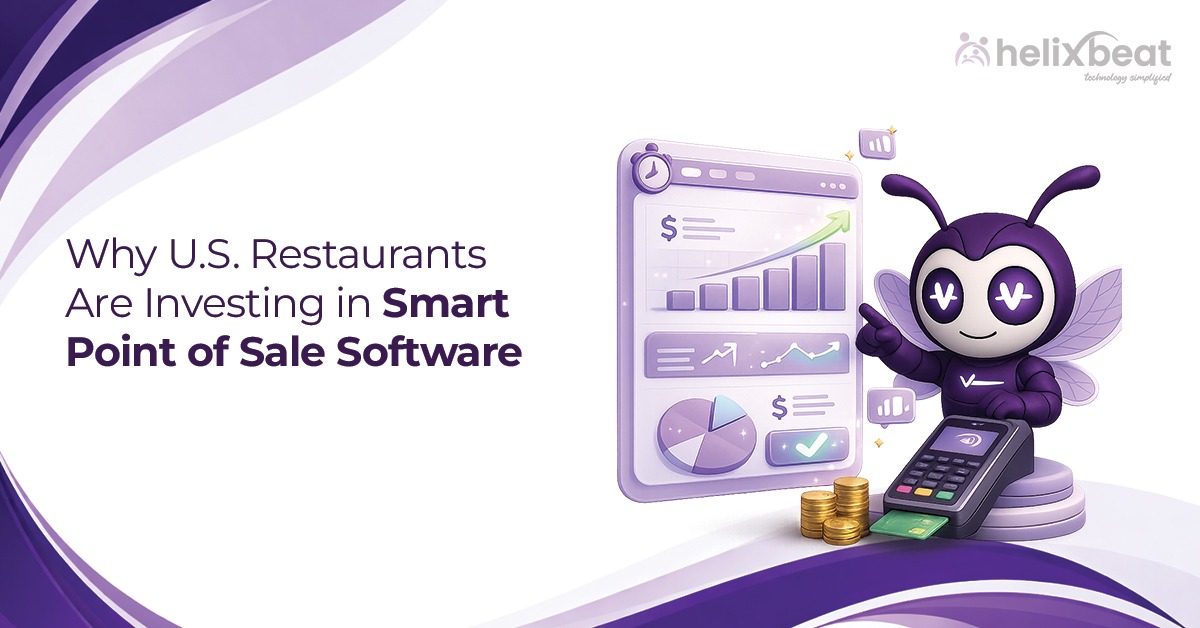
Running a restaurant in the U.S. today requires more than great food and service. Owners are managing tighter margins, rising labor costs, and higher customer expectations, all while trying to operate faster and smarter. That’s why more businesses are adopting point of sale software for restaurant operations to replace outdated systems and manual processes.
According to industry data, over 80% of U.S. restaurants now rely on modern POS systems to manage daily operations, highlighting how essential this technology has become for sustainable growth.
Smart POS software goes far beyond processing payments. It gives restaurant owners real-time visibility into sales, inventory, and staff performance, allowing them to make informed decisions quickly.
For operators focused on efficiency and long-term profitability, investing in the right POS system is no longer optional; it’s a competitive necessity.
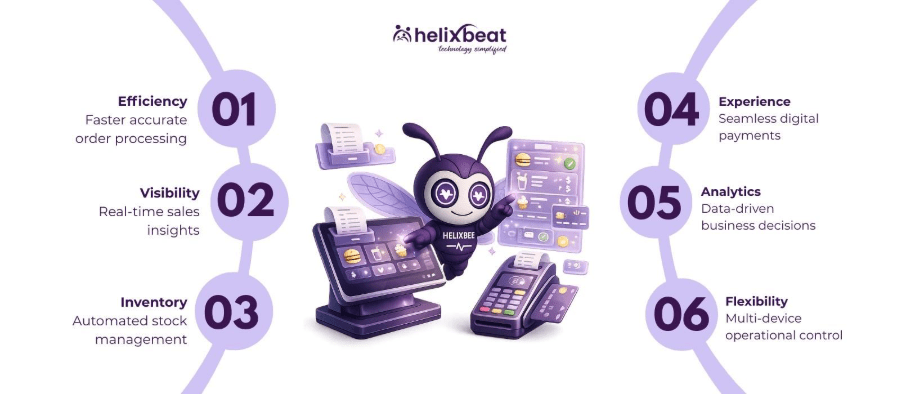
Table of Contents
Short Note on Point of Sale Software for Restaurants
Point of sale software for restaurants is a powerful tool that goes beyond traditional cash registers. It helps restaurants manage orders, track sales, monitor inventory, and analyze performance in real-time. Modern POS systems also support multiple devices, including tablets and handheld POS systems for restaurants, making operations smoother and more efficient.
These systems are designed to simplify daily tasks while improving customer service. Restaurants, cafés, and food trucks can process payments faster, reduce errors, and access detailed reports to make informed business decisions. Investing in a smart POS solution helps owners save time, reduce costs, and create a seamless experience for both staff and customers.
Interesting statistics on POS Software
Here are some key statistics that highlight the impact of point of sale software in the industry:
- Quick‑service restaurants report a 25 percent reduction in order wait times when using mobile POS systems, which helps improve customer experience and throughput.
- Online ordering processed through POS systems accounts for about 55 percent of restaurant sales, highlighting the importance of integrated digital ordering.
- 58 percent of diners prefer restaurants that offer digital payment options through POS systems, underscoring the impact on customer satisfaction and sales.
These numbers clearly show why investing in advanced POS software is no longer optional but essential for U.S. restaurants aiming to stay competitive and meet modern customer expectations.
5 Main Reasons U.S. Restaurants Are Investing in Smart Point of Sale Software
Investing in smart POS solutions is becoming a top priority for U.S. restaurants, as it helps streamline operations, improve efficiency, and deliver a better dining experience. Here are five main reasons why restaurant owners are making the switch:
1. Faster and More Accurate Orders
Modern point of sale software for cafe and full-service restaurants helps staff take orders quickly and accurately. Handheld POS devices allow servers to input orders directly at the table, reducing mistakes and speeding up service. Food trucks using point of sale systems for food trucks also benefit from quick, precise order handling during busy hours.
Example: At Starbucks locations across New York City, baristas use handheld POS tablets to take orders at the counter and tables, cutting wait times during the morning rush.
2. Smarter Inventory Management
Tracking stock in real-time prevents shortages and reduces waste. Advanced POS solutions monitor ingredient usage, alert owners when items run low, and help manage multiple locations. Restaurants using different POS systems for restaurants gain full visibility into inventory and supply trends.
Example: Sweetgreen, a fast-casual chain in Los Angeles, uses POS-driven inventory tracking to automatically reorder greens and toppings before supplies run out, keeping kitchens fully stocked.
3. Improved Customer Experience
Smart POS systems speed up checkout, support loyalty programs, and accept multiple payment options. Cafés and casual dining spots using point of sale software for cafe can personalize offers based on customer behavior, keeping patrons happy and encouraging repeat visits.
Example: Panera Bread leverages POS data to send personalized offers to customers’ apps, improving engagement and repeat visits.
4. Insightful Analytics and Reporting
Restaurant owners can access detailed sales reports, track best-selling menu items, and analyze staff performance. The best EPOS system for restaurants provides actionable insights to optimize operations, improve menu planning, and make data-driven decisions.
Example: Shake Shack uses POS analytics to identify their most popular items by location, adjusting inventory and staffing accordingly to meet local demand.
5. Flexibility Across Devices and Locations
Whether it is a busy café, a food truck, or a multi-location restaurant, POS systems adapt to various devices and setups. Handheld POS systems for restaurants make it easier to serve customers quickly while maintaining consistent service quality.
Example: Food trucks in Austin, Texas, use handheld POS tablets to take orders at festivals and busy streets, allowing staff to serve more customers efficiently without returning to a central terminal.
With these advantages, it is clear why U.S. restaurant owners are rapidly adopting smart POS software to stay competitive, improve operations, and deliver a seamless experience for every customer.
Before and After Usage of POS Software for U.S. Restaurants
| Aspect | Before POS Software | After POS Software | Practical U.S. Example |
| Order Accuracy | Frequent order mistakes due to manual entry. | Orders are accurate as servers input directly via POS. | At Starbucks in New York, handheld POS tablets reduce mistakes during morning rush. |
| Speed of Service | Long wait times during peak hours. | Faster service with quick order processing. | Sweetgreen in Los Angeles cuts prep time using POS-based order management. |
| Inventory Management | Manual tracking often leads to shortages or waste. | Real-time inventory updates and automated stock alerts. | Panera Bread monitors ingredient levels across multiple locations to prevent shortages. |
| Payment Processing | Slower checkouts and limited payment options. | Quick payments with multiple options, including mobile wallets. | Shake Shack speeds up payment processing with integrated POS terminals. |
| Customer Insights | Limited understanding of customer preferences. | Detailed analytics for menu planning and personalized offers. | Local cafés use POS data to send targeted offers to loyalty program members. |
| Staff Management | Hard to track staff performance and schedules. | Staff hours, performance, and shifts are easily monitored. | Food trucks in Austin use POS reporting to optimize staff allocation during festivals. |
Why U.S. Restaurant Owners Choose the RavZora POS System over Other Systems
U.S. restaurant owners are picking the RavZora POS System because it has everything they need in one easy-to-use platform. It handles orders, tracks inventory in real-time, and helps manage customers, whether it’s a café, a food truck, or a full-service restaurant. Unlike other systems, RavZora keeps things simple while giving restaurants the tools to run smoothly.
RavZora stands out because it works on tablets and handheld POS systems for restaurants and gives owners clear insights to make smart decisions fast.
With features like menu controls, loyalty programs, and reliable support, many owners see it as the best EPOS system for restaurants. It helps reduce mistakes, speed up service, and grow sales without the hassle of complicated systems.
FAQ
1. How long does it take to set up a POS system in a U.S. restaurant?
Most modern POS systems can be set up within a few days, including menu setup, payment integration, and staff training.
2. Can a POS system work without internet access?
Many POS systems offer offline mode, allowing restaurants to take orders and sync data once the connection is restored.
3. Is POS software suitable for small, single-location restaurants?
Yes, POS software is designed to scale and works well for small restaurants, cafés, and food trucks with limited staff.
4. What kind of training do staff need to use a POS system?
Most POS systems are user-friendly, and staff can learn the basics within a few hours of hands-on training.
5. How does POS software help with tax and compliance reporting in the U.S.?
POS systems generate accurate sales reports that make tax filing, audits, and compliance much easier for restaurant owners.