

Table of Contents
Introduction
Security breaches no longer begin with broken doors or stolen keys. In today’s digital-first workplaces, unauthorized access often starts with compromised credentials, tailgating, or weak identity verification at entry points. For organizations across the United States—corporate offices, hospitals, educational institutions, and critical infrastructure—this reality has made traditional access controls dangerously insufficient.
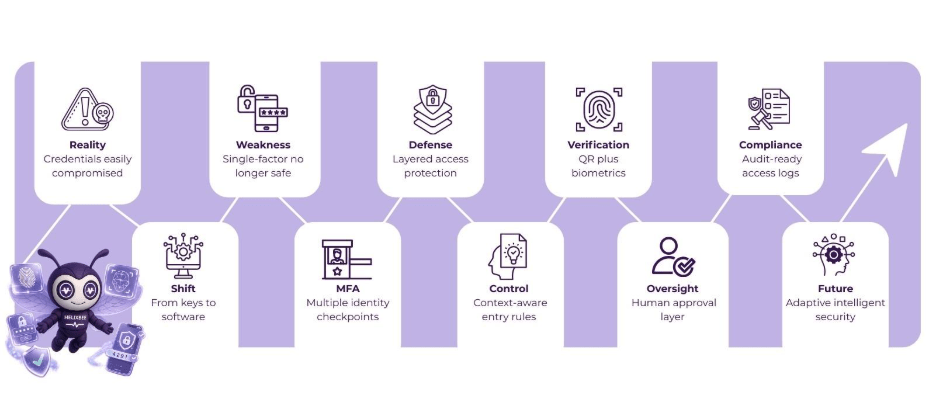
This is where multi-factor authentication (MFA) becomes a game changer. When integrated into a modern access entry system, MFA creates layered security that verifies not just who is requesting access, but how, where, and under what conditions. Platforms like VISTA Visitor Management are redefining access control by combining identity verification, digital credentials, and real-time monitoring into a single intelligent framework.
In this blog, we’ll explore how multi-factor authentication strengthens access entry systems, why layered security is essential for U.S. organizations, and how VISTA delivers enterprise-grade protection without compromising user experience.
What Is an Access Entry System?
An access entry system is a security solution that controls who can enter a building, facility, or restricted area. Traditionally, this meant physical keys or swipe cards. Today, access entry systems are software-driven, cloud-connected, and deeply integrated with identity management and security analytics.
Modern access entry systems typically manage:
- Visitor and employee access
- Entry and exit logs
- Credential verification
- Area-based permissions
- Compliance reporting
VISTA modernizes the access entry system by combining visitor management, authentication layers, and real-time alerts into a single platform—eliminating gaps that attackers often exploit.
Why Single-Factor Authentication Is No Longer Enough
Single-factor authentication relies on one method of verification—usually a badge, PIN, or access card. While convenient, it presents serious vulnerabilities:
- Lost or stolen badges
- Shared credentials
- Tailgating
- Insider threats
- Credential cloning
According to U.S. security studies, credential misuse remains one of the top causes of unauthorized physical access incidents. A robust access entry system must assume that any single credential can be compromised—and plan accordingly.
Understanding Multi-Factor Authentication (MFA)
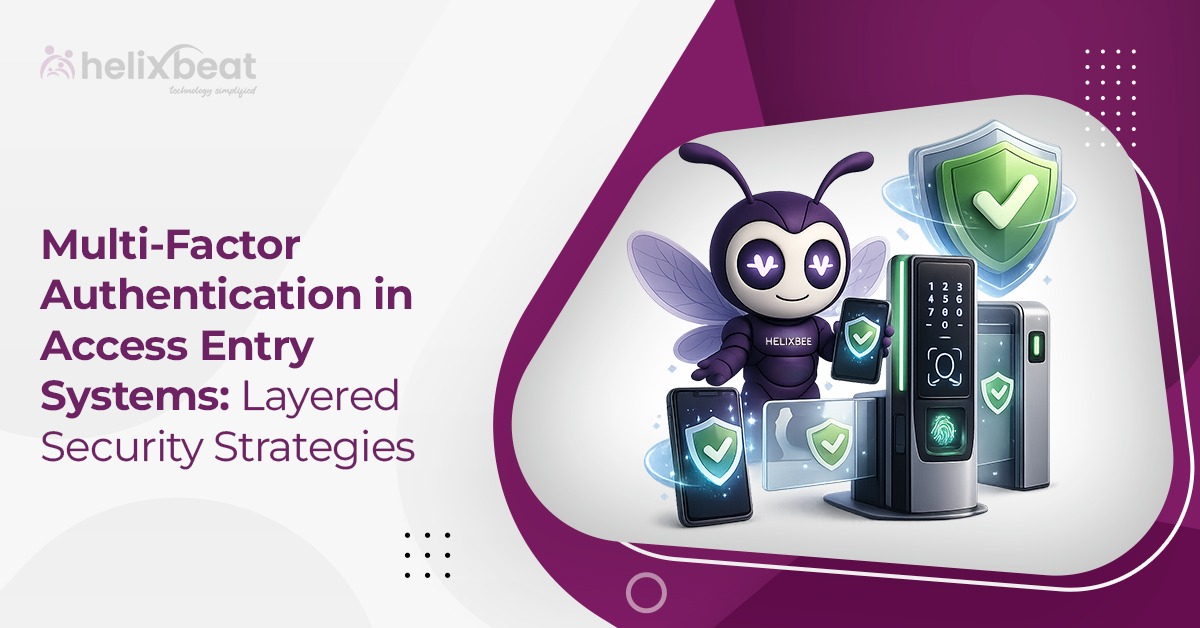
Multi-factor authentication requires users to verify their identity using two or more independent factors, typically categorized as:
- Something you know – PIN, password
- Something you have – QR code, mobile device, access badge
- Something you are – Facial recognition, biometrics
When MFA is embedded into an access entry system, breaching security becomes exponentially harder because attackers must defeat multiple layers simultaneously.
How MFA Strengthens Access Entry Systems
1. Layered Identity Verification
A VISTA-powered access entry system can require:
- A pre-registered QR code plus
- Facial recognition at entry
Even if a QR code is shared, the biometric layer prevents misuse—creating a true layered defense.
2. Reduced Unauthorized Access
MFA dramatically reduces:
- Badge cloning
- Tailgating incidents
- Unauthorized visitor entry
For U.S. enterprises handling sensitive data or regulated environments, MFA-enabled access entry systems are quickly becoming a baseline requirement.
3. Real-Time Authentication Decisions
VISTA allows administrators to configure dynamic authentication rules:
- High-risk areas require multiple factors
- Low-risk zones allow faster access
- Temporary visitors have limited credentials
This intelligence transforms a static access entry system into a context-aware security platform.
VISTA’s Multi-Factor Authentication Framework
VISTA integrates MFA directly into its access entry system without adding friction for users. Here’s how it works:
Pre-Registration as the First Security Layer
Visitors are pre-registered by hosts before arrival. This step:
- Verifies intent
- Captures identity details
- Generates secure digital credentials
Pre-registration alone strengthens the access entry system by eliminating unknown walk-ins.
QR Code Authentication
Each approved visitor receives a unique, time-bound QR code. At entry:
- QR codes are scanned
- Credentials are validated in real time
- Expired or reused codes are automatically rejected
This adds a possession-based factor to the access entry system.
Facial Recognition & Biometric Verification
For high-security environments, VISTA adds biometric authentication:
- Facial recognition verifies identity
- Prevents credential sharing
- Enables touchless, hygienic access
This biometric layer is especially valuable in healthcare, data centers, and corporate HQs across the USA.
Host Approval & Real-Time Alerts
Another overlooked authentication factor is human validation. VISTA sends instant alerts to hosts when visitors arrive. Hosts can:
- Approve or deny access
- Monitor visitor movement
- Escalate suspicious activity
Human-in-the-loop verification adds a powerful layer to the access entry system.
MFA Use Cases Across U.S. Industries
Corporate Offices
U.S. enterprises face insider threats, intellectual property theft, and compliance risks. An MFA-enabled access entry system ensures:
- Only approved visitors enter
- Employees access permitted zones
- Full audit trails for compliance
Healthcare Facilities
HIPAA compliance demands strict access control. VISTA’s MFA-based access entry system:
- Restricts sensitive areas
- Tracks visitor duration
- Enables contactless entry for infection control
Educational Institutions
Schools and universities need secure yet welcoming environments. MFA ensures:
- Parents, vendors, and guests are verified
- Unauthorized individuals are blocked
- Emergency access logs are instantly available
Manufacturing & Industrial Sites
High-risk zones require strict access rules. MFA helps:
- Enforce role-based access
- Track contractors and vendors
- Prevent unauthorized equipment access
Compliance & Audit Readiness
In the USA, organizations face increasing regulatory pressure—from SOC 2 to HIPAA and internal security audits. A modern access entry system must provide:
- Detailed entry logs
- Identity verification records
- Timestamped authentication events
VISTA automatically generates audit-ready reports, turning compliance from a burden into a built-in feature.
Balancing Security and User Experience
One concern with MFA is friction. VISTA solves this by:
- Using touchless authentication
- Automating approvals
- Reducing manual check-ins
The result is an access entry system that is secure yet seamless, protecting people without slowing them down.
Future of Access Entry Systems: Adaptive MFA
The next evolution of access entry systems is adaptive authentication—where security levels adjust based on:
- Time of day
- Visitor type
- Risk profile
- Location
VISTA is built for this future, enabling organizations to scale security intelligently as threats evolve.
Why VISTA Is the Right Choice for MFA-Driven Access Control
VISTA is not just a visitor log—it’s a security-first access entry system designed for modern threats. With:
- Built-in multi-factor authentication
- Cloud-based management
- Real-time visibility
- Compliance-ready reporting
VISTA delivers enterprise-grade protection for U.S. organizations that can’t afford security gaps.
Conclusion
In an era where physical and digital security are deeply intertwined, relying on single-factor access control is no longer acceptable. Multi-factor authentication transforms the access entry system from a basic gatekeeper into a proactive security layer.
With VISTA, organizations gain a future-ready access entry system that combines layered authentication, intelligent workflows, and real-time insights—ensuring that only the right people gain access, every time.
For U.S. businesses seeking stronger security without sacrificing efficiency, VISTA’s MFA-powered access entry system is not just an upgrade—it’s a necessity.
FAQs
1. What is a multi-factor authentication access entry system?
A multi-factor authentication access entry system verifies identity using two or more methods like QR codes, biometrics, and host approval to prevent unauthorized access.
2. Why is multi-factor authentication important in access entry systems?
It adds layered security, reducing risks from lost badges, stolen credentials, and tailgating—common causes of physical security breaches.
3. How does VISTA support multi-factor authentication?
VISTA combines pre-registration, QR code verification, facial recognition, and real-time host approvals to create a secure, touchless access entry system.
4. Which industries benefit most from MFA-based access entry systems?
Corporate offices, healthcare facilities, educational institutions, and industrial sites benefit most due to strict security and compliance requirements.
5. Does multi-factor authentication slow down visitor entry?
No. VISTA’s touchless and automated workflows ensure fast check-ins while maintaining high security standards in the access entry system.