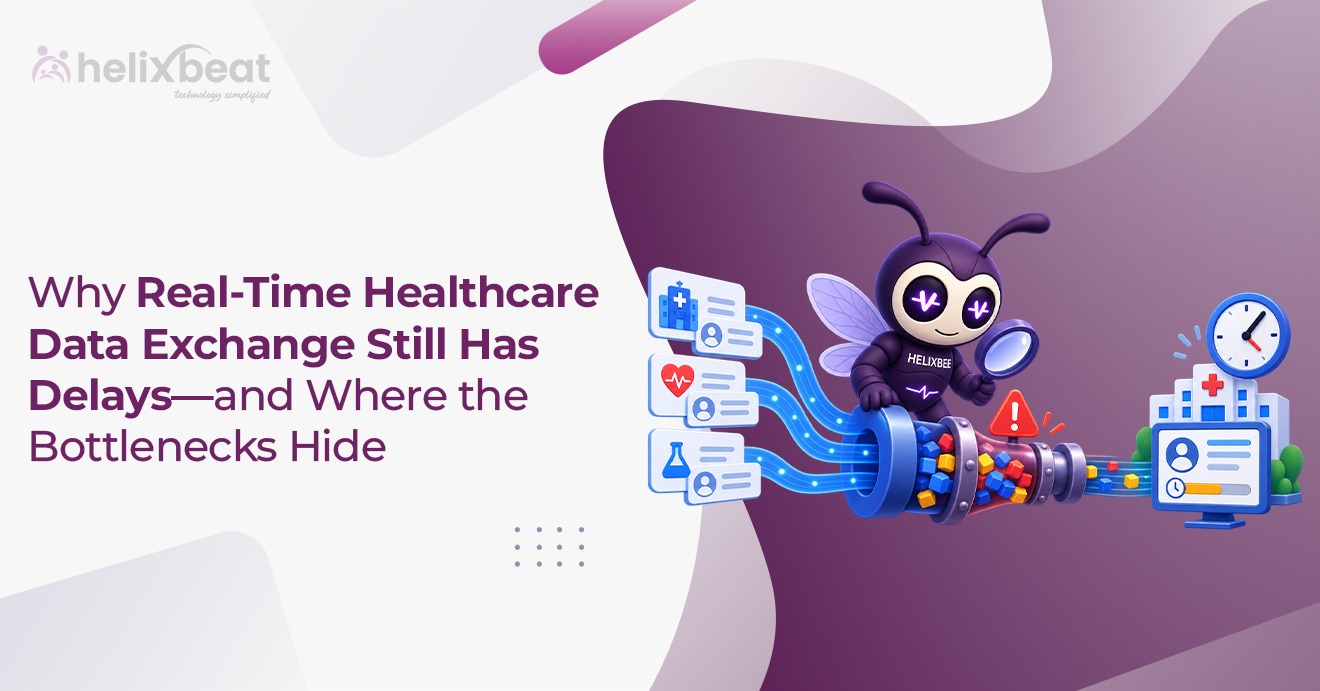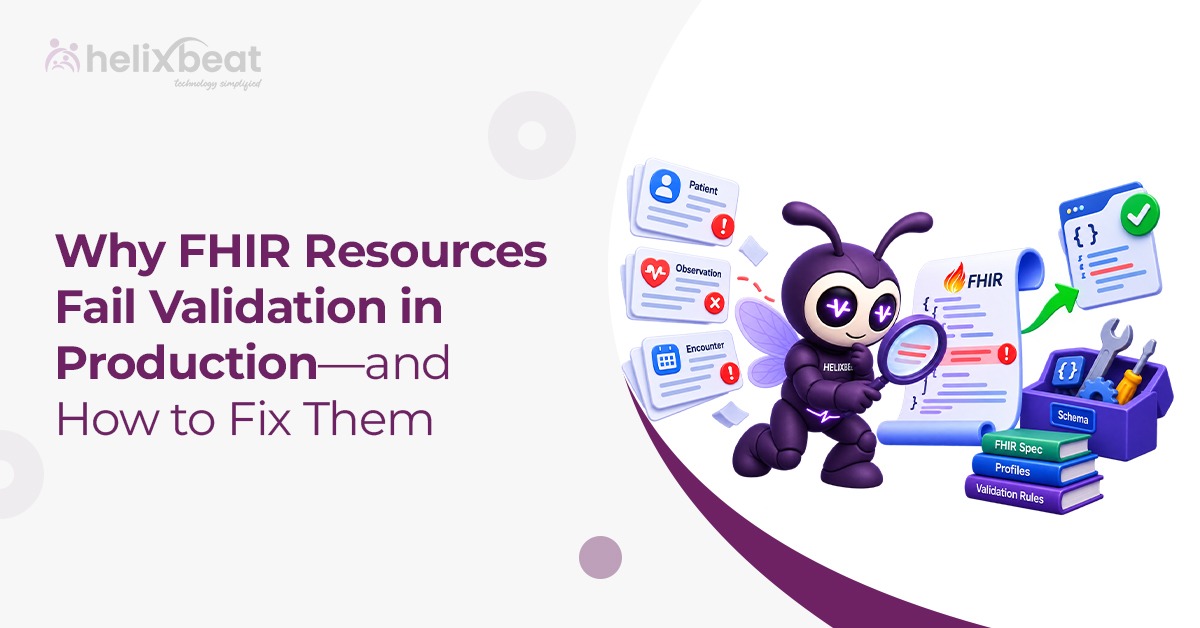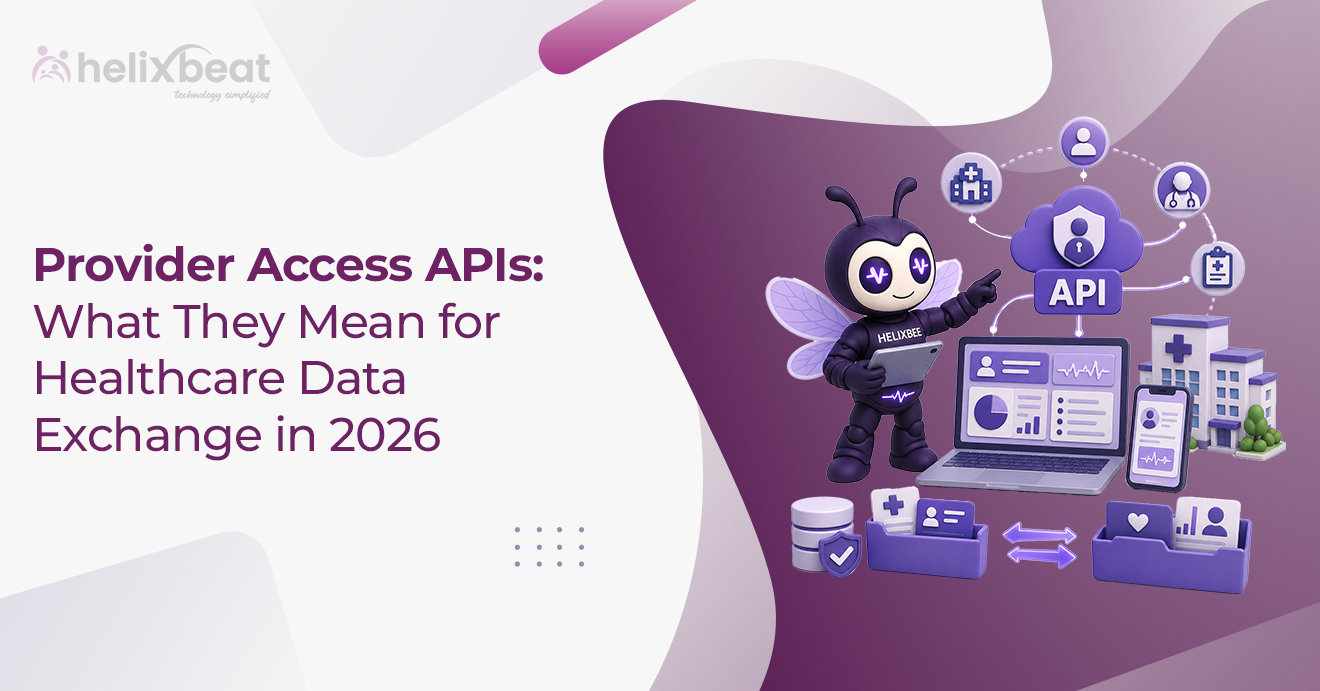


In 2026, FHIR interoperability has become a powerful driver of real-time clinical decision-making. As more healthcare systems adopt FHIR, the focus is moving away from static API connections toward intelligent systems that deliver instant insights. These advances help clinicians make faster decisions, improve patient outcomes, and streamline operations.
In this blog, we’ll discuss the current landscape, emerging technologies, and what they mean for healthcare organizations in 2026.
Table of Contents
The Current State of FHIR Interoperability
Industry reports point to a steady rise in practical use cases, as providers and payers shift from conceptual models to production-ready deployments. The HL7 FHIR standard supports faster and more flexible access to healthcare data, helping organizations connect systems more efficiently and reduce manual reporting efforts. At the same time, adoption remains uneven across regions and organizations. Current trends suggest expanding use of FHIR to link clinical data with administrative and payment workflows, gradually reducing reliance on traditional, siloed data exchange methods.
Similarly, government policies in the United States play a big role. The Office of the National Coordinator for Health Information Technology (ONC) advances interoperability through frameworks like the Trusted Exchange Framework and Common Agreement (TEFCA), which streamlines nationwide data sharing. The Health IT Certification Program mandates the United States Core Data for Interoperability (USCDI), covering elements like clinical notes and medications. Recent proposals, like HTI-5, signal a shift toward FHIR-first approaches, eliminating outdated requirements and anchoring policies on this standard.
Globally, FHIR adoption impacts various sectors. For example, in healthcare integration, event-driven workflows powered by FHIR APIs blend AI with standardized data exchange. These developments reflect that FHIR interoperability is no longer a chore for IT departments, but a foundation for better, more connected medical services.
Shifting from APIs to Event-Driven Architectures
Traditional APIs started the job, but FHIR takes it further by making data exchange more reliable and secure. The emphasis moves beyond these to event-driven architectures that support real-time processing. RESTful APIs combined with FHIR create unified approaches for delivering accurate data directly into clinical workflows. This evolution addresses limitations in batch processing.
One key advancement involves transitioning from older formats like C-CDA to FHIR, which facilitates real-time data retrieval and updates. Instead of sending a whole file like C-CDA, FHIR uses modular parts that make it easy for patient apps to grab exactly what they need. Because FHIR uses APIs, it’s flexible enough for organizations to build their own workflows.
Event-driven systems highlight this shift in healthcare interoperability. For instance, FHIR APIs are increasingly used to speed up pharmaceutical data exchanges, moving from slower, document-based workflows toward faster, automated processing. In clinical research, initiatives under the HL7 Vulcan FHIR Accelerator provide guidance and tools that help align healthcare and research data, supporting more standardized and timely information sharing. These architectures aim to convert complex, real-world data into structured inputs that clinicians and researchers can use for decision-making.
Additionally, FHIR interoperability works alongside modern security approaches like Zero Trust, which is becoming more common in healthcare IT to protect sensitive data while supporting rapid, secure exchanges.
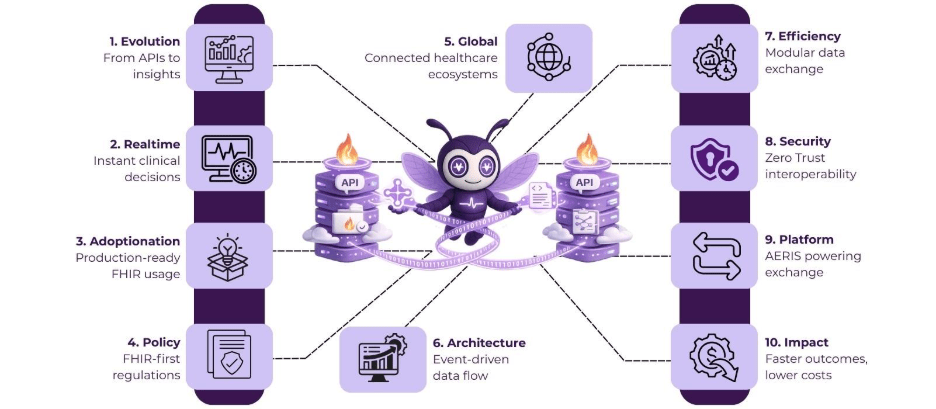
How AERIS Makes FHIR Interoperability Possible in 2026?
Imagine a world where your healthcare organization thrives with seamless, secure, and real-time data exchange. That’s the power of AERIS by Helixbeat, a game-changing platform designed to transform how you connect, collaborate, and care. Built for healthcare providers, clinics, hospitals, and cross-industry partners like pharmacies and insurers, AERIS harnesses FHIR standards to break down data silos, streamline operations, and put patient care first.
Ready to cut delays by 50%, double your ROI, and empower your team with instant access to critical data? Let’s dive into why AERIS is the solution you’ve been waiting for.
Why AERIS is Your Key to Healthcare Innovation?
At Helixbeat, we know your challenges: fragmented systems, delayed data, and rising costs. AERIS is here to change that, offering a personalized, scalable, and secure platform that fits your unique needs. Whether you’re a small clinic or a sprawling hospital network, AERIS delivers measurable results that elevate patient outcomes and boost your bottom line.
- 20+ Years of Expertise: Our team brings decades of healthcare IT experience to ensure AERIS works for you.
- 50+ IT Professionals: A dedicated crew powers AERIS, delivering unmatched support and innovation.
- 1,000+ Customers: Join a thriving community of healthcare leaders already transforming with AERIS.
- 10,000+ Projects Completed: Proven success across countless integrations and workflows.
- 95% Returning Customers: Our clients trust AERIS to deliver, time and time again.
Providers adopting AERIS report faster diagnoses, lower costs, and improved outcomes, positioning it as the go-to tool for future-proof HIE.
Your Benefits, Amplified
- 50% Fewer Delays: Real-time data means critical information is always at your fingertips, turning hours into seconds.
- 100% Faster ROI: Plug-and-play integration maximizes your investment without expensive system replacements.
- 30% Cost Savings, 90% Fewer Errors: Automation eliminates waste, saving resources and ensuring accuracy.
Final Thoughts
FHIR interoperability in 2026 is a gateway to smarter, faster, and more connected healthcare. As adoption grows, healthcare providers who embrace FHIR are better positioned to respond quickly, reduce inefficiencies, and drive innovation across the care continuum.
AERIS by Helixbeat brings the full potential of FHIR interoperability to your organization. From seamless real-time data exchange to secure, scalable workflows, AERIS transforms how clinics, hospitals, pharmacies, and insurers connect and collaborate. Accelerate diagnoses, reduce costs, and elevate patient care, all while keeping your systems agile for the future.
Discover AERIS today and experience healthcare without delays. Schedule a call with Helixbeat today!
FAQs
1. How does FHIR integrate with clinical research?
Initiatives like the HL7 Vulcan FHIR Accelerator provide guidance and tools to align healthcare and research data, supporting timely and standardized sharing.
2. Is FHIR secure?
FHIR works alongside security frameworks like Zero Trust, protecting sensitive data while enabling rapid and secure exchange between systems.
3. Can FHIR replace traditional APIs?
FHIR builds on RESTful APIs but offers modular, real-time data exchange that goes beyond traditional static API integrations.
4. What sectors benefit most from FHIR?
Hospitals, clinics, pharmacies, insurers, and research organizations all gain from faster, standardized data workflows.
5. How does AERIS use FHIR interoperability?
AERIS leverages FHIR to break down data silos, streamline operations, and provide real-time access to clinical and administrative data.