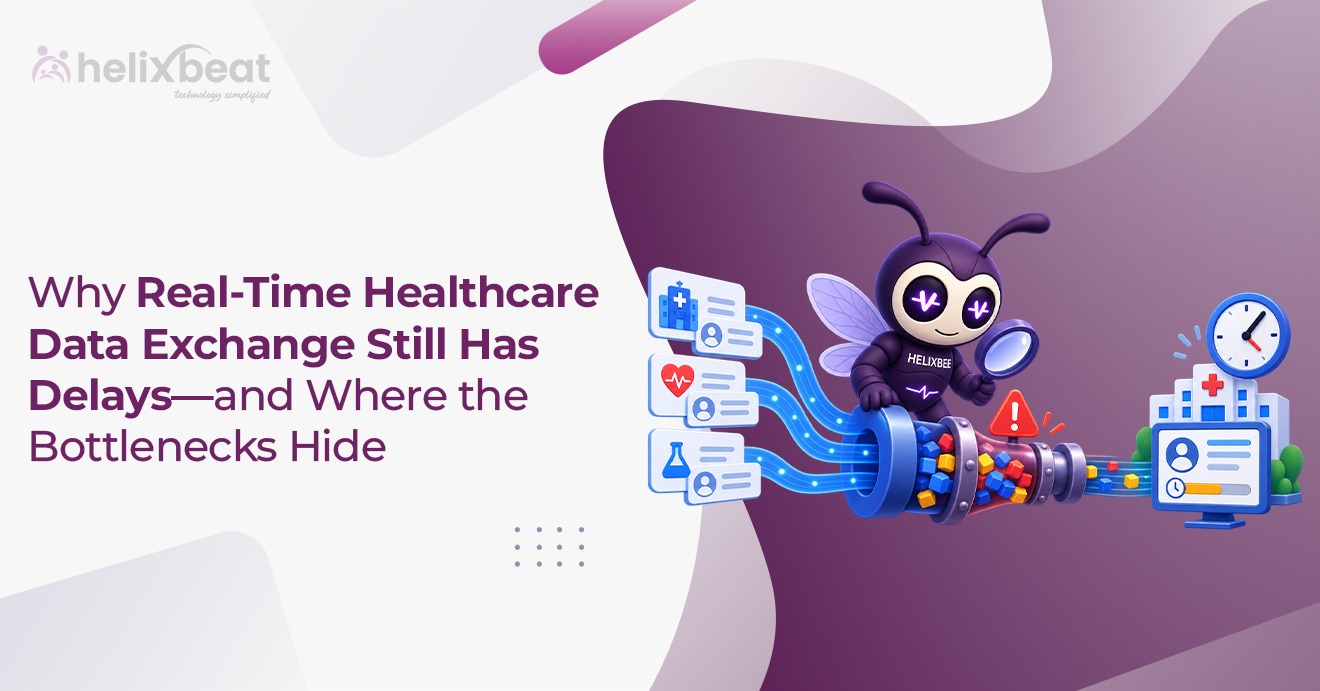

In the modern healthcare ecosystem, the need for seamless communication across systems has never been more critical. Healthcare organizations manage vast amounts of data, including electronic health records (EHRs), laboratory results, imaging data, and patient-generated health information. Yet, one of the most persistent challenges is healthcare data interoperability. However, event streaming has emerged as a transformative technology that addresses this challenge.
Table of Contents
What is Event Streaming?
Event streaming is a data architecture paradigm in which systems continuously produce, transmit, and consume streams of events or messages in real-time. An “event” represents a discrete occurrence, such as a new lab result, a patient admission, or a medication update. Event streaming platforms enable healthcare organizations to ingest these events in real time, process them, and distribute the data to multiple systems simultaneously. With this approach, connected applications and services maintain access to the most up-to-date information without delays.
How Event Streaming Enhances Healthcare Data Interoperability
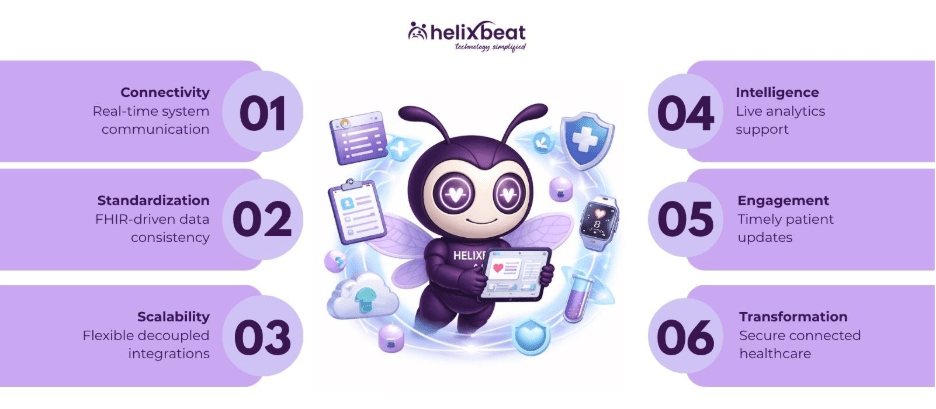
1. Real-Time Data Exchange
One of the key advantages of event streaming is its ability to support real-time data exchange. For example, when a patient’s vital signs change in the ICU, event streaming triggers instant updates across monitoring dashboards, alert systems, and care team devices. This level of responsiveness is critical for critical care scenarios, where delays in information can impact patient outcomes.
2. Standardized Data Flow Across Systems
Event streaming platforms often incorporate tools like AERIS, which help standardize incoming data before it reaches other applications. By enforcing consistent formats and validation rules using FHIR, healthcare organizations can overcome the challenges posed by heterogeneous data sources. This standardization is important for achieving healthcare data interoperability.
3. Decoupling Systems for Scalability
Traditional healthcare IT architectures often rely on tight integrations between systems, which makes them difficult to scale or modify. Event streaming decouples data producers (such as EHRs or lab systems) from data consumers (like analytics platforms or patient portals). This decoupling enables healthcare organizations to add new systems, applications, or analytics tools without disrupting existing workflows.
4. Support for Advanced Analytics and AI
Event streaming feeds advanced analytics and AI with a continuous flow of high-fidelity, real-time data. As a result, healthcare organizations can drive faster insights and proactive interventions by using event streaming to deliver live data streams directly to AI and analytics platforms.
5. Improved Patient Engagement
Interoperable healthcare data can also enhance patient engagement. With event streaming, patient-facing applications like mobile health apps or patient portals can receive real-time updates on appointments, lab results, and care plans. Patients gain a more accurate and immediate understanding of their health status, which encourages proactive management of chronic conditions and adherence to treatment plans.
6. Facilitating Regulatory Compliance
Healthcare organizations must comply with regulations such as HIPAA in the U.S. and other local patient data privacy laws. By enabling consistent and secure data flows across systems, event streaming supports both interoperability and regulatory adherence.
Best Practices for Leveraging Event Streaming in Healthcare
- Adopt Industry Standards: Leverage HL7 FHIR with AERIS and other healthcare standards to drive data consistency and seamless interoperability.
- Implement Robust Data Governance: Establish clear policies for data quality, privacy, and access control.
- Prioritize Real-Time Analytics: Integrate event streams with analytics and AI platforms to extract actionable insights quickly.
- Start Small and Scale: Begin with high-impact use cases such as lab results or vital signs monitoring, then expand to broader applications.
- Invest in Staff Training: Equip IT teams and clinical staff with the skills needed to manage and utilize event streaming platforms effectively.
How AERIS Enhances Healthcare Data Interoperability with FHIR APIs?
Achieving true healthcare data interoperability demands real-time, standardized, and secure access to patient information. This is where AERIS by Helixbeat comes in, offering a powerful platform that combines event streaming with FHIR APIs.
AERIS enables healthcare providers, clinics, hospitals, pharmacies, and insurers to move beyond fragmented systems and adopt a connected, API-driven approach. Through FHIR APIs, the system supports real-time data exchange and provides instant access to critical patient information at the point of care.
As a result, AERIS creates a consistent, reliable data layer that simplifies integration, accelerates digital transformation, and drives meaningful improvements in healthcare data interoperability.
Why AERIS is Your Key to Healthcare Innovation
- 20+ Years of Expertise: Our team brings decades of healthcare IT experience to ensure AERIS works for you.
- 50+ IT Professionals: A dedicated crew powers AERIS, delivering unmatched support and innovation.
- 1,000+ Customers: Join a thriving community of healthcare leaders already transforming with AERIS.
- 10,000+ Projects Completed: Proven success across countless integrations and workflows.
- 95% Returning Customers: Our clients trust AERIS to deliver, time and time again.
Providers adopting AERIS report faster diagnoses, lower costs, and improved outcomes, positioning it as the go-to tool for future-proof HIE.
Final Thoughts
Event streaming is transforming the way healthcare organizations achieve healthcare data interoperability. Platforms like AERIS by Helixbeat combine the power of real-time event streaming with standardized FHIR APIs to break down data silos, streamline workflows, and enhance care coordination across providers, hospitals, pharmacies, and insurers.
By adopting AERIS, healthcare organizations accelerate digital transformation, improve patient outcomes, and deliver critical health information precisely when and where it’s needed. Get in touch with Helixbeat today!
FAQs
1. What is healthcare data interoperability?
Healthcare data interoperability is the ability of different health IT systems and applications to exchange, interpret, and use patient data seamlessly and securely.
2. How does event streaming improve healthcare data interoperability?
Event streaming enables real-time, continuous data flow between systems, ensuring timely access to patient information and reducing delays caused by batch processing.
3. What role do FHIR APIs play in interoperability?
FHIR (Fast Healthcare Interoperability Resources) APIs provide standardized formats and protocols for healthcare data exchange, ensuring different systems can read and process the data correctly.
4. How does AERIS combine event streaming and FHIR APIs?
AERIS leverages event streaming for real-time data delivery while using FHIR APIs to enforce standards and ensure interoperability across healthcare systems.
5. Which healthcare organizations can benefit from AERIS?
Hospitals, clinics, laboratories, pharmacies, insurers, and other healthcare providers can benefit from improved data exchange and streamlined workflows.