
Table of Contents
Introduction: The Silent Risk at Your Office Entrance
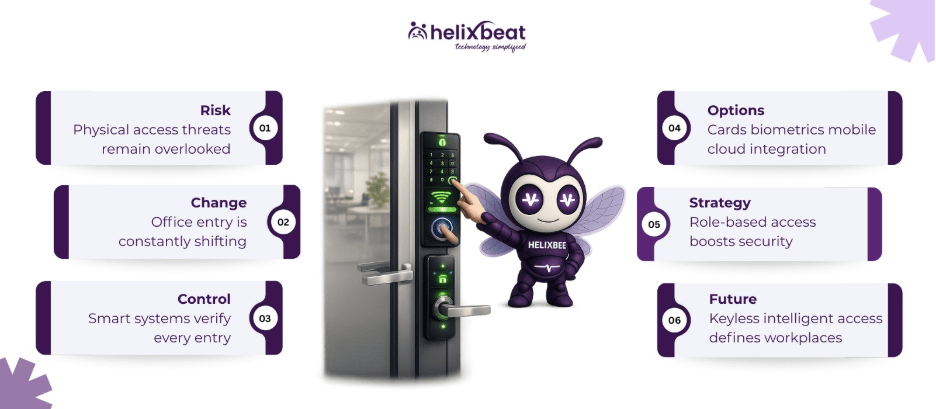
In 2026, Indian businesses are becoming more advanced than ever. From AI tools to cloud platforms, everything is evolving fast. But while digital security is improving, physical access is often overlooked.
Reports suggest that over 70% of security breaches involve unauthorized physical entry, and India’s access control market is rapidly expanding. Still, many offices continue to rely on outdated door entry systems like manual registers and shared access cards.
This brings up a simple but important question—who actually has access to your office right now?
A modern office door entry system is no longer just a facility upgrade. It’s a core part of how businesses protect people, data, and operations.
The Changing Reality of Office Access
Today’s offices are no longer predictable environments. Teams work in shifts, visitors arrive frequently, and vendors move in and out throughout the day. In cities like Bengaluru, Chennai, and Hyderabad, workplaces are constantly active.
In such conditions, access is not fixed—it keeps changing. Employees join and leave. Temporary staff require limited access. Visitors need controlled entry.
Without structured office access control systems, this creates confusion. Access permissions may remain active longer than they should. Visitors may enter without proper verification. Even a lost access card can become a risk.
Traditional door entry systems simply don’t offer the level of control required for this kind of environment.
Why Access Control Needs a New Approach
Earlier, security was about locking doors. If the door was closed, the office was considered safe.
But today, that approach is outdated. Security is no longer about the door—it’s about the people who pass through it.
A modern office door entry system focuses on managing access intelligently. It ensures that the right individuals can enter at the right time, under the right conditions.
This shift is driven by smart access control solutions that combine automation, authentication, and real-time tracking. Instead of relying on assumptions, businesses now operate with clarity.
This is what defines modern workplace security systems—they don’t just protect spaces, they manage access behavior.
How a Modern Office Door Entry System Works
The biggest difference in modern systems is how early the process begins—especially for visitors.
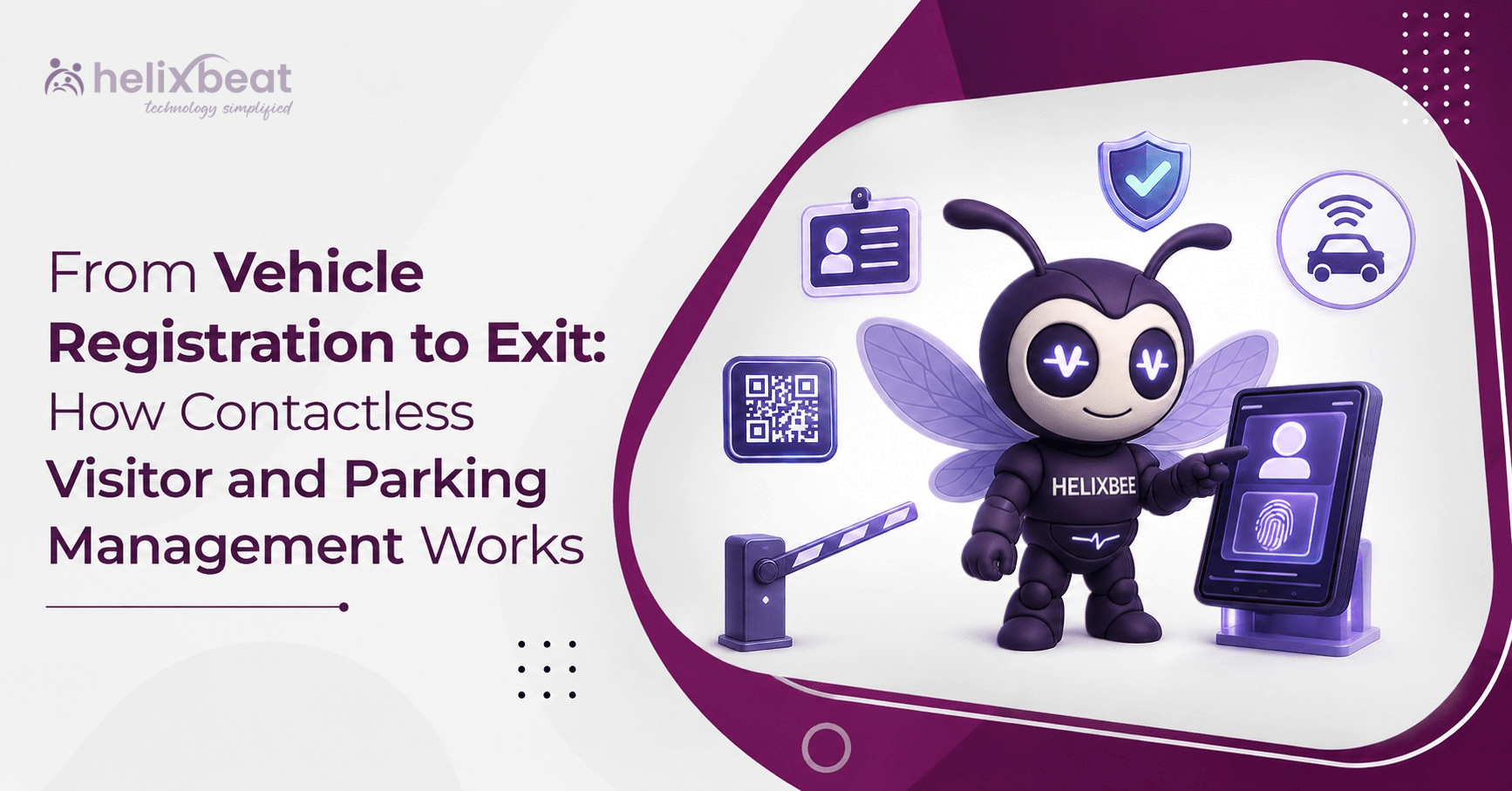
Before arriving, a guest is usually pre-registered by the host. Their details, purpose of visit, and expected time are submitted and approved in advance. This ensures that only expected visitors reach the office.
Once approved, the visitor receives a digital pass, typically a QR code. This becomes their entry credential.
When they arrive, they simply scan the code at the entrance using the office door entry system. The system checks their identity and validates their access instantly. If approved, the door opens. If not, entry is denied.
Behind this simple process, office access control systems are continuously working. Every entry is logged. Every movement can be tracked. Businesses know exactly who is inside the office at any given time.
This level of visibility is something traditional door entry systems could never provide.
Types of Door Entry Systems in Modern Offices
Today, businesses have multiple options when it comes to choosing an office door entry system.
1. Card-Based Systems
- RFID cards or ID badges
- Widely used in Indian offices
Still used by 60% of organizations globally
Limitations:
- Can be lost or shared
- No real identity verification
2. Biometric Systems
- Fingerprint
- Facial recognition
- Iris scan
High-security environments prefer this type of office access control systems
Benefits:
- Unique identification
- No duplication
3. Mobile-Based Access
- Smartphone-based entry
- QR or app-based authentication
Growing trend in keyless entry systems for offices
Benefits:
- No physical cards
- Easy to manage remotely
4. Cloud-Based Systems
- Centralized control
- Multi-location management
Ideal for enterprises using advanced workplace security systems
5. Integrated Visitor + Access Systems
- Combines visitor management with entry control
- Example: systems like VISTA
Creates a unified office door entry system experience
All these advancements show how workplace security systems are evolving into smarter, connected environments.
Improving Office Security with Access Control
For many businesses, improving security starts with installing cameras. But real control begins at the entry point.
Understanding how to improve office security with access control systems means taking a structured approach. First, all entry points must be identified. Then, access levels should be clearly defined for employees, visitors, and vendors.
A well-designed office door entry system ensures that access is not open or shared—it is controlled and role-based.
Integration plays a major role here. When entry systems are connected with visitor tracking, businesses gain full visibility. This is where smart access control solutions become powerful, combining data, automation, and security into one system.
Modern keyless entry systems for offices also provide insights into movement patterns, helping businesses identify risks and improve efficiency.
These are some of the key benefits of smart door entry systems for workplaces, especially in high-traffic office environments.
How to Improve Office Security with Access Control Systems
Here’s a practical approach for Indian businesses:
Step 1: Identify Entry Points
- Main entrance
- Restricted zones
- Server rooms
Step 2: Define Access Levels
- Employees
- Visitors
- Vendors
Step 3: Implement Role-Based Access
Not everyone needs access to everything
Step 4: Integrate with Visitor Management
Combine:
- Entry system
- Visitor tracking
This is where solutions like VISTA become powerful
Step 5: Monitor & Optimize
Use analytics to:
- Identify risks
- Improve flow
How to Choose the Best Door Entry System for Your Office
When selecting an office door entry system, businesses today are focusing on the best door entry systems for offices in 2026—solutions that are secure, scalable, and easy to manage. Here’s a simple way to evaluate the right system:
1. Security Level
- Basic offices can use card-based door entry systems
- High-security environments should opt for biometric-enabled office access control systems
Choose based on risk, not just convenience
2. Office Size
- Small offices → Standalone office door entry system
- Large enterprises → Cloud-based systems
Essential for scaling and multi-location control within workplace security systems
3. Integration Capability
Check if the system connects with:
- CCTV
- Visitor management platforms
- HR systems
Strong smart access control solutions integrate everything into one system
4. Ease of Use
- Simple interfaces improve adoption
- Complicated systems slow down operations
Even advanced keyless entry systems for offices must be user-friendly
5. Cost vs Value
- Don’t focus only on price
- Evaluate:
- Risk reduction
- Time saved
- Operational efficiency
A good office door entry system delivers long-term value, not just short-term savings
Choosing the right system ensures your workplace security systems are not just functional, but future-ready.
Modern keyless entry systems for offices offer flexibility and better control, making them a preferred choice for growing businesses.
The Role of Smart Access in Indian Workplaces
India’s office landscape is changing rapidly. Co-working spaces, tech parks, and large corporate campuses are becoming more common.
This growth brings challenges—higher visitor volumes, shared spaces, and increased security risks.
To manage this, workplace security systems are evolving into integrated ecosystems. They combine access control, monitoring, and analytics into a single framework.
Solutions like VISTA enhance the office door entry system by integrating visitor management with real-time tracking. Businesses can see who entered, when they entered, and why they were there.
This level of insight transforms office entry from a basic function into a strategic advantage.
The Future of Door Entry Systems
The future of door entry systems is intelligent and seamless. AI-based decisions, facial recognition, and mobile-first access are becoming standard.
Businesses are moving towards systems that not only manage entry but also predict risks. This shift highlights the importance of keyless entry systems vs traditional locks for offices, where digital solutions clearly offer better control.
As technology evolves, smart access control solutions will continue to shape how organizations manage access, making workplaces safer and more efficient.
Conclusion
In 2026, security begins with access. A modern office door entry system ensures that every entry is controlled, verified, and tracked. With evolving workplace security systems and smart access control solutions, businesses can move beyond basic security and build smarter, safer workplaces.
Because in the end, controlling access means controlling security.
FAQs
1. What is an office door entry system and how does it work?
An office door entry system is a digital solution that controls and monitors access to your workplace. It uses credentials like cards, biometrics, or mobile apps to verify identity and grant or deny entry in real time.
2. How do office access control systems improve workplace security?
Office access control systems improve workplace security systems by restricting unauthorized entry, tracking movement, and providing real-time visibility of who is inside the office at any time.
3. Are keyless entry systems for offices better than traditional locks?
Yes, keyless entry systems for offices are more secure and flexible. Unlike traditional locks, they allow instant access control, remote management, and better tracking, making them a smarter alternative.
4. What are the benefits of smart door entry systems for workplaces?
The benefits of smart door entry systems for workplaces include enhanced security, faster entry, real-time tracking, reduced manual work, and better integration with modern smart access control solutions.