

Every time a visitor check in goes wrong — an unauthorized contractor walks in unchallenged, a host gets no warning their client arrived, a paper log exposes personal data to anyone in the lobby — it costs your business money, trust, and potentially your compliance standing. In 2026, US companies are no longer willing to accept that risk. Automated visitor pre-invites are becoming standard operating procedure, and the businesses still running manual front desks are falling dangerously behind.
Platforms like VISTA by Helixbeat are leading this shift — replacing paper logs and reactive reception workflows with smart, touchless, data-driven visitor check in systems that protect your premises before a guest even walks through the door.
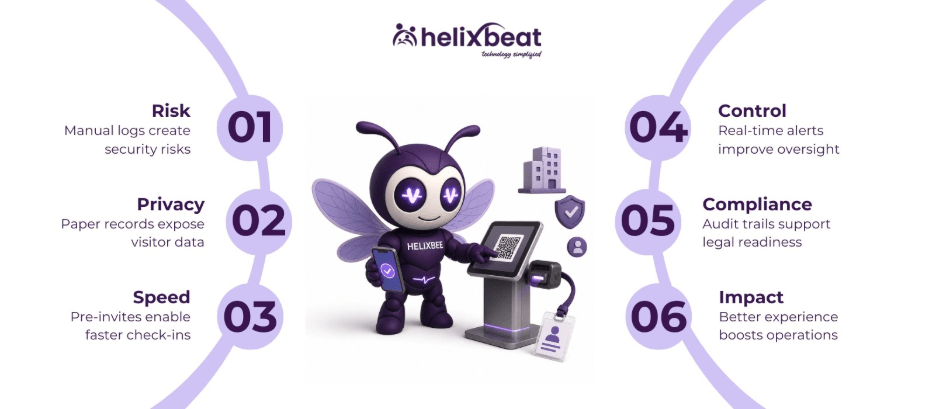
Table of Contents
Why the Old Visitor Check In Model Is a Liability
For decades, front desk visitor check in was treated as a low-priority task. A guest arrived, scribbled their name on a paper sheet, got a stick-on badge, and waited while a receptionist called upstairs. It felt manageable — until you look at what that model actually costs.
That paper log sitting on the reception desk? It contains names, phone numbers, company affiliations, and arrival times — visible to every person who walks by. In a regulatory environment shaped by the California Consumer Privacy Act (CCPA), HIPAA access controls, and SOC 2 compliance requirements, that clipboard is not just sloppy. It is a legal exposure.
Beyond compliance, a manual visitor check in system creates operational drag every single day. Receptionists are pulled away from real work dozens of times. Hosts are blindsided when clients arrive. Contractors enter without pre-authorization. And in a genuine emergency, there is no reliable, real-time headcount of who is actually inside the building.
These are not inconveniences. They are security gaps and compliance failures — and they are entirely preventable.
What Automated Visitor Pre-Invites Actually Do
Automated pre-invites fundamentally change when the visitor check in process begins. Instead of starting at the front desk, it starts days before the visit.
Here is the VISTA workflow in practice:
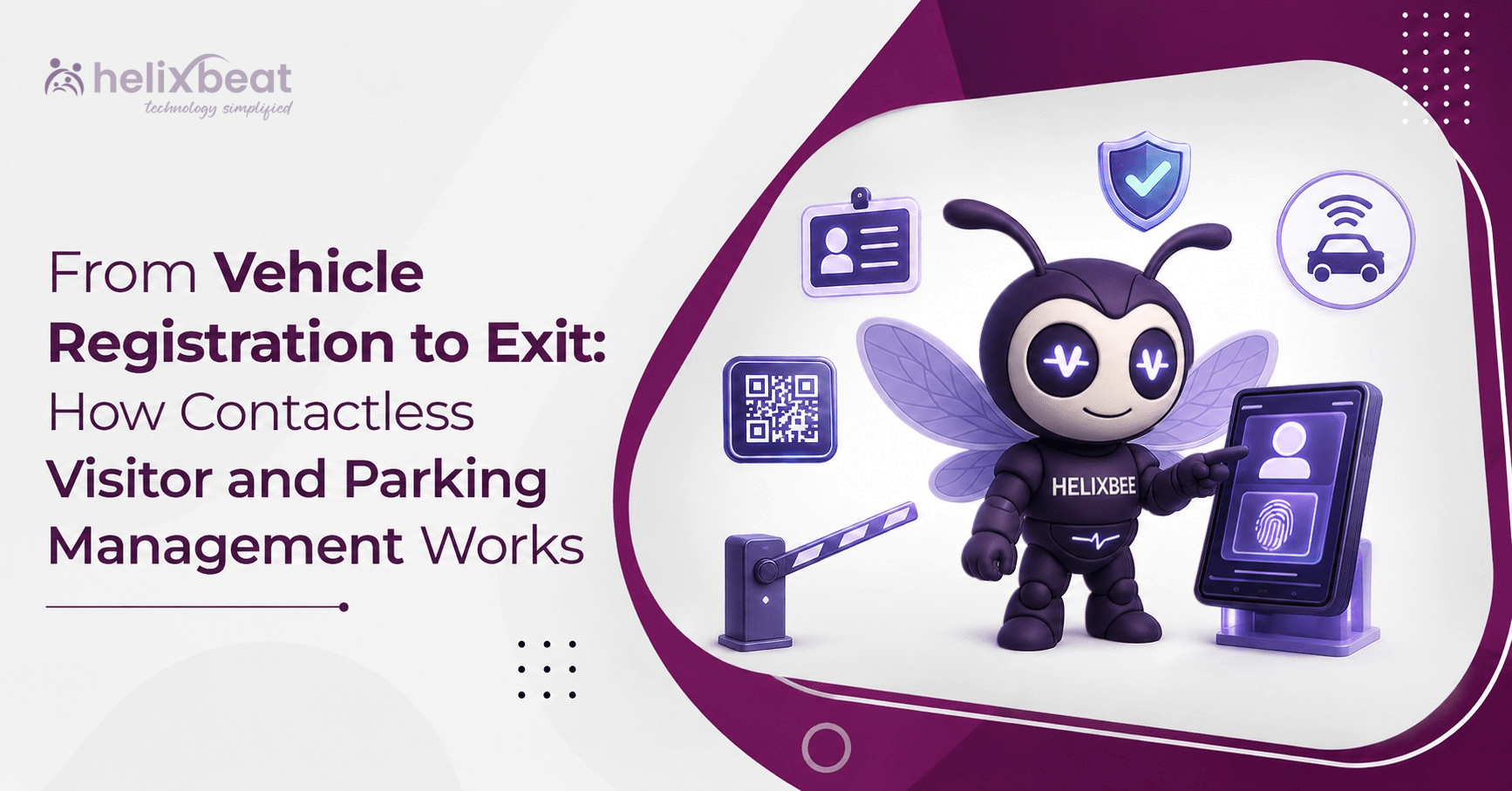
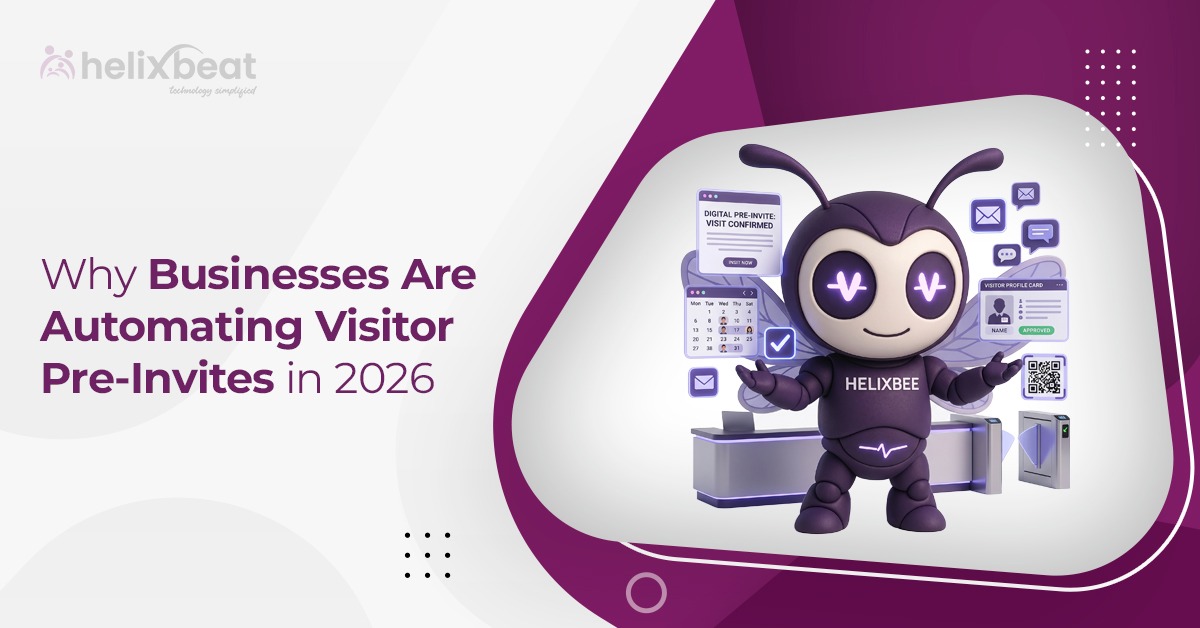
A host sends a digital pre-registration link to their guest. The visitor completes their details in advance — name, company, purpose of visit, ID verification — and receives a unique QR code. On arrival, they scan the code at a kiosk or use facial recognition for a completely touchless visitor check in. The host receives an instant notification. Access is granted only to approved areas based on role-based permissions. At visit end, one tap triggers checkout, and the visitor’s personal data is automatically cleared from active systems — keeping the business compliant with privacy law without any manual cleanup.
The result: a visitor check in experience that takes under 30 seconds, leaves no security gaps, and generates a clean audit trail automatically.
Why 2026 Is the Year US Businesses Are Making the Switch
Several forces converged to make automated visitor check in not just desirable but necessary in 2026.
Hybrid work broke the traditional front desk model. When employees rotate across flexible schedules, a receptionist can no longer recognize every face or anticipate every arrival. Offices are running at variable occupancy with frequent external visitors — clients, vendors, contractors, auditors. A smart visitor check in system that pre-screens and pre-authorizes guests has become essential infrastructure.
Physical security threats are escalating. Unauthorized access incidents in US corporate environments rose sharply in the post-pandemic period. The front door remains the most exploited vulnerability. Automated visitor check in with digital ID verification, QR authentication, and role-based access control closes that gap in ways a human receptionist simply cannot.
Regulatory scrutiny on physical access has intensified. Healthcare campuses managing HIPAA compliance, financial firms under SOC 2, and government contractors navigating federal access protocols all face increasing pressure to document exactly who was in their building and when. An automated visitor check in platform with timestamped logs and automatic data expiration handles this by default.
First impressions are a competitive advantage. A client who walks into your office and breezes through a smooth, contactless visitor check in experience forms an immediate impression of your organization’s professionalism and operational maturity. A paper clipboard sends the opposite message.
How VISTA Handles Visitor Check In End-to-End
VISTA is not a digital version of a sign-in sheet. It is a complete visitor lifecycle management platform that serves both your security team and your guests simultaneously.
For administrators and security teams, VISTA delivers a centralized real-time dashboard showing every active visitor check in, pending approval, and access event across the facility. Role-based permissions mean a front desk manager sees their zone’s data while a security director has visibility across all locations. Emergency management tools produce instant evacuation lists. And automated post-visit data clearance keeps the system compliant without anyone needing to run manual cleanup jobs.
For visitors and hosts, the experience is frictionless. Guests pre-register at their convenience, arrive with a QR code, and complete a touchless visitor check in via kiosk scan or facial recognition in seconds. Hosts get a real-time push notification the moment their guest checks in — no more awkward lobby waits or missed arrivals. Repeat visitors maintain a saved profile that makes every future visitor check in even faster.
For IT and facilities teams, VISTA integrates directly with existing infrastructure — badge readers, door access control systems, and surveillance cameras — so there is no need to rip out current investments. The platform is fully cloud-based, which means zero on-premise server maintenance and automatic updates.
This end-to-end approach is what separates a true visitor check in platform from a simple digital form.
The Numbers Behind the Business Case
The ROI of automated visitor check in is concrete and measurable.
VISTA customers report reducing visitor check in processing time by up to 90% compared to manual systems. For a facility handling 50 visitors per day, that is hours of receptionist time recovered daily — time redirected to higher-value work.
From a security standpoint, every visitor check in generates a timestamped, searchable log. When an access incident occurs, security teams can pull a complete visitor history in seconds rather than sifting through handwritten pages. That response speed matters enormously in both real emergencies and compliance audits.
For multi-site organizations, VISTA’s analytics dashboard aggregates visitor traffic patterns across all locations — identifying peak hours, high-frequency guest types, and access anomalies. This is data that simply did not exist under a paper-based visitor check in model, and it directly improves both security posture and resource allocation.
Which US Industries Are Adopting This Fastest
Automated visitor check in is spreading across sectors, but adoption is moving fastest where security and compliance pressure is highest.
Corporate offices and headquarters are leading adoption, driven by hybrid work volatility, client-facing environments, and the need to project operational sophistication to external stakeholders.
Healthcare facilities use VISTA’s contactless visitor check in and automatic data clearance to maintain HIPAA-aligned access records without burdening clinical staff.
Government agencies and education campuses rely on VISTA’s emergency management tools and role-based access to keep large, high-traffic facilities secure without creating bottlenecks at entry points.
Commercial real estate and property management firms manage visitor check in across dozens of properties from a single VISTA dashboard, tracking contractor visits, tenant guests, and service providers in real time.
For a tactical breakdown of how organizations in these sectors are structuring their access control and visitor management strategies, this guide on visitor management tactics and implementation is worth reviewing before you build your own policy.
Getting VISTA Up and Running
Deploying an automated visitor check in system does not require a major IT project. VISTA is cloud-based, meaning setup requires nothing more than an internet connection and a device at your entry point — tablet, kiosk, or smartphone.
The VISTA team handles onboarding end-to-end: system configuration, integration with existing security hardware, and staff training. Most US organizations are live with a fully operational visitor check in system within days.
Pricing scales with business size, with a 20% discount on annual subscriptions and custom enterprise pricing available on request. A free demo is available for any organization that wants to see the full visitor check in workflow in action before committing.
The Bottom Line
The visitor check in process is not a back-office detail. It is the first physical touchpoint a guest has with your organization, a live security perimeter, and an active compliance obligation — all at once. Running it manually in 2026 is not just inefficient. It is a risk that has no upside.
VISTA by Helixbeat gives US businesses a visitor check in platform that is fast for guests, effortless for hosts, secure for facilities teams, and audit-ready for compliance officers. It turns the front door from a vulnerability into a competitive asset.
If your organization is still on paper logs or a basic digital form, the gap between where you are and where your peers are widening.
Request a free VISTA demo today and see how an automated visitor check in system transforms the experience from day one.
VISTA is a product of Helixbeat. Free demos available for businesses of all sizes — no commitment required.
Frequently Asked Questions
Does VISTA work with our existing badge and door access system? Yes. VISTA integrates with most badge readers, door access controllers, and surveillance systems already in place, so your visitor check in upgrade does not require replacing existing security hardware.
Is visitor data stored securely and in compliance with US privacy laws? VISTA automatically removes visitor personal data after each visit, maintaining compliance with CCPA and other applicable data privacy frameworks. All data in transit and at rest is encrypted.
How long does it take to deploy VISTA at a new location? Most organizations complete setup and go live with their automated visitor check in system within a few days. The VISTA team provides onboarding support and staff training as part of the process.
Can VISTA scale across multiple office locations? Absolutely. VISTA’s centralized dashboard gives administrators visibility and control across all sites, with location-specific permissions and reporting available from a single login.