

Every hospital IT leader knows this tension. Your HL7 integration layer keeps admissions, lab results, and billing data flowing every hour of every day. At the same time, it feels like a relic nobody wants to touch. Ripping out core systems to fix outdated interfaces sounds expensive, risky, and disruptive to patient care.
Here’s the good news. You don’t have to choose between “leave it alone” and “replace everything.” HL7 interface modernization can happen in stages, without touching your EHR, lab system, or your billing platform. In this blog, we walk you through a practical path for healthcare data integration that respects your budget, staff, and your patients.
Table of Contents
Why a Full Replacement Is Rarely the Right Call?
Swapping out core clinical systems just to fix messaging problems is like renovating a whole house because one pipe leaks. The financial cost is only part of it. Staff need retraining. Interfaces to labs, pharmacies, and payers need rebuilding from scratch. Go-live windows introduce downtime that no emergency department wants.
Most HL7 integration problems don’t actually live inside the EHR or the ancillary system. They live in the interface layer sitting between systems: the mapping rules, the point-to-point connections, and the aging integration engines translating pipe-delimited HL7 v2 messages. Fix that layer, and you solve the real pain without a system-wide rebuild.
What Interface Modernization Actually Means?
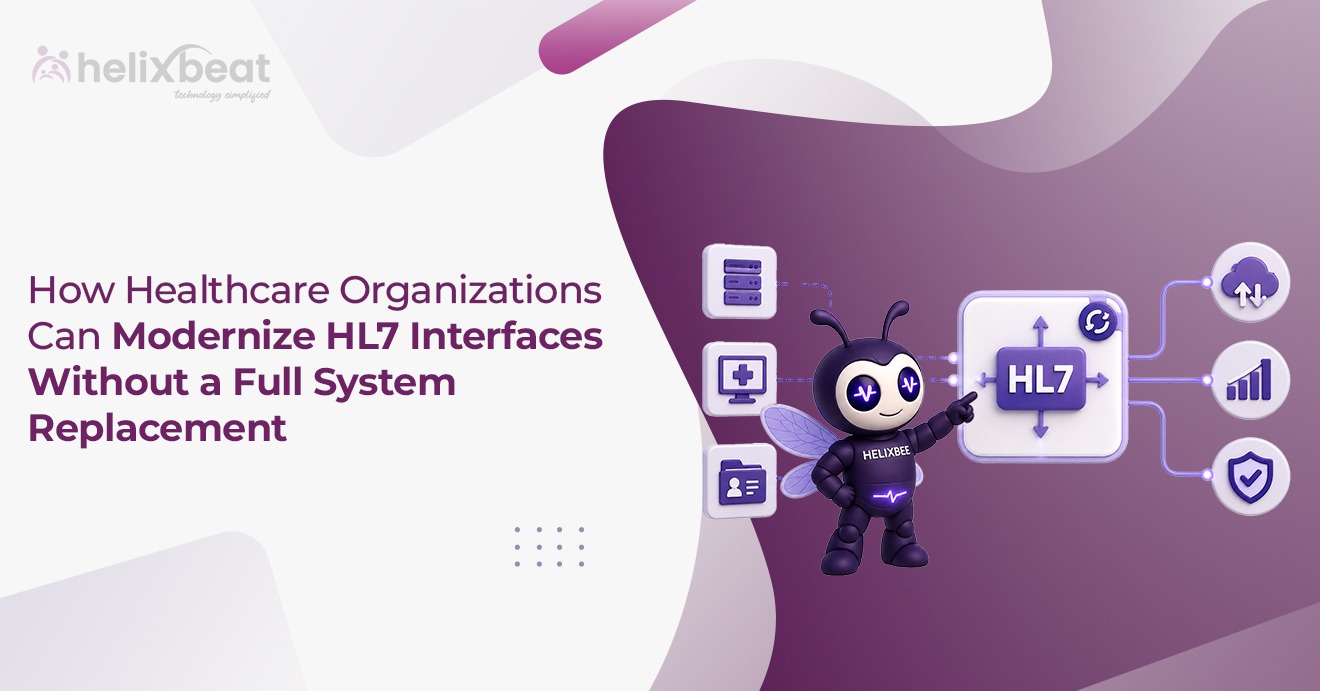
HL7 interface modernization isn’t about deleting HL7 v2. Version 2 still runs a huge share of daily transactions across hospitals, and it will for years. Modernization means adding a smarter, more flexible layer on top of what already works, so new applications, mobile tools, and analytics platforms can pull data using modern APIs.
That’s where HL7 to FHIR integration comes in. A well-designed HL7 to FHIR integration doesn’t replace your v2 feeds. It translates them and gives downstream applications a consistent, resource-based way to request patient data.
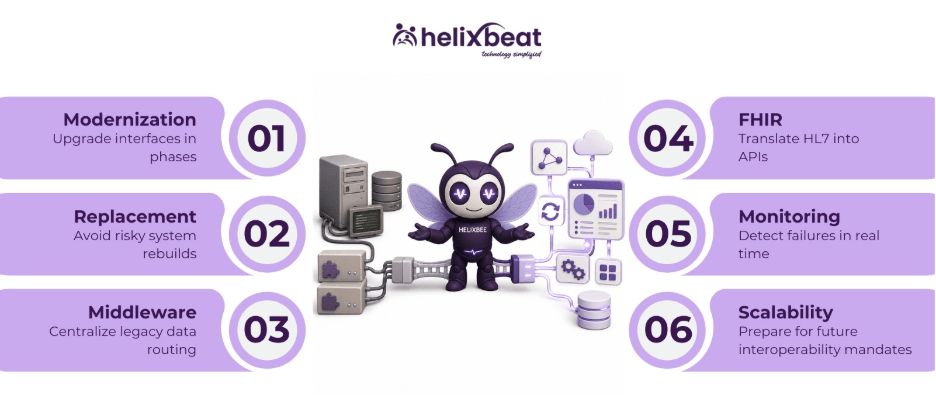
A Practical, Phased Approach
- Map what youactually have.Most organizations have accumulated interfaces over fifteen or twenty years, often with little documentation. Before changing anything, catalog every interface, its message types, its trading partners, and its failure history. This step alone uncovers redundant or dead connections worth retiring.
- Introduce a middleware abstraction layer.Instead of point-to-point connections between every system, route traffic through a single integration engine. This isolates legacy healthcare system integration logic from the applications themselves, so changing one endpoint no longer means touching five others.
- Add a FHIR facade over existing v2 feeds.Rather than rewriting source systems, place a translation layer that converts HL7 v2 messages into FHIR resources on the fly. As a result, clinicians and downstream apps get modern access, and the source system keeps working exactly as it did yesterday.AERIS is built around this exact pattern, standardizing data without forcing a rip-and-replace project.
- Migrate by trading partner, not all at once.Move one lab interface, one payer feed, or one referring clinic connection at a time. Validate each one against real transaction volume before moving to the next. This keeps riskcontained and gives staff time to adjust.
- Build in monitoring and alerting.Legacy interfaces often fail silently, and nobody notices until a claim getsrejected or a result goes missing. That’s why modern healthcare data integration needs dashboards that flag dropped messages, queue backlogs, and mapping errors in real time.
- Plan forwhat’scoming next. Federal interoperability rules increasingly expect FHIR-based APIs for data sharing, and networks like TEFCA are pushing toward broader, standardized exchange between organizations. Building your modernization roadmap now puts you ahead of mandates rather than scrambling to catch up.
Where Real-Time Exchange Fits In?
Interface modernization also opens the door to real-time data exchange. Today, care teams increasingly need current information the moment a patient moves between departments or facilities. AERIS sits alongside existing HL7 integration infrastructure to reduce delays in care coordination without disrupting the systems already in production.
How AERIS Enhances Healthcare Data Interoperability with FHIR APIs?
Achieving true healthcare data interoperability demands real-time, standardized, and secure access to patient information. This is where AERIS by Helixbeat comes in, offering a powerful platform that combines event streaming with FHIR APIs.
AERIS enables healthcare providers, clinics, hospitals, pharmacies, and insurers to move beyond fragmented systems and adopt a connected, API-driven approach. Through FHIR APIs, the system supports real-time data exchange and provides instant access to critical patient information at the point of care.
As a result, AERIS creates a consistent, reliable data layer that simplifies integration, accelerates digital transformation, and drives meaningful improvements in healthcare data interoperability.
Common Pitfalls Worth Avoiding
Teams often underestimate two things: data quality and testing time. Cleaning up mismatched patient identifiers before migration prevents downstream matching errors. Likewise, testing against production-like message volume catches problems before they reach clinicians. Skipping either step tends to resurface the same issues the project was meant to fix.
Another common mistake is treating modernization as a one-time project. Interfaces need ongoing maintenance as trading partners update their own systems. A broader legacy system modernization strategy treats interface upgrades as a continuous practice, not a single deployment.
The Payoff
Organizations that modernize interfaces see fewer integration failures, faster onboarding of new trading partners, and cleaner data reaching analytics and reporting tools.
HL7 integration doesn’t have to be an all-or-nothing decision. A layered, phased approach delivers modern capability while protecting the systems your organization depends on every single day.
Ready to modernize your HL7 integration strategy? Get in touch with us!
FAQs
- What does HL7 interface modernization actually involve?
It typically means adding an integration engine or middleware layer, translating legacy HL7 v2 messages into modern formats like FHIR, and cleaning up point-to-point connections, all without replacing the source systems.
- Can HL7 v2 and FHIR run side by side?
Yes. Most healthcare organizations run both for years. A FHIR facade can sit on top of HL7 v2 feeds, so legacy systems keep functioning while new applications use modern APIs.
- How long does HL7 interface modernization usually take?
It depends on the number of interfaces involved, but a phased rollout, migrating one trading partner at a time, often spans several months rather than a single big-bang cutover.
- Is HL7 to FHIR integration mandatory?
Federal interoperability rules increasingly expect FHIR-based APIs for certified health IT and data sharing programs, so most organizations will need some level of FHIR capability, even if HL7 v2 stays in place internally.
- What’s the biggest riskduringmodernization?
Poor data quality, especially mismatched patient identifiers, and insufficient testing against real transaction volume are the two most common causes of post-migration problems.