

Table of Contents
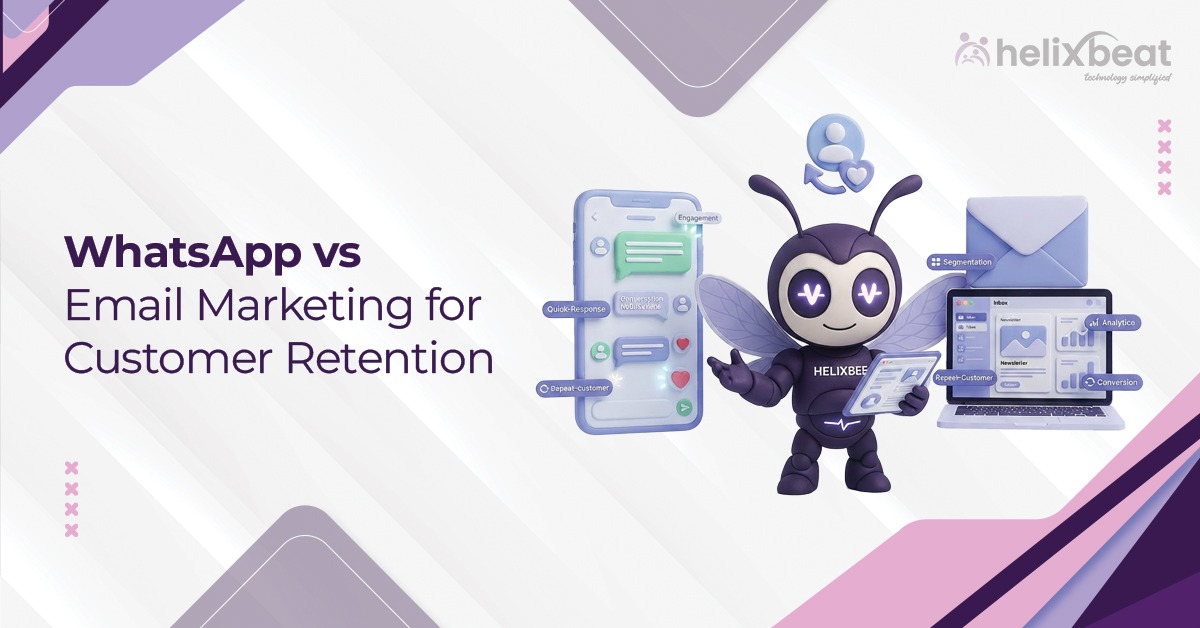
WhatsApp vs Email Marketing for Customer Retention
Winning a customer is expensive. Keeping one is profitable.
Yet many businesses put most of their budget into acquisition and treat retention as an occasional discount campaign. A customer buys once, receives a coupon weeks later, and hears nothing useful in between.
That is why WhatsApp vs Email Marketing has become an important strategic question.
Both channels can increase repeat purchases, reduce churn, and build loyalty. But they work differently. Email gives brands room to educate and nurture. WhatsApp creates fast, personal conversations that encourage immediate action.
The best choice depends on the message, the customer’s lifecycle stage, and the action you want them to take.
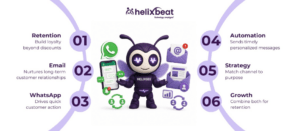
Why Customer Retention Needs a Connected Strategy
Retention is not created by sending more promotions. It grows through useful communication.
Customers stay when a business remembers their preferences, simplifies their experience, solves problems quickly, and provides value after the first purchase.
A customer retention marketing agency connects onboarding, education, service updates, loyalty offers, replenishment reminders, feedback requests, and win-back campaigns into one journey.
This is where marketing automation services become valuable. Automation lets brands respond to customer behavior instead of relying only on fixed campaign calendars.
The WhatsApp vs Email Marketing decision should begin with one question: What does the customer need at this moment?
How Email Marketing Builds Long-Term Relationships
Email works best when a message needs context.
Brands can use it for welcome journeys, newsletters, product education, loyalty programs, personalized recommendations, post-purchase guidance, and re-engagement campaigns.
A professional email marketing agency can segment customers by purchase history, engagement, interests, lifecycle stage, and behavior. A new buyer should not receive the same message as a loyal customer or an inactive subscriber.
HelixBeat’s email services include targeted campaigns, personalization, newsletters, automated workflows, analytics, and A/B testing. Its automation capabilities cover welcome sequences, drip campaigns, cart recovery, onboarding, post-purchase communication, and re-engagement.
Effective email automation consulting also improves timing. A business can trigger messages when a customer buys, abandons a cart, views a product repeatedly, approaches renewal, or becomes inactive.
In the WhatsApp vs Email Marketing comparison, email is stronger when customers need detailed information, several links, visual structure, or content they may save and revisit.
How WhatsApp Creates Faster Engagement
WhatsApp is designed for immediacy.
It is useful for appointment confirmations, reminders, delivery updates, customer support, feedback requests, replenishment prompts, and short personalized offers.
A WhatsApp marketing company should create conversational experiences rather than simply broadcast advertisements. The message must feel useful, relevant, and easy to answer.
HelixBeat positions its WhatsApp service around targeted campaigns, automated workflows, chatbots, interactive messaging, rich media, segmentation, and performance tracking.
WhatsApp Business API services help growing companies connect messaging with customer data, approved templates, automation platforms, and support teams.
A business can automatically confirm an order, update a delivery, remind a customer about a booking, answer common questions through a bot, or route a complex request to a person.
In the WhatsApp vs Email Marketing debate, WhatsApp is stronger when speed, convenience, and two-way communication matter most.
WhatsApp vs Email Marketing: The Practical Differences
Email supports planned attention. WhatsApp supports immediate action.
Email is suited to longer messages, educational sequences, newsletters, detailed recommendations, and brand storytelling. WhatsApp is suited to urgent updates, quick replies, service conversations, reminders, and high-intent follow-ups.
An email marketing agency may build a monthly newsletter, a six-message onboarding flow, and a win-back sequence. A WhatsApp marketing company may create booking reminders, service alerts, chatbot journeys, and post-purchase check-ins.
| Customer Need | Better Starting Channel |
| Detailed onboarding | |
| Urgent reminder | |
| Educational newsletter | |
| Delivery update | |
| Loyalty program explanation | |
| Quick feedback request | |
| Long-term nurturing | |
| Real-time support | |
| Re-engagement | Both |
The WhatsApp vs Email Marketing choice becomes easier when the channel is matched to the purpose.
When Email Is the Better Retention Channel
Choose email when customers need time to read, compare, or learn.
A software company can use email to improve product adoption. An online store can explain loyalty benefits. A healthcare business can share educational content after an appointment. A professional services company can nurture customers through expert insights.
An experienced email marketing agency also manages copy, design, segmentation, deliverability, testing, scheduling, and reporting.
Email automation consulting goes beyond connecting software. It defines which triggers matter, what every message should achieve, how long a sequence should run, and when customers should enter or leave a workflow.
Good marketing automation services also stop conflicting communication. A customer who completed a purchase should not continue receiving abandoned-cart emails for the same item.
In WhatsApp vs Email Marketing, email wins when education and relationship building matter more than urgency.
When WhatsApp Is the Better Retention Channel
Choose WhatsApp when a message is time-sensitive, conversational, or closely linked to a customer action.
A clinic can send appointment reminders. A retailer can share shipping updates. A service provider can confirm a booking. A support team can resolve a simple problem without making the customer open a portal.
WhatsApp Business API services make these interactions scalable while preserving a route to human assistance.
A capable WhatsApp marketing company can help with segmentation, message templates, chatbot logic, automation, frequency, and campaign measurement.
But the channel must be used carefully. Customers do not want a personal messaging space filled with constant promotions.
A customer retention marketing agency can determine which messages deserve WhatsApp’s urgency and which belong in email.
In WhatsApp vs Email Marketing, WhatsApp wins when reducing friction is the main objective.
Why the Best Strategy Uses Both
The biggest mistake is treating email and WhatsApp as competing databases.
They should be connected parts of the same customer journey.
Imagine a customer purchases a skincare product. Email delivers detailed usage instructions. WhatsApp confirms delivery. Email later shares care tips. WhatsApp asks whether the customer needs help. Near the replenishment date, email explains a subscription while WhatsApp sends a short reminder.
Each channel has a specific role.
This blended WhatsApp vs Email Marketing strategy provides depth and convenience.
Marketing automation services coordinate the experience by using customer behavior to determine the next message, channel, timing, and offer.
For example, email can introduce a loyalty program, WhatsApp can warn that points are expiring, email can share recommendations, and WhatsApp can provide a fast support or purchase option.
A customer retention marketing agency can build these flows around retention goals instead of managing isolated campaigns.
How Marketing as a Service Improves Results
Technology alone does not create loyalty.
A business can buy email software, activate WhatsApp Business API services, and install a chatbot. Without segmentation, strategy, content, testing, and measurement, it may simply automate irrelevant communication.
Marketing as a Service provides a coordinated team that manages the retention system.
That team may include an email marketing agency function, lifecycle strategists, copywriters, designers, automation specialists, analysts, and a WhatsApp marketing company working under one plan.
Together, they can map the customer journey, identify drop-off points, create segments, design workflows, build campaign assets, configure integrations, test messages, and measure repeat purchases.
Email automation consulting is particularly valuable when workflows have become duplicated, disconnected, or difficult to measure.
With the right marketing automation services, communication becomes consistent without feeling robotic.
How HelixBeat Creates a Connected Retention Engine
HelixBeat approaches digital marketing as a personalized and measurable growth system. Its email offering focuses on targeting, personalization, automated journeys, newsletters, testing, and analytics. Its WhatsApp offering focuses on direct communication, bots, automation, rich media, segmentation, and performance tracking.
Businesses comparing WhatsApp vs Email Marketing can explore HelixBeat’s WhatsApp vs Email Marketing solutions for conversational engagement and its WhatsApp vs Email Marketing solutions for lifecycle nurturing.
As a customer retention marketing agency partner, HelixBeat can align both channels with customer behavior and business outcomes.
Its Marketing as a Service approach can bring retention strategy, segmentation, email campaigns, WhatsApp campaigns, chatbot planning, workflow automation, content, reporting, and optimization under one accountable team.
HelixBeat can also combine WhatsApp Business API services with email automation consulting so every customer receives consistent communication across both platforms.
The purpose is not to send more messages. It is to send more useful messages.
Final Verdict
There is no universal winner in WhatsApp vs Email Marketing.
Email provides depth. WhatsApp provides immediacy.
Use email to educate, nurture, and build long-term value. Use WhatsApp to simplify quick actions, reminders, updates, and conversations. Use both when the customer journey needs coordinated touchpoints.
An email marketing agency can create sophisticated nurture and re-engagement systems. A WhatsApp marketing company can deliver responsive, conversational experiences. Email automation consulting can connect customer behavior with lifecycle communication, while WhatsApp Business API services can support scalable real-time engagement.
The strongest WhatsApp vs Email Marketing strategy respects customer preferences, matches each message to the right channel, and measures repeat purchases, retention, and customer value—not only opens or clicks.
With a Marketing as a Service partner like HelixBeat, both channels can operate as one connected retention engine.
Frequently Asked Questions
- Is WhatsApp better than email for customer retention?
WhatsApp is better for urgent conversations and quick actions. Email is better for detailed nurturing and educational content. Most businesses achieve stronger retention by using both.
- Can email and WhatsApp automation work together?
Yes. Marketing automation services can coordinate messages based on purchases, bookings, renewals, inactivity, and other customer actions.
- What should a business automate first?
Start with welcome journeys, post-purchase messages, reminders, abandoned-cart recovery, re-engagement, and feedback requests. Focus first on workflows that reduce friction or prevent customer loss.