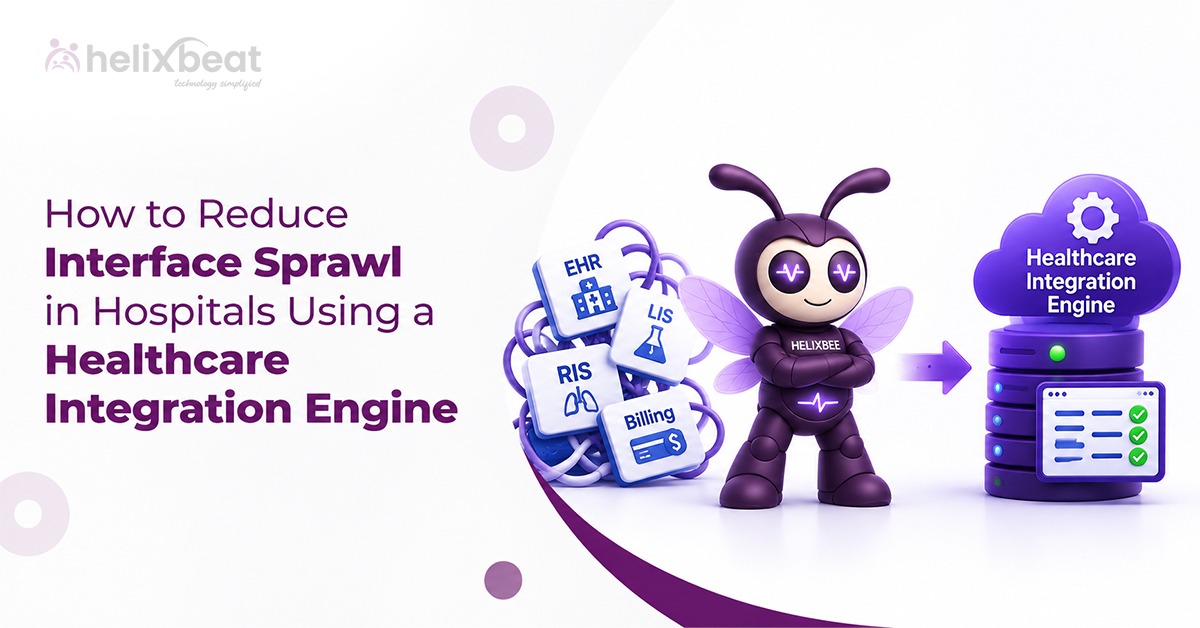


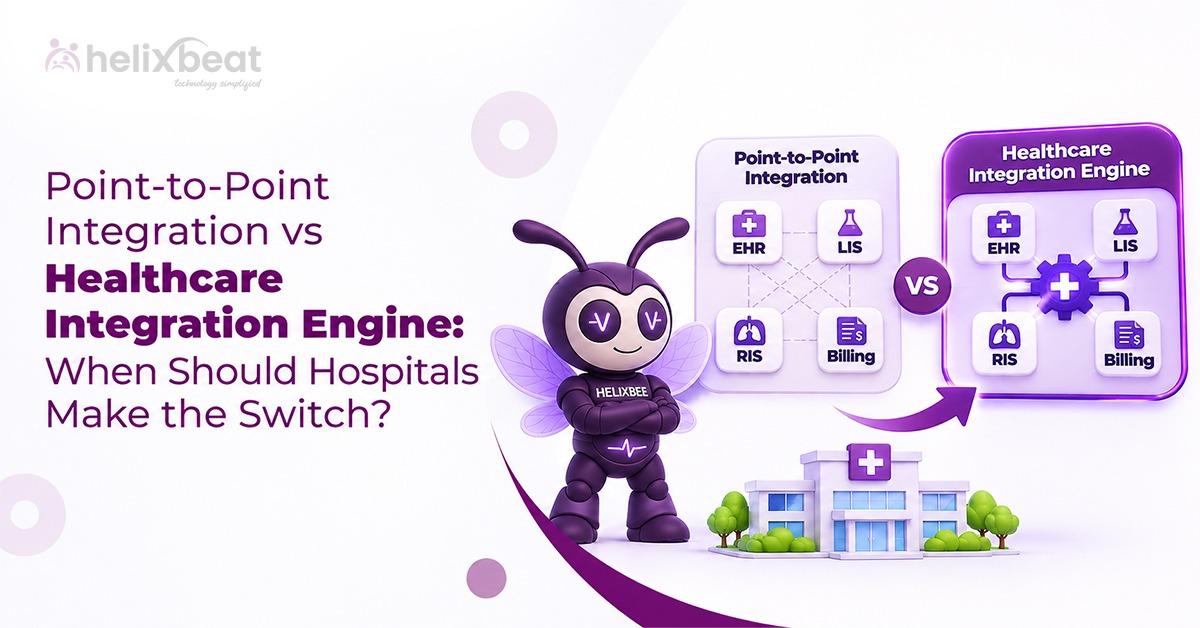
Most hospitals don’t plan point-to-point integration; they fall into it. First, the lab needs to shoot results over to the EHR, so someone throws together a quick connection. Then the pharmacy needs to know who’s being admitted, and billing needs to pull charges. Each link made sense on the day it went live.
But years later, nobody can draw the full map. That’s usually the moment the real question appears: is it time to move to an engine? In this guide, we give you a way to answer it with evidence.
Table of Contents
Why Point-to-Point Works, Until It Doesn’t
Point-to-point is simple. Two systems exchange messages directly, often HL7 v2 over MLLP, the TCP-based framing most v2 feeds still use. For two or three systems, that’s a reasonable design. There is no extra platform to buy or staff to hire.
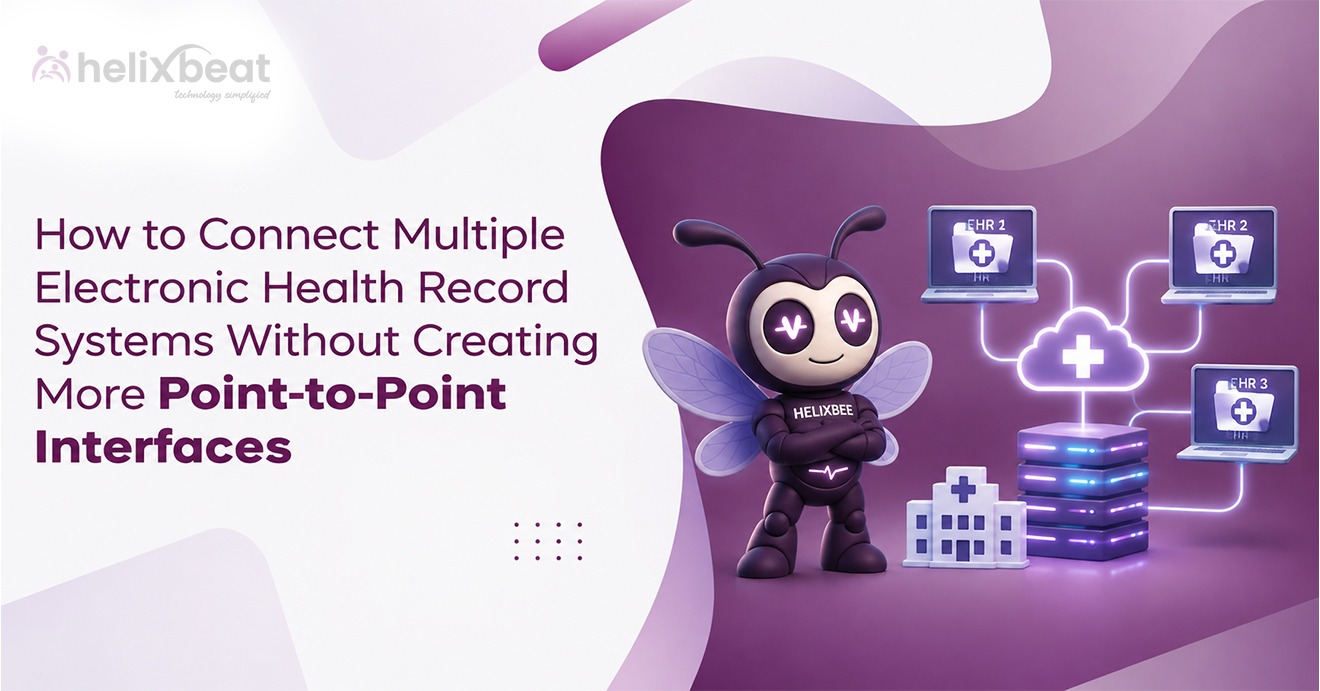
The trouble is arithmetic. In a fully connected setup, the number of possible links is n(n-1)/2. Therefore, six systems can need 15 connections and ten systems can need 45. An engine in the middle needs one connection per system, so six systems need six and ten need ten.
The cost grows in less visible ways too:
- Duplicated mapping logic. The same patient-class translation gets rebuilt in five places, and each copy drifts.
- Key-person risk. One analyst understands a custom script. When that analyst leaves, so does the knowledge.
- Silent failures. A dropped message may surface only when a clinician asks where a result went.
- Slow change. Upgrading one system means retesting every link attached to it.
What a Healthcare Integration Engine Changes
A healthcare integration engine sits between systems and handles the work each connection used to do alone. It receives messages, validates them, transforms them, routes them, and logs what happened.
Four capabilities matter most in daily operations:
- Central transformation. Map a field once, reuse it everywhere.
- Queuing and retry. If the receiving system is down for maintenance, messages wait instead of vanishing.
- Acknowledgment tracking. HL7 v2 uses ACK and NACK messages, and an engine can alert on missing or negative ones.
- Protocol conversion. One feed can arrive as v2 and leave as FHIR, CDA, or a flat file.
Our guide on the role of an HL7 integration engine covers how these functions fit into a move toward FHIR.
Seven Signals It’s Time to Switch
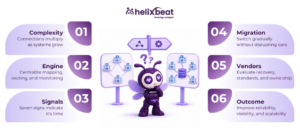
There’s no magic number. But these signals tend to cluster, and the more you recognize, the stronger the case.
- You can’t produce an interface inventory within a day. If it takes weeks, you’re operating blind.
- Onboarding a new system takes months. Most of that time goes to building and testing links, not to the business need.
- Users find outages, not monitoring.
- You’ve merged or acquired. Each acquisition adds systems with different formats and conventions.
- A single person holds critical interface knowledge.
- Audit questions are hard to answer. HIPAA requires audit controls, and tracing a message across scattered scripts is painful.
- You need FHIR APIs, but your core feeds are v2. Someone has to translate, and doing it connection by connection doesn’t scale.
Three or more is a strong prompt to run a formal assessment.
How to Switch Without Disrupting Care
Don’t attempt a big-bang cutover. A gradual path works better:
- Inventory first. List every interface, its message types, volume, owner, and failure history.
- Rank by pain. Start with the interface that fails most often or feeds the most downstream systems.
- Run in parallel. Route the same feed through the engine while the old link stays live, and compare outputs.
- Cut over one interface at a time. Keep the old path available for rollback until the new one proves stable.
- Retire old links deliberately. Decommission only after a defined quiet period.
Platforms like AERIS take that approach with standards-based mapping and validation.
What to Ask Vendors Before You Commit
Feature lists may look alike, but these questions separate them:
- Can it monitor and alert on message flow without custom scripting?
- How does it handle failover and message recovery?
- Does it support both HL7 v2 and FHIR, so healthcare data integration doesn’t need a second tool later?
- Who owns the mappings, and can you export them?
- What is the licensing model as interface counts grow?
The export question matters more than it seems. Mappings are years of institutional knowledge, and you should be able to take them with you.
The Bottom Line
Point-to-point integration isn’t a mistake; it’s a stage. The mistake is staying in it after the cost curve has turned. If you recognize several of the signals above, start your healthcare data integration cleanup with an inventory this month. Even if you decide to wait, you’ll know exactly why.
And if you’re ready to move beyond fragmented integrations, get in touch with us to discuss your integration requirements.
FAQs
- What is a healthcare integration engine?
It is middleware that receives, validates, transforms, routes, and logs messages between clinical and administrative systems. It replaces many direct connections with a central hub.
- Is a healthcare interface engine the same thing?
The terms are generally used interchangeably. “Interface engine” is the older label, and “integration engine” often implies broader capabilities such as APIs and FHIR support.
- How many interfaces justify an integration engine?
No standard threshold exists. Many teams reconsider when the interface count is growing, new connections take months, or failures are found by users instead of monitoring.
- Can an engine handle both HL7 v2 and FHIR?
Many can, but support varies by product. Confirm which FHIR versions and resource types a vendor supports before you buy.
- Does an integration engine replace our EHR?
No. It sits between systems and moves data. Your EHR, lab, and billing platforms stay in place.
- How does an engine support compliance?
Centralized logging helps you trace who sent what and when. That supports audit controls required under the HIPAA Security Rule, though you still need access controls and policies.
- How long does migration usually take?
It depends on interface count and complexity. A phased approach, migrating one interface at a time, typically takes months.