

A patient walks into your urgent care center on a Saturday. Her cardiologist works at your hospital across town. Her latest lab results sit in a third system you inherited through an acquisition. Can the clinician see all of it before the visit ends?
For many multi-facility organizations, the honest answer is “sometimes.” Mergers and years of department-level purchasing leave behind a patchwork of record systems. But building interoperable electronic health records across that patchwork is more of a design problem. In this guide, we cover how to approach it, in the order that tends to work.
Table of Contents
Define “Interoperable” Before You Buy Anything
Interoperability has layers, and teams often solve only the first one.
- Transport: can systems move data at all?
- Structure: can the receiving system parse what arrives?
- Meaning: does “glucose, fasting” in one lab system mean the same thing in another?
Many projects connect the pipes and skip the meaning. Clinicians then face duplicate, mismatched entries and stop trusting the data. You can fix that by agreeing first on the data that drives decisions: allergies, medications, problems, lab results, and encounters. The USCDI (United States Core Data for Interoperability) is a sensible starting checklist. It defines the standardized data classes that federal rules expect certified health IT to exchange.
Choose an Architecture That Fits Your Reality
Most multi-facility organizations pick from three patterns.
- Single shared instance. Every facility runs on one EHR. Data stays cleanest, but migration cost and disruption are the highest.
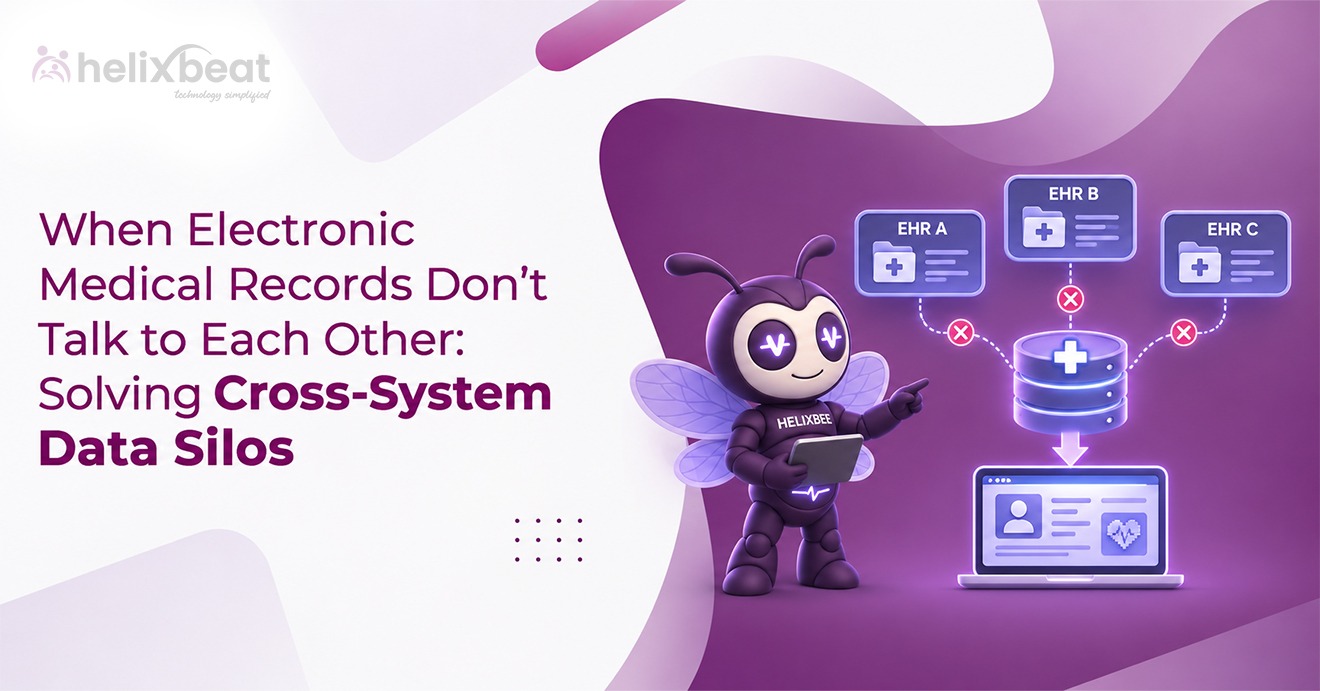
- Federated model. Each facility keeps its own EHR. A shared integration layer and common services connect them. It moves faster, but it depends on strong governance.
- Hybrid. Consolidate where it is cheap, such as facilities already on one vendor. Federate the rest.
But most organizations end up hybrid. Therefore, the first question is which facilities share the most patients. Start connecting those.
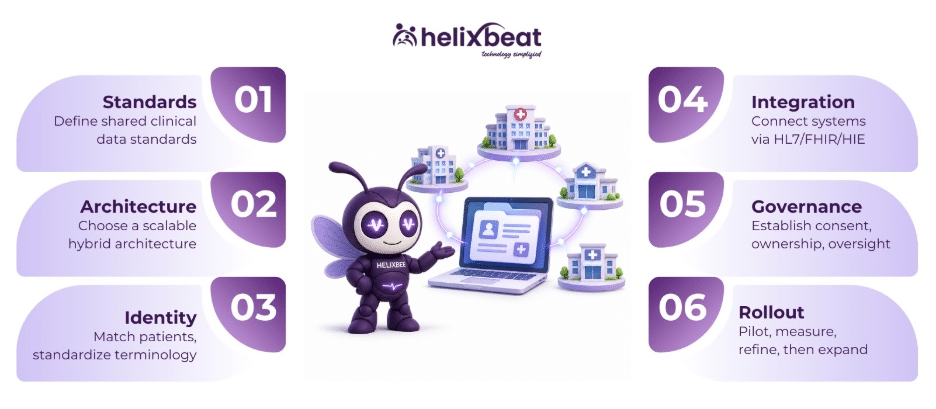
Build Five Foundations, in This Order
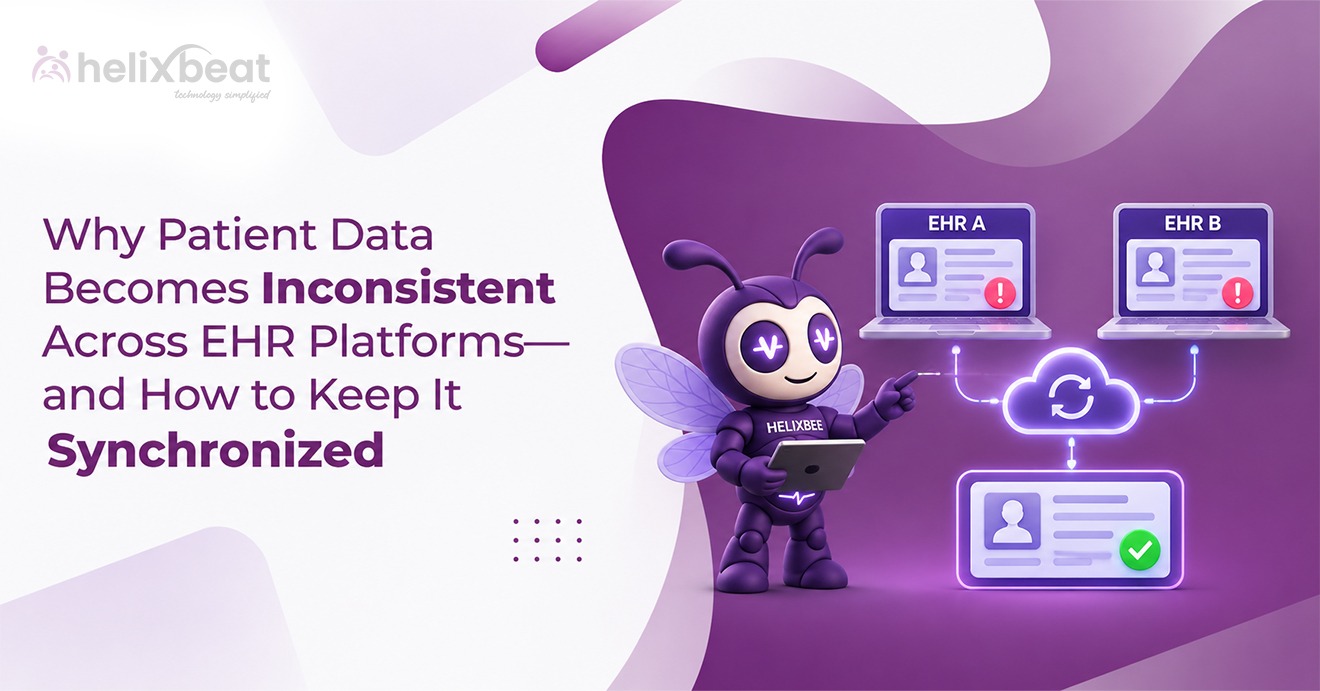
- Patient identity. One patient registered at three facilities often holds three medical record numbers. But an enterprise master patient index (EMPI) links them by comparing name, birth date, address, and other identifiers. Therefore, set conservative matching thresholds and assign data stewards to review borderline cases. A wrongly merged record is more dangerous than a duplicate, so err toward review.
- Shared terminology. Map local codes to common standards: LOINC for lab tests, SNOMED CT for clinical findings, RxNorm for medications, and ICD-10-CM for diagnoses. Begin with the highest-volume lab tests and medications. That is where mismatches hurt clinicians most.
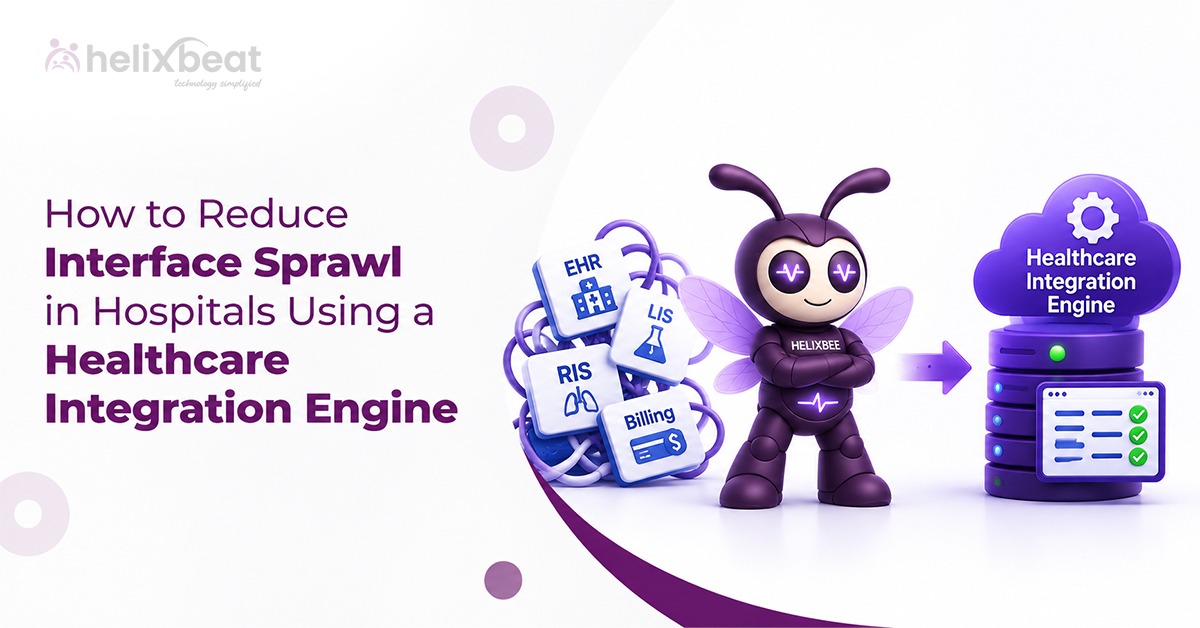
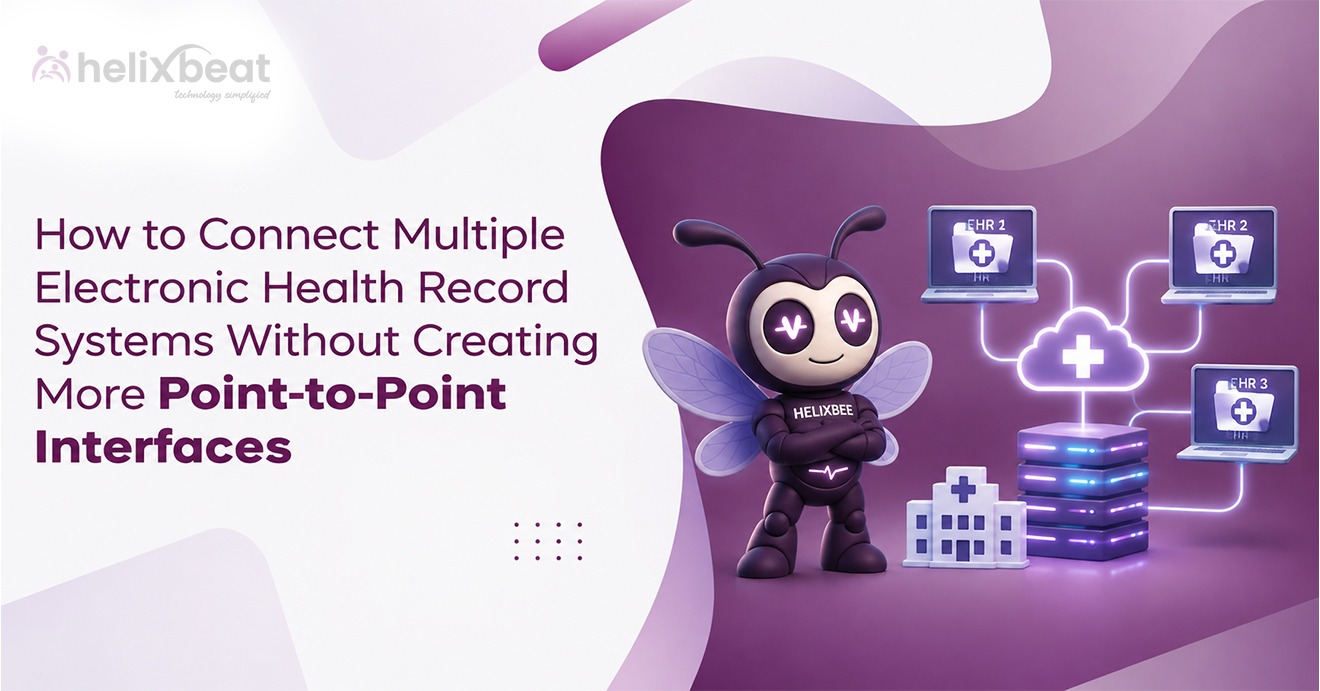
- An integration layer. Point-to-point links multiply fast. Six facilities need 15 connections to talk directly, but 10 need 45. However, a central layer replaces that web with one connection per system. It translates HL7 v2 feeds from older platforms and exposes FHIR APIs to newer applications. AERIS is built for this role. If older systems are your concern, our piece on bridging legacy platforms without full replacement is worth a read.
- Connections beyond your walls. Internal exchange only covers your own facilities. But patients also visit outside providers. Here, health information exchange (HIE) lets you query those records and connects participants through Qualified Health Information Networks (QHINs). Choose based on where your patients actually go, not on brand names. Also note that, under CMS conditions of participation, many hospitals must send electronic admission, discharge, and transfer notifications to a patient’s established care providers.
- Governance and consent. Decide who owns data definitions, who approves changes, and how consent works. HIPAA permits sharing for treatment without patient authorization. But state laws and 42 CFR Part 2, which covers substance use disorder records, can add stricter limits. Therefore, build consent handling early. Retrofitting it later is painful.
Roll Out in Slices, Not in One Big Bang
Pick one high-value use case. A good example is sharing medication lists and allergies between your emergency department and nearby primary care clinics. Track a few measures: duplicate orders, time spent searching for outside records, and patient-matching errors. Then expand.
Test with working clinicians, not only IT staff. Show the source of each data point, meaning which facility recorded it and when. Clinicians trust external data far more when they can see its source.
Pitfalls Worth Planning For
- Treating go-live as the finish line. Terminology drifts as new codes and local practices appear. Therefore, schedule a mapping review every quarter.
- Ignoring workflow. Data that lands in a tab nobody opens is not interoperable in practice. Place it inside the chart view where decisions happen.
- Forgetting small affiliates. Rural clinics and long-term care partners often lack IT staff. That’s why offer lightweight connection options so they are not left out.
- Underestimating the scope of healthcare data integration. It is ongoing work. Every new facility, vendor upgrade, or trading partner changes something. Treat it as a standing program with an owner and a budget.
Where to Begin?
Start with a short audit. List every EHR instance, its vendor, its version, and the interfaces it already runs. This inventory shapes your electronic health record integration plan and exposes duplicate connections you can retire.
You do not need a multi-year master plan to start. You need a clear picture of how patients move between your facilities, an honest look at your patient-matching quality, and one use case worth proving.
Need help turning this assessment into a practical interoperability strategy? Get in touch with our team!
FAQs
- What makes electronic health records “interoperable”?
Records are interoperable when one system can send data, and another can receive, interpret, and use it without manual re-entry. That requires shared formats and shared meaning.
- Is health information exchange the same as interoperability?
Not exactly. Exchange means data moves between systems. Interoperability goes further, because the receiving system can understand and use what arrives. A PDF sent between two EHRs is exchange, but it is not full interoperability.
- Do all our facilities need the same EHR vendor?
No. A federated or hybrid model lets facilities keep different EHRs, connected through a shared integration layer and common data standards.
- What is an enterprise master patient index (EMPI)?
It’s a system that links records for the same person across facilities and systems. It prevents duplicate charts and supports accurate record retrieval.
- What roles do HL7 v2 and FHIR play?
HL7 v2 still carries much of the daily traffic between hospital systems, such as admissions and lab results. FHIR provides modern, API-based access to data. Most organizations use both during a long transition.