

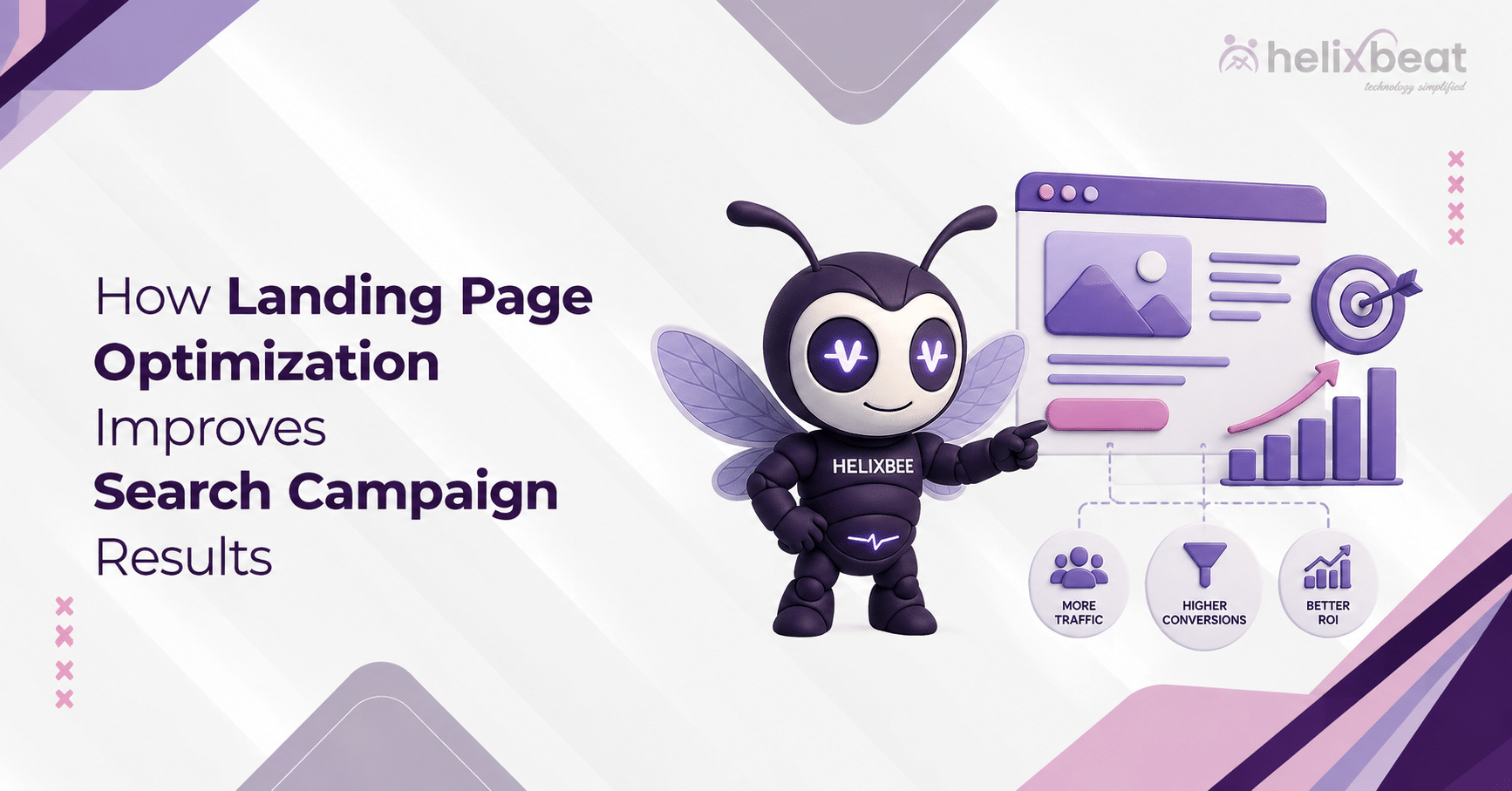
Running a paid search campaign is easy. Making every click profitable is harder.
Most advertisers spend their time adjusting bids, adding keywords, rewriting ads, and watching cost per click. Those actions matter, but they only control what happens before the click. The conversion decision often happens after the visitor reaches the website.
That is where Landing Page Optimization becomes a major performance lever.
A search ad may attract the right person at the right moment, but if the destination page is slow, confusing, generic, or disconnected from the ad promise, the campaign loses momentum. Google treats landing page experience as one of the three components used to calculate Quality Score, alongside expected click-through rate and ad relevance.
For brands investing in paid search, the goal is not simply to buy more traffic. It is to create a connected journey from search query to ad to page to conversion.
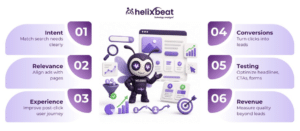
Table of Contents
What Is Landing Page Optimization in Paid Search?
Landing Page Optimization is the process of improving the page a visitor reaches after clicking an ad so that it better matches search intent and increases the likelihood of a valuable action.
That action could be a purchase, demo request, consultation, call, sign-up, or lead form. In paid search, the landing page is part of the campaign architecture. Google says landing page experience is influenced by usefulness, relevance, navigation, and whether the page meets expectations created by the ad.
This is why landing page optimization for PPC should start with intent and message match, not button colors or design trends.
Why Does Landing Page Optimization Improve Search Campaign Results?
Strong post-click optimization reduces friction between what users search for and what they experience after clicking.
Google recommends closely matching landing pages with ads and keywords. If an ad makes a specific promise, users should find that offer or information immediately after they arrive.
- It Creates Better Message Match
Imagine someone searches for “enterprise CRM implementation services.”
Your ad says: “Enterprise CRM Implementation | Book a Strategy Call.”
But the click sends the user to a generic homepage covering software development, cloud services, mobile apps, and consulting.
The page may look impressive, but it does not continue the conversation started by the search.
Effective Landing Page Optimization keeps the keyword, ad message, headline, supporting copy, proof, and CTA aligned around the same need. This is one of the most important PPC landing page best practices because visitors should not have to search the page to confirm they are in the right place.
- It Strengthens Landing Page Experience
Google Ads evaluates landing page experience as a Quality Score component. Quality Score is a diagnostic tool, not a direct input in the ad auction, but its components help advertisers identify weak relevance or experience.
That makes post-click optimization useful beyond visual design because it can reveal gaps between keywords, ads, and destination pages.
- It Improves Conversion Efficiency
A better ad can increase clicks. A better page can increase the percentage of those clicks that become leads or customers.
Your landing page conversion rate shows how effectively paid traffic turns into the action you care about. If 1,000 paid visitors produce 30 leads, the rate is 3%. If page improvements lift it to 5%, the same traffic produces 50 leads without buying more clicks.
That is why the page is a critical part of search campaign optimization.
The Search-to-Conversion Alignment Framework
High-performing paid search programs treat the campaign and landing page as one system:
Search Query → Keyword Theme → Ad Promise → Landing Page Message → Conversion Action
Every step should reinforce the previous one.
Understand the Search Query
Two keywords can look similar while representing different levels of buying intent.
“What is marketing automation?” is largely informational. “Marketing automation agency for SaaS” signals much stronger commercial intent.
Before building the page, identify the visitor’s problem, buying stage, required proof, and most logical next action. That is the foundation of landing page optimization for PPC.
Continue the Ad Promise
If an ad promises a “Free PPC Audit,” the page should feature that offer prominently. If the ad promotes “B2B Lead Generation Services,” the page should not open with vague brand language.
Google specifically recommends matching the landing page to the ad and keyword theme.
Answer Four Questions Fast
A strong page should quickly answer:
- Am I in the right place?
- Can this company solve my problem?
- Why should I trust them?
- What should I do next?
Good Landing Page Optimization reduces the effort required to reach those answers.
What Should High-Converting Google Ads Landing Pages Include?
There is no universal layout that wins every test, but strong Google Ads landing pages usually share a few fundamentals.
An intent-matched headline. Specificity beats cleverness. “B2B PPC Management for SaaS Companies” tells a high-intent visitor more than “Accelerate Your Digital Future.”
A focused value proposition. Explain what the visitor gets, who it is for, and why it matters.
One primary CTA. Keep supporting sections focused on the main conversion action.
Relevant trust signals. Use testimonials, certifications, case-study outcomes, or reviews that support the advertised service.
A fast mobile experience. Google Ads provides landing-page reporting that can identify pages that are not optimized for mobile, and Google recommends mobile-friendly landing pages as part of campaign optimization.
These basics belong in every PPC landing page best practices checklist.
Example: One Campaign, Two Different Landing Page Outcomes
Imagine a B2B cybersecurity company running ads for “managed SOC services.”
The original campaign sends every click to the homepage. That homepage contains multiple services, broad messaging, several navigation choices, no SOC-specific proof, and a generic “Contact Us” CTA.
The team creates a dedicated page with:
- A headline aligned to managed SOC services
- A concise explanation of the offer
- Relevant certifications and proof
- A security-focused case study
- A “Book a SOC Assessment” CTA
- A shorter form
The keywords and ads remain the same.
If qualified visitors understand the offer faster and have a clearer next step, the landing page conversion rate can rise even without changing media spend.
This is the practical value of improving the page: capturing more value from traffic the company already pays for.
Landing Pages Are Part of Search Campaign Performance
Many teams optimize search terms, negative keywords, match types, bids, assets, budgets, devices, and locations inside the ad platform. But search campaign optimization is incomplete if the post-click experience is ignored.
Google recommends conversion measurement because it helps advertisers identify which campaigns, ad groups, ads, and keywords drive valuable customer actions. It also gives automated bidding strategies better goal signals to optimize toward.
HelixBeat’s article on Landing Page Optimization connects closely with this idea by discussing intent alignment, conversion paths, mobile performance, and why traffic can fail to become leads.
Its guide to integrated search campaign optimization also explains how SEO, paid advertising, analytics, and data-driven decisions work together to generate stronger business outcomes.
What Should You Test First?
Start testing with changes closest to intent and conversion friction.
Headline and message match: Test whether the headline reflects the keyword theme and ad promise.
Offer: Compare a consultation, audit, assessment, trial, or demo based on the audience’s buying stage.
CTA: Test clarity. “Request My PPC Audit” is more specific than “Get Started.”
Form length: Remove fields that are not necessary for qualification or follow-up.
Social proof: Test proof that matches the user’s industry, use case, or problem.
Mobile experience: Review the real mobile journey, not only a desktop preview.
For Google Ads landing pages, prioritize meaningful hypotheses over endless cosmetic micro-tests.
Measure More Than Conversion Rate
The landing page conversion rate matters, but it should not be viewed alone. A page can generate more forms while producing worse leads.
Track the full chain: CTR, CPC, conversion rate, cost per lead, qualified lead rate, pipeline value, and revenue or ROAS. This is where Landing Page Optimization becomes more than design work; it becomes revenue optimization.
Google also recommends setting up website conversion measurement around valuable actions such as purchases, sign-ups, or calls so campaign performance can be evaluated using business outcomes.
Common Landing Page Mistakes That Waste Paid Search Budget
Several mistakes repeatedly weaken paid search performance:
- Sending every ad to the homepage
- Using one page for unrelated keyword groups
- Breaking the promise made in the ad
- Overloading the page with unnecessary choices
- Using vague CTAs
- Ignoring mobile usability
- Running tests without a hypothesis
- Tracking leads but not lead quality
Avoiding these errors makes the user journey clearer and the economics of paid acquisition easier to improve.
How HelixBeat Connects Landing Pages With Marketing-as-a-Service
The strongest search campaigns are not managed as disconnected advertising projects.
HelixBeat lists SEO and SEM and performance marketing among its digital marketing capabilities, supporting an integrated approach across acquisition, content, UX, analytics, and optimization.
Within a Marketing-as-a-Service model, Landing Page Optimization can connect keyword research, ad messaging, conversion copy, UX improvements, tracking, testing, lead-quality analysis, and ongoing refinement.
Landing pages are never truly finished. Search behavior, offers, competitors, and performance data change, so ongoing refinement keeps the page aligned with both campaign goals and customer needs.
Final Thoughts
Paid search does not end when someone clicks an ad. The click is only the handoff between acquisition and conversion.
Effective Landing Page Optimization makes that handoff smoother by aligning search intent, ad messaging, page experience, proof, and calls to action. It can help advertisers turn more existing paid traffic into qualified business outcomes while creating better data for future campaign decisions.
If search campaigns generate clicks but not enough qualified leads, do not assume the answer is simply more budget.
Look at what happens after the click. In many cases, Landing Page Optimization is where the next performance gain is waiting.
FAQs
- What is Landing Page Optimization?
Landing Page Optimization improves page content, design, speed, and usability to increase conversions from paid search traffic.
- Why is Landing Page Optimization important for PPC?
It improves message relevance, user experience, and conversion potential, helping PPC campaigns generate more value from existing traffic.
- How can landing pages improve Google Ads performance?
Relevant, fast, and user-friendly landing pages can improve landing page experience and help turn more ad clicks into leads or sales.
- What should I test on a PPC landing page?
Test headlines, CTAs, forms, offers, trust signals, page layout, and mobile experience to identify what improves conversions.