

Table of Contents
Introduction
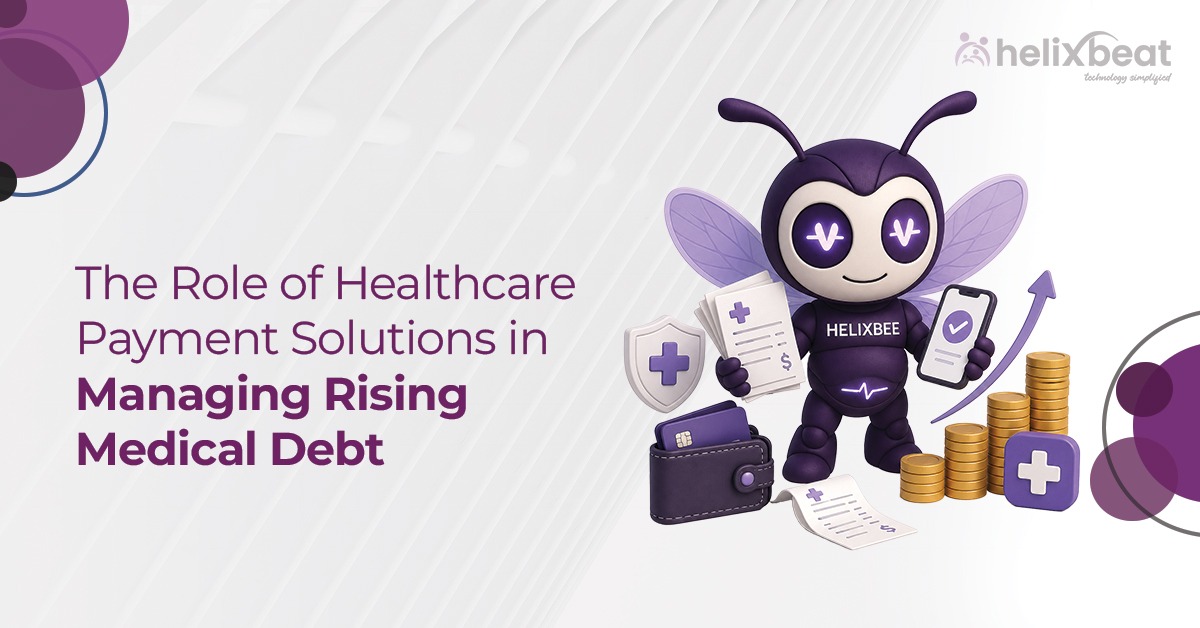
Medical debt is becoming one of the biggest financial challenges in the U.S. healthcare industry. Approximately 20 million Americans — nearly 1 in 13 adults — currently carry medical debt, with more than $220 billion owed nationwide.
Even patients with health insurance are struggling with rising deductibles, co-pays, denied claims, and uncovered treatments. For hospitals and healthcare businesses, this means slower collections, rising bad debt, and increasing pressure on revenue cycles.
For example, a patient may undergo surgery expecting insurance to cover most costs, only to receive thousands of dollars in remaining balances later. This is why modern payment solutions for healthcare are becoming essential for providers looking to improve collections, simplify billing, and reduce the growing impact of medical debt.
The Current Situation of Medical Debt in the U.S.
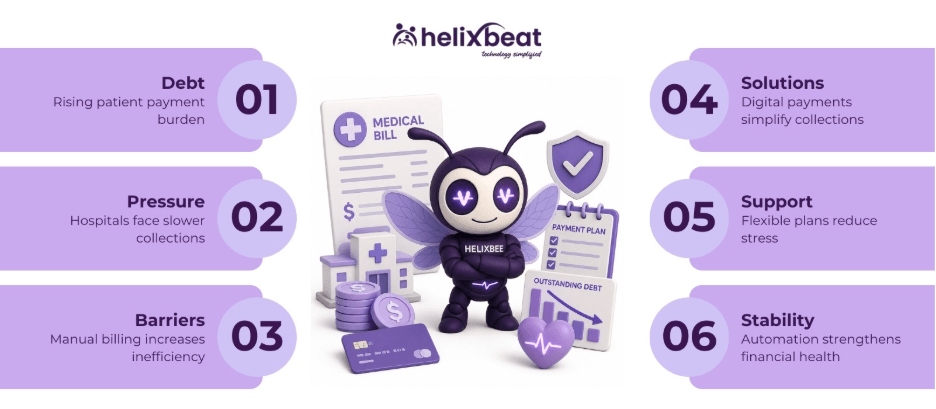
Medical debt has become a major concern for healthcare providers across the United States. Rising healthcare costs and increased patient financial responsibility are changing how healthcare organizations manage revenue. Today, many patients are responsible for a larger share of their medical expenses due to high-deductible insurance plans and growing out-of-pocket costs.
Even insured patients often struggle to pay medical bills on time. Delayed payments, denied claims, and confusing billing processes are increasing financial stress for both patients and providers. Many healthcare businesses are also closely monitoring discussions surrounding the Medical Debt Forgiveness Act , which is bringing greater attention to healthcare affordability and billing transparency.
For healthcare providers, this situation creates serious operational challenges. Hospitals and medical billing teams are dealing with rising unpaid balances, growing administrative workload, and slower reimbursements. Traditional billing systems that rely heavily on manual processes and paper invoices are no longer effective in modern healthcare environments.
This is why healthcare organizations are increasingly investing in smarter payment solutions for healthcare that help streamline payment processes while improving patient financial experiences.
How Hospitals Are Struggling With Medical Debt
Hospitals and healthcare providers are facing increasing financial pressure as patient payment responsibility continues to rise. Collections are becoming harder than ever before, even for experienced billing teams. Staffing shortages, insurance complexities, and administrative inefficiencies are creating serious revenue cycle challenges.
One major issue hospitals face is delayed patient payments. For example, a patient receiving emergency treatment may have insurance coverage for part of the bill but still owe a large deductible or co-pay afterward. If the patient cannot pay immediately, the balance often becomes overdue, increasing bad debt for the provider.
Healthcare organizations also struggle with:
- Manual billing processes
- Insurance verification delays
- Claim denials
- Payment disputes
- High administrative costs
- Inefficient follow-up systems
Without modern payment solutions for healthcare, hospitals often spend significant time and resources tracking unpaid balances and correcting billing errors.
In addition, outdated billing systems make it difficult for providers to offer the convenience patients expect today. Many patients prefer online payment options and flexible payment plans, but traditional systems cannot support these expectations effectively.
As discussions around the Medical Debt Forgiveness Act continue, healthcare providers are under greater pressure to improve billing transparency and reduce patient financial burdens.
How Payment Solutions for Healthcare Help Hospitals Reduce Medical Debt
Modern payment solutions for healthcare are helping hospitals simplify collections, improve operational efficiency, and reduce bad debt.
Platforms like PayNova allow healthcare providers to centralize payment operations and automate billing workflows. Instead of relying on paper statements and manual follow-ups, hospitals can offer secure digital payment experiences that make it easier for patients to pay balances on time.
One major advantage of payment solutions for healthcare is flexibility. Patients can make payments through:
- Credit and debit cards
- ACH transfers
- Online patient portals
- Mobile wallets
- Installment payment plans
- Recurring billing options
This flexibility helps providers improve collection rates while reducing financial stress for patients.
Another major benefit is healthcare billing automation. Automated systems help hospitals:
- Verify insurance eligibility instantly
- Generate accurate billing estimates
- Submit claims electronically
- Track reimbursement status
- Send automated reminders
- Process payments faster
By using healthcare billing automation, providers can reduce manual errors, improve billing accuracy, and speed up revenue cycles.
Modern payment solutions for healthcare also improve financial visibility. Hospitals can monitor outstanding balances, identify payment delays, and analyze collection trends through real-time dashboards.
The rise of digital healthcare payments is also helping providers modernize patient payment experiences. Patients increasingly prefer digital payment methods that allow them to make secure transactions quickly from their phones or computers.
Secure digital healthcare payments improve convenience while helping providers accelerate collections and reduce administrative burden.
As patient responsibility continues to grow, healthcare organizations that invest in smarter payment solutions for healthcare will be better prepared to manage long-term financial challenges.
How Payment Solutions Help Patients Prevent Debt
Medical debt often grows because patients do not fully understand their bills or lack flexible payment options. Many patients delay payments simply because they are overwhelmed by confusing invoices or large balances.
Modern payment solutions for healthcare help patients prevent debt by improving payment transparency and flexibility.
For example, instead of receiving unclear paper bills weeks after treatment, patients can use secure online portals to:
- View itemized charges
- Understand insurance coverage
- Check remaining balances
- Access payment plans
- Make secure online payments
This transparency reduces confusion and helps patients manage healthcare expenses more effectively.
Flexible payment plans also support stronger medical debt management by allowing patients to spread healthcare costs over time rather than facing large one-time payments.
The growth of digital healthcare payments has also improved patient convenience significantly. Patients can now make payments online, receive automated reminders, and manage healthcare expenses through self-service platforms.
These systems make healthcare payments faster, easier, and more accessible.
In addition, stronger medical debt management strategies help healthcare providers reduce collection problems before balances become delinquent. Automated reminders, payment plans, and financial transparency all help reduce long-term debt risks for patients.
As awareness around the Medical Debt Forgiveness Act continues to grow, patients are increasingly expecting healthcare providers to offer clearer billing experiences and more affordable payment options.
Conclusion
Medical debt continues to create major financial challenges for both patients and healthcare providers across the United States. Rising deductibles, delayed reimbursements, and billing complexities are increasing pressure on hospital revenue cycles while making healthcare expenses harder for patients to manage.
To address these challenges, healthcare organizations are investing in modern payment solutions for healthcare that improve collections, simplify billing, and support better patient financial experiences.
Platforms like PayNova help providers modernize operations through secure digital healthcare payments, advanced healthcare billing automation, and flexible payment systems that support stronger medical debt management.
As the healthcare industry continues evolving alongside discussions around the Medical Debt Forgiveness Act, providers that adopt smarter payment solutions for healthcare will be better positioned to reduce bad debt, improve patient trust, and strengthen long-term financial stability.
FAQs
What is a medical debt?
Medical debt refers to unpaid healthcare expenses owed by patients for medical treatments, hospital visits, surgeries, medications, or other healthcare services.
What is the leading cause of medical debt?
The leading causes of medical debt are high deductibles, out-of-pocket expenses, unexpected medical emergencies, and denied or partially covered insurance claims.
What is the best way to negotiate medical bills?
The best way to negotiate medical bills is to request an itemized bill, verify insurance coverage, ask about discounts or financial assistance programs, and discuss flexible payment plans with the provider.
What is the lowest amount you can pay on a hospital bill?
The minimum payment depends on the hospital’s payment policy. Many hospitals allow small monthly installment payments based on the patient’s financial situation and payment agreement.