

For years, the U.S. healthcare industry has tried to move away from fee-for-service systems and toward a model focused on outcomes, quality, and patient wellness. That transition sparked the rise of value based reimbursement in healthcare, a payment approach designed to reward providers for improving patient outcomes instead of simply increasing the number of procedures performed.
Now, after nearly fifteen years of implementation, healthcare leaders are asking an important question: Is value based reimbursement in healthcare finally delivering the results it promised?
The answer is complex. While the healthcare industry has made meaningful progress, challenges still remain. However, with better technology, smarter payment systems, stronger data analytics, and evolving government initiatives, many experts believe that value based reimbursement in healthcare is beginning to show measurable success in 2026.
For healthcare organizations, understanding how these reimbursement models work — and how payment technology supports them — has become more important than ever.
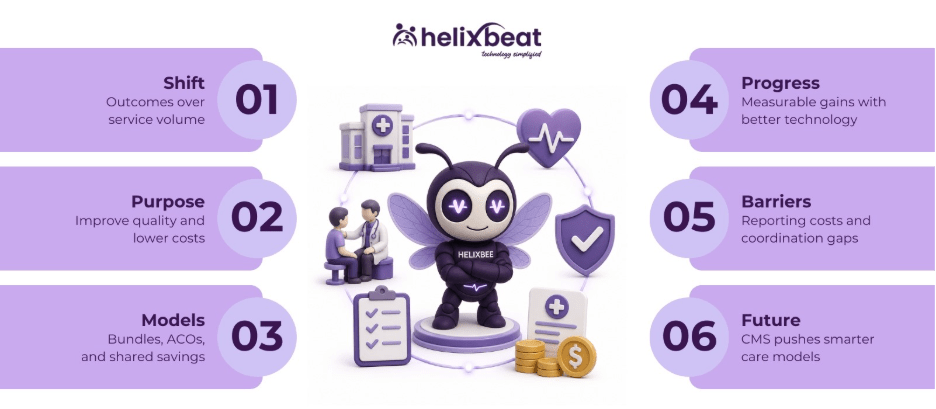
Table of Contents
Understanding Value Based Reimbursement in Healthcare
At its core, value based reimbursement in healthcare is a payment system where healthcare providers are compensated based on patient outcomes, care quality, efficiency, and overall performance.
Traditional fee-for-service systems reward providers for volume. The more tests, visits, or procedures completed, the more providers get paid. In contrast, value based reimbursement in healthcare focuses on:
- Preventive care
- Reduced hospital readmissions
- Better chronic disease management
- Improved patient satisfaction
- Lower healthcare costs
The goal is simple: improve patient health while reducing unnecessary healthcare spending.
This ongoing shift to value-based care has become one of the biggest transformations in modern healthcare finance.
Why the Healthcare Industry Shifted to Value-Based Care
The U.S. healthcare system has long struggled with rising costs, fragmented care coordination, and inconsistent patient outcomes. Policymakers and healthcare organizations realized that rewarding treatment quantity instead of quality created inefficiencies across the system.
This triggered the national shift to value-based care, encouraging providers to focus on long-term patient wellness rather than short-term service volume.
Programs introduced by the Centers for Medicare & Medicaid Services (CMS) accelerated this transition. Today, CMS value-based care 2030 initiatives continue pushing healthcare organizations toward outcome-driven reimbursement systems.
Healthcare leaders now recognize that value based reimbursement in healthcare is not just a payment reform. It is a broader strategy for improving the entire healthcare experience.
Value-Based Reimbursement Models in Healthcare
There are several common Value-based reimbursement models in healthcare currently used across hospitals, clinics, and healthcare networks.
1. Pay-for-Performance Programs
Providers receive incentives for meeting quality benchmarks such as patient satisfaction scores, reduced complications, or preventive care goals.
2. Bundled Payments
Healthcare providers receive a single payment covering an entire episode of care instead of separate payments for every service performed.
3. Accountable Care Organizations (ACOs)
Groups of providers work together to coordinate care while reducing unnecessary spending.
4. Shared Savings Models
Providers who reduce healthcare costs while maintaining quality standards share in the financial savings.
These Value-based reimbursement models in healthcare are designed to encourage collaboration, efficiency, and patient-centered care delivery.
Is Value-Based Care Working?
One of the most searched questions today is: Is value-based care working?
After fifteen years, the evidence is becoming clearer.
Many healthcare organizations participating in value based reimbursement in healthcare programs have reported:
- Lower hospital readmission rates
- Better chronic disease management
- Improved preventive care participation
- Increased patient engagement
- Reduced unnecessary emergency visits
However, results vary significantly depending on the organization’s infrastructure, technology adoption, and ability to coordinate care effectively.
For providers with strong digital systems and advanced analytics, value based reimbursement in healthcare is proving increasingly effective. For organizations still relying on outdated billing systems or fragmented communication workflows, the transition remains difficult.
So, while Is value-based care working is still debated in some areas, the overall direction appears promising.
The Role of Technology in Value-Based Care Success
Technology has become one of the biggest reasons why value based reimbursement in healthcare is gaining traction in 2026.
Fifteen years ago, many healthcare organizations lacked the digital infrastructure needed to track patient outcomes, monitor quality metrics, or manage large-scale reimbursement reporting.
Today, healthcare providers use:
- AI-powered analytics
- Electronic Health Records (EHRs)
- Predictive care management tools
- Automated billing systems
- Real-time reporting dashboards
These technologies help providers succeed under modern reimbursement structures.
Advanced healthcare payment platforms like also play an important role by improving payment transparency, simplifying patient billing communication, and reducing administrative burdens.
Without digital transformation, value based reimbursement in healthcare would be far more difficult to implement successfully.
Value-Based Payment Models Examples in Real Healthcare Settings
Understanding real-world Value-based payment models examples helps explain why healthcare organizations continue investing in these systems.
Example 1: Diabetes Management Programs
Providers receive incentives when diabetic patients maintain stable blood sugar levels and avoid preventable hospitalizations.
Example 2: Bundled Surgical Care
Hospitals receive one combined payment covering surgery, rehabilitation, follow-up visits, and recovery care.
Example 3: Preventive Screening Initiatives
Healthcare organizations are rewarded for increasing cancer screenings, vaccinations, and wellness visits.
These Value-based payment models examples demonstrate how reimbursement structures now focus more heavily on long-term patient outcomes.
Who Benefits the Most from Value Based Reimbursement and Why?
Another common question is: Who benefits the most from value based reimbursement and why?
The answer involves multiple stakeholders.
Patients
Patients benefit from:
- Better coordinated care
- Improved preventive services
- More personalized treatment plans
- Reduced unnecessary procedures
Providers
Healthcare providers benefit through:
- Performance incentives
- Better patient relationships
- Improved operational efficiency
- Long-term financial sustainability
Insurance Providers and Government Programs
Payers benefit because value based reimbursement in healthcare helps reduce avoidable healthcare costs and improves population health management.
Ultimately, patients may benefit the most because the system encourages providers to prioritize health outcomes over service volume.
CMS Value-Based Care 2030 Goals
The federal government continues to aggressively support outcome-based healthcare reforms.
The CMS value-based care 2030 initiative aims to:
- Expand accountable care models
- Improve health equity
- Increase preventive care access
- Enhance healthcare affordability
- Accelerate digital transformation
CMS has made it clear that the future of healthcare reimbursement will increasingly depend on measurable outcomes and quality metrics.
As these policies evolve, healthcare organizations must prepare for deeper integration of value based reimbursement in healthcare systems.
Pros and Cons of Value-Based Care
Like any major healthcare reform, there are important Pros and cons of value-based care to consider.
Pros of Value-Based Care
Better Patient Outcomes
Providers focus more on preventive care and long-term wellness.
Reduced Healthcare Costs
The system discourages unnecessary treatments and hospitalizations.
Improved Care Coordination
Healthcare teams work together more effectively.
Increased Patient Engagement
Patients receive more personalized communication and follow-up care.
These benefits continue driving investment in value based reimbursement in healthcare programs nationwide.
Cons of Value-Based Care
Complex Reporting Requirements
Providers must track large amounts of performance data.
High Technology Costs
Implementing advanced digital systems requires significant investment.
Administrative Challenges
Smaller practices may struggle with compliance and reporting demands.
Transition Difficulties
Moving away from fee-for-service systems can be operationally challenging.
Despite these concerns, many experts believe the long-term benefits outweigh the challenges.
Why Payment Infrastructure Matters More Than Ever
As reimbursement models evolve, healthcare organizations need smarter financial systems to support operational efficiency.
Modern healthcare payment platforms help providers:
- Automate billing workflows
- Improve revenue cycle management
- Reduce claim denials
- Simplify patient communication
- Improve payment transparency
This is where supports healthcare organizations navigating the future of healthcare finance.
By simplifying complex payment processes and improving digital billing experiences, PayNova helps providers focus more on patient outcomes and less on administrative friction.
Efficient financial infrastructure is becoming essential for organizations participating in value based reimbursement in healthcare programs.
The Future of Value Based Reimbursement in Healthcare
The future of healthcare reimbursement is becoming increasingly outcome-driven, technology-enabled, and patient-focused.
Healthcare organizations are recognizing that successful value based reimbursement in healthcare depends on:
- Strong patient engagement
- Better communication
- Advanced analytics
- Automated payment systems
- Interoperable healthcare technology
As AI, predictive analytics, and digital payment systems continue evolving, providers will gain more tools to improve both clinical and financial performance.
The continued shift to value-based care is unlikely to slow down. Instead, it will become more integrated into everyday healthcare operations.
Conclusion
After fifteen years of experimentation, policy changes, and technological evolution, value based reimbursement in healthcare appears to be moving closer to its original promise.
While challenges remain, healthcare providers are beginning to see measurable improvements in patient outcomes, care coordination, and cost management. Advanced technology, government initiatives, and smarter financial systems are helping make these reimbursement models more practical and scalable.
Questions like Is value-based care working, Who benefits the most from value based reimbursement and why, and concerns around the Pros and cons of value-based care will continue shaping industry discussions for years to come.
However, one thing is becoming increasingly clear: the healthcare industry’s future will rely heavily on connected systems, digital transformation, and outcome-focused payment strategies.
For healthcare organizations preparing for the next phase of CMS value-based care 2030, investing in modern payment infrastructure and patient-centered financial communication will be essential for long-term success.
FAQs
1. What is value based reimbursement in healthcare?
Value based reimbursement in healthcare is a payment model where providers are rewarded based on patient outcomes and care quality instead of service volume.
2. Are value-based reimbursement models in healthcare effective?
Yes, many value-based reimbursement models in healthcare help reduce costs, improve care coordination, and enhance patient outcomes.
3. What are some value-based payment models examples?
Common value-based payment models examples include bundled payments, Accountable Care Organizations (ACOs), and pay-for-performance programs.
4. Is value-based care working in 2026?
Many experts believe value-based care is working as providers use better technology, analytics, and patient engagement strategies to improve outcomes.
5. What are the pros and cons of value-based care?
The pros and cons of value-based care include improved patient outcomes and lower costs, but also higher reporting requirements and implementation challenges.